
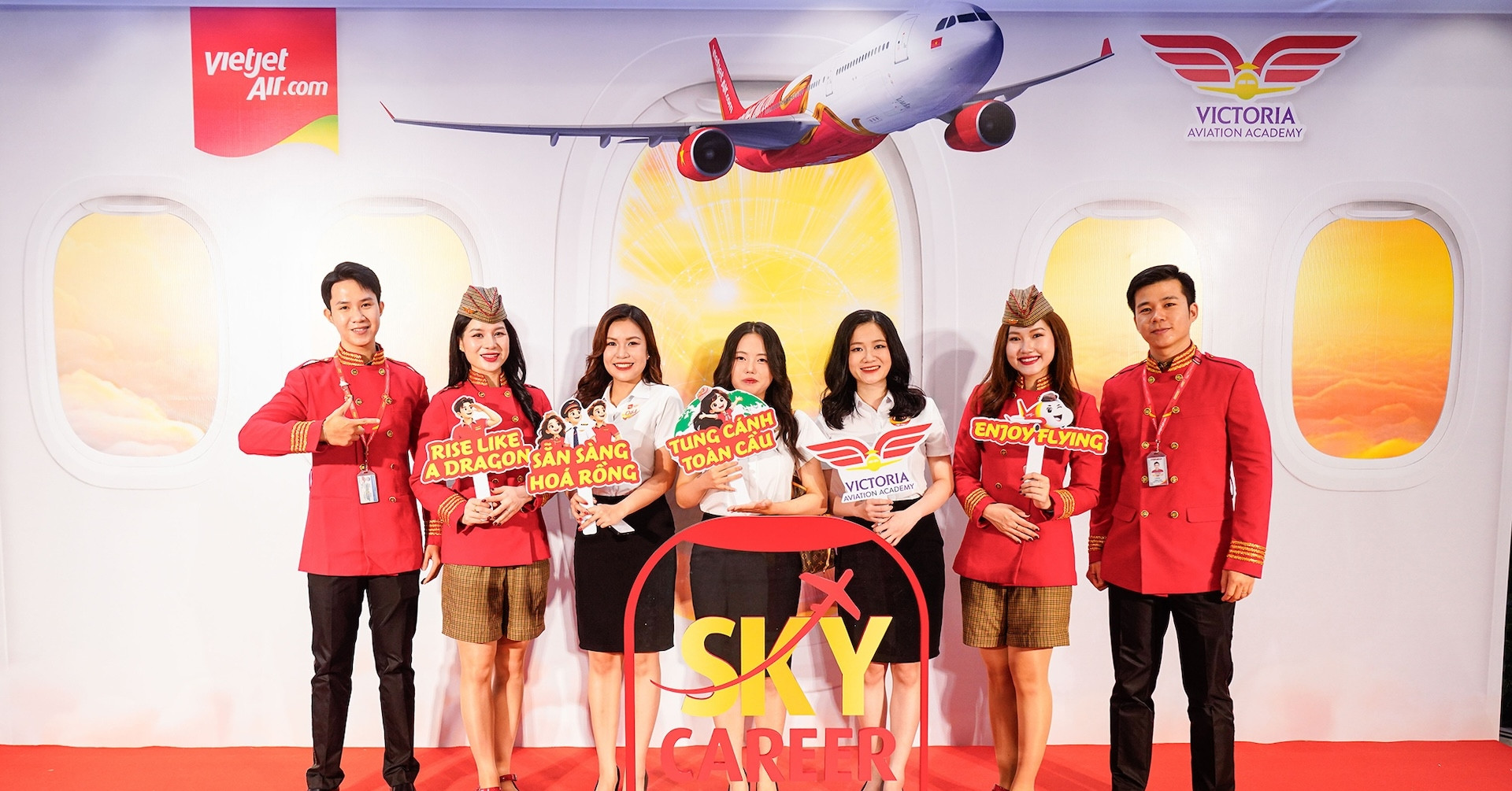
The aviation industry in Southeast Asia is currently witnessing a significant surge in demand, driven by the rapid post-pandemic recovery of international travel and the expansion of major low-cost carriers. In this competitive landscape, Vietjet Air has launched its 2026 recruitment campaign, attracting hundreds of aspiring cabin crew members from across the region. The recruitment drive, which recently held a major event in Ho Chi Minh City, highlights the aspirations of a new generation seeking to transition from traditional office roles to the dynamic, fast-paced environment of global aviation.
Among the participants was Thanyaporn Sanggawe, a young professional currently employed in Bangkok, Thailand. Despite enjoying a stable income and a comfortable life in the Thai capital, her long-held ambition to become a flight attendant remained a driving force. For Thanyaporn, the prospect of wearing the airline uniform, navigating international airports, and connecting diverse cultures was more than just a career choice; it was a realization of a life-long dream.
Upon learning that Vietjet was conducting a massive recruitment drive in Ho Chi Minh City, she viewed it as a pivotal opportunity. "I often thought that I would settle for a safe, predictable path, but I knew that if I didn’t take this chance, I would eventually regret it," she stated. "I wanted to take charge of my own life." Thanyaporn’s successful navigation of the rigorous selection process—characterized by demanding English proficiency tests, personal interviews, and behavioral assessments—serves as a testament to the determination required to succeed in one of the world’s most competitive service industries.
A Legacy of Dreams and Generational Aspirations
The recruitment event served as a melting pot of stories, each reflecting the diverse motivations of the modern youth. Among the applicants was Vu Minh Phuc, born in 2003, who brought a deeply personal dimension to the selection process. For Phuc, the decision to apply was not only about securing his own future but also about fulfilling a legacy.
Phuc’s older sister had long harbored dreams of becoming a flight attendant but was unable to pursue the career due to physical height requirements. Having graduated from university only to find that his chosen field did not resonate with his passions, Phuc began to reflect on his career trajectory. During his final year of high school, when asked about his future aspirations by a teacher, he had replied, "I want to be a flight attendant." This desire was rooted in his sister’s unfulfilled ambition.
By joining the recruitment drive, Phuc felt he was participating in a shared journey. "When I entered the venue, I wasn’t just competing for myself," he explained. "I felt that I was realizing a dream for my sister as well." This narrative underscores the profound emotional impact that aviation careers have on families and individuals in emerging economies, where joining a major airline is often seen as a significant milestone in social and professional development.
The Operational Context: Vietjet’s Growth Strategy
The recruitment campaign is a core component of Vietjet’s broader expansion strategy. As the airline increases its fleet size and opens new international routes to destinations across Asia, Europe, and Australia, the need for high-quality, multilingual, and customer-oriented personnel has grown exponentially.
According to Nguyen Thanh Son, Vice President of Vietjet, the airline is committed to fostering an international working environment. "Joining Vietjet offers young people the chance to work in a truly global setting, within a multi-cultural team that has been built and refined over more than 15 years," he noted.
The aviation industry in Vietnam has seen an average annual growth rate in passenger traffic of approximately 10-15% over the past decade, placing immense pressure on airlines to scale their operations. Vietjet’s recruitment model is designed to address this by not only hiring for immediate needs but by investing in the long-term professional development of its staff.
Investment in Training and Human Capital
A notable feature of the 2026 recruitment drive is the financial support offered to successful candidates. Vietjet has announced a policy to subsidize up to 50% of the training costs for those who pass the selection process. This initiative is intended to lower the barriers to entry for talented individuals who might otherwise be deterred by the high costs of specialized aviation training.
Once selected, trainees undergo comprehensive instruction at the Vietjet Victoria Aviation Academy. The facility represents a significant capital investment, featuring state-of-the-art training equipment that meets international standards set by the International Air Transport Association (IATA). Key features of the training facility include:
- Full-flight Simulators (FFS): Used for pilot training and emergency procedures.
- Cabin Mock-ups: Replicas of aircraft interiors to simulate safety drills and in-flight service.
- Water Survival Training Pools: Olympic-standard facilities for emergency evacuation training.
- Technical Workshops: Specialized centers for ground handling and maintenance engineering.
By providing such extensive training, the airline ensures that its crew members are equipped with the technical skills and safety knowledge required to operate in the highly regulated global aviation environment.
Comprehensive Employee Welfare and Retention
The aviation industry is notoriously demanding, characterized by irregular hours, travel fatigue, and high-pressure environments. To mitigate these challenges and improve staff retention, Vietjet has implemented a robust suite of over 60 welfare policies.
These policies extend beyond standard salary packages to include comprehensive health insurance, medical care for crew members performing international duties, and generous travel benefits for employees and their families. These measures are designed to provide the stability and support necessary for employees to maintain their well-being throughout their careers.
The importance of these policies cannot be overstated. Industry data suggests that the "human factor" is the most critical element in passenger satisfaction and flight safety. By investing in the physical and mental health of its cabin crew, Vietjet is effectively hedging against the high turnover rates that currently plague the aviation sector globally.

Future Outlook: Building the Next Generation of Aviation Professionals
The recruitment drive in Ho Chi Minh City, which saw nearly 400 candidates participating, is indicative of the robust interest in aviation as a career path in Vietnam. The next phase of the recruitment campaign is scheduled to take place in Hanoi on October 3, 2026.
This ongoing expansion reflects the airline’s confidence in the future of the aviation market. Despite challenges such as rising fuel costs and geopolitical volatility, the demand for affordable, safe, and efficient air travel remains high. The transition of young professionals like Thanyaporn and Minh Phuc into the industry signals a positive shift in labor demographics, where talent is increasingly attracted to high-skill, service-oriented roles.
In conclusion, the 2026 recruitment cycle of Vietjet is not merely a logistical exercise in filling vacancies; it is a strategic investment in human capital. By combining aggressive recruitment with comprehensive training and welfare, the airline is positioning itself to meet the challenges of a rapidly evolving global market. For the hundreds of young men and women attending these events, the opportunity represents more than just a job—it is a launchpad for a career that literally spans the globe, offering them a chance to contribute to the growth of one of the most dynamic industries of the 21st century.