Iran Vows to Block US Warships from the Persian Gulf and Threatens Submarine Cable Attacks Amid Escalating Tensions

Tehran has intensified its rhetoric against Washington and its allies, issuing a sweeping declaration that Iranian armed forces will forcefully prevent any United States warships from entering the Persian Gulf. In addition to these maritime restrictions, senior security officials in Tehran have outlined aggressive contingency plans targeting critical underwater telecommunications infrastructure in the region should hostilities escalate further. These sweeping warnings arrive at a precarious geopolitical juncture, characterized by persistent threats of preemptive military strikes from both the United States and Israel, leaving diplomatic channels effectively frozen and regional stability hanging by a thread.
Hardline Stance from Military Leadership
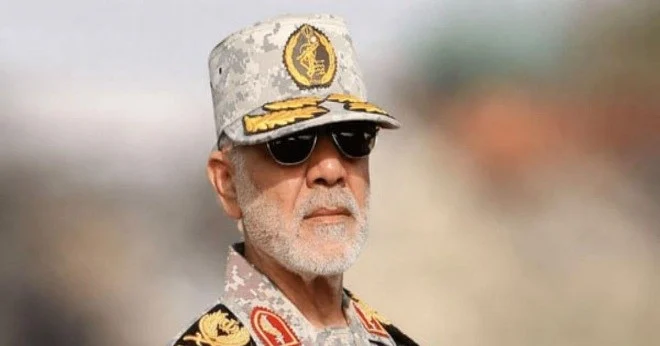
The latest round of aggressive posturing was spearheaded by General Ali Abdollahi, Chief of the General Staff of the Iranian Armed Forces. Speaking to regional media outlets on October 24, General Abdollahi categorically dismissed assertions made by Washington regarding the systematic dismantling of Iran’s nuclear infrastructure. While acknowledging that the United States administration under President Donald Trump retains the liberty to posture and deploy military assets toward the region, the Iranian chief of staff insisted that such maneuvers would never translate into operational success within Iranian territorial waters.
"The President of the United States may continue his grandstanding regarding the deployment of armed forces toward the Persian Gulf, but this will simply never happen," General Abdollahi stated. "We will not allow US military vessels to appear in the Persian Gulf under any circumstances and at any point in time."
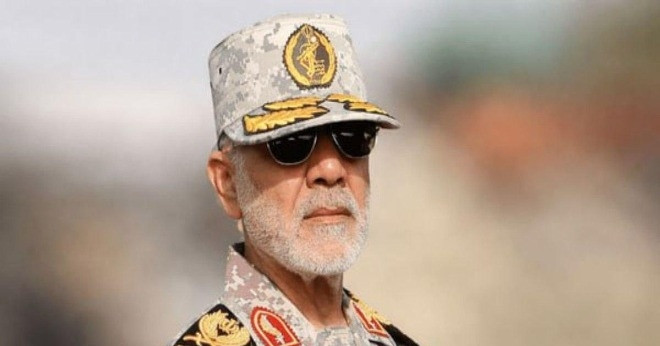
Furthermore, General Abdollahi cast profound skepticism upon repeated claims from Washington that previous airstrikes successfully neutralized Tehran’s military and nuclear capabilities. He challenged the narrative of total destruction by highlighting the operational posture of foreign navies in the region. "If the United States has destroyed everything, then why do they reiterate these claims? If they deny having destroyed Iran’s military capabilities, then why do their warships not dare to approach the Strait of Hormuz? The United States and Israel will continue to fall into the trap they created themselves," he asserted.
The Threat to Critical Underwater Infrastructure
Complementing the maritime warnings, Iranian security officials disclosed on the same day that defense planners are actively formulating retaliatory strategies that extend far beyond traditional surface combat. According to these briefings, Tehran has established comprehensive blueprints aimed directly at submarine communication cables traversing the Persian Gulf, designating them as legitimate strategic targets in the event of renewed aggression.
"If the US and Israel engage in hostile acts, there will be no red lines left," a senior Iranian security official warned, speaking on the condition of anonymity. "Everything will become a target, from the underground submarine cables all the way to military bases."
Submarine communication cables are the invisible backbone of global internet traffic, financial transactions, and international communications. The deliberate targeting of such infrastructure represents a catastrophic escalation in modern warfare, possessing the potential to severely disrupt connectivity not only across the Middle East but also along crucial intercontinental data corridors linking Europe, Asia, and Africa. Analysts note that while state actors possess the technical capability to sever or sabotage these deep-sea lines, doing so invites unprecedented international condemnation and severe, multi-faceted retaliation.
Background Context and Recent Chronology
The current standoff is the culmination of years of mounting hostility, economic sanctions, and localized military friction between Iran, the United States, and Israel. The geopolitical landscape of the Persian Gulf and the broader Middle East has experienced acute volatility following repeated cycles of proxy warfare, direct missile exchanges, and covert operations targeting nuclear and military sites.
The timeline of recent friction underscores the rapid deterioration of security conditions:
- Mid-October: Tensions spiked following a series of deployments and counter-deployments. Senior commanders within the Islamic Revolutionary Guard Corps (IRGC) naval forces asserted that US naval power had been forced to withdraw significantly, claiming American strike groups were maintaining a distance of 600 to 700 kilometers away from the vital Strait of Hormuz.
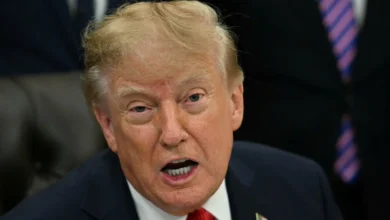
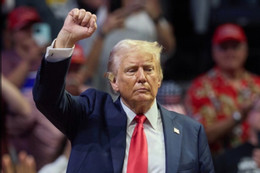
- October 23–24: Rhetoric from Washington intensified rapidly. President Donald Trump warned that the United States could execute an additional "massive strike" campaign against Iranian targets unless Tehran agreed to comprehensive renegotiations regarding its nuclear program and regional influence.
- October 24: Adding fuel to the fire, US Ambassador to Turkey Tom Barrack publicly cautioned that Washington remained fully prepared to reactivate military campaigns against Iran "as early as this weekend," signaling that inter-governmental communications had broken down completely and military options were actively being weighed. Simultaneously, Iranian military leadership and security apparatuses responded with their dual-track warning regarding Persian Gulf naval access and submarine cable vulnerability.
Official Responses and Strategic Posturing
The diplomatic communication between Tehran and Washington has degenerated into a public war of words characterized by ultimatums and maximalist demands. The United States maintains that its military presence in the Middle East is designed to safeguard international commerce, protect regional allies such as Israel, and deter Iranian malign influence. Washington’s official policy insists on preventing Iran from acquiring nuclear weapons capability and curtailing its ballistic missile proliferation.
Conversely, Tehran views the continuous buildup of Western military assets near its borders as an existential threat. Iranian officials consistently frame their defensive and offensive postures as legitimate countermeasures against foreign imperialism and unprovoked aggression. The insistence by the IRGC and regular armed forces that US warships must remain absent from the Persian Gulf reflects a long-standing strategic objective of pushing Western naval power out of what Tehran considers its exclusive sphere of influence.

The inclusion of Israel in Iran’s recent threats highlights the deeply interconnected nature of the regional conflict. Tehran views Israeli military actions and intelligence operations as inextricably linked with US strategy, establishing a dual-target paradigm where any hostile move by either nation will elicit a symmetrical or asymmetrical response from the Iranian armed forces.
Broader Impact and Global Implications
The convergence of threats involving naval blockades in the Strait of Hormuz and potential sabotage of submarine communication cables carries profound implications for global security and economic stability.
First, the Strait of Hormuz is one of the world’s most critical energy chokepoints, through which a significant percentage of the globe’s petroleum passes daily. Any genuine attempt by Iran to enforce a total ban on US naval vessels or to disrupt commercial shipping through this narrow waterway would inevitably trigger a major military conflict, causing immediate and catastrophic spikes in international oil prices and threatening global economic recovery.
Second, the explicit threat to underwater data cables introduces a novel dimension of hybrid warfare. Modern economies rely almost exclusively on submarine fiber-optic cables for high-frequency trading, secure government communications, and general internet traffic. A coordinated attack on these subterranean or undersea links would cause widespread digital blackouts, disrupting financial markets and crippling logistics networks across multiple continents.
As the weekend approaches amid warnings from American diplomats and defiant declarations from Iranian military commanders, the international community watches with bated breath. With neither side willing to project weakness or make preemptive concessions, the margin for diplomatic error has vanished, leaving the Persian Gulf on a knife-edge between deterrence and open warfare.