Can grandchildren inherit property if their parents pass away before their grandparents in Vietnam

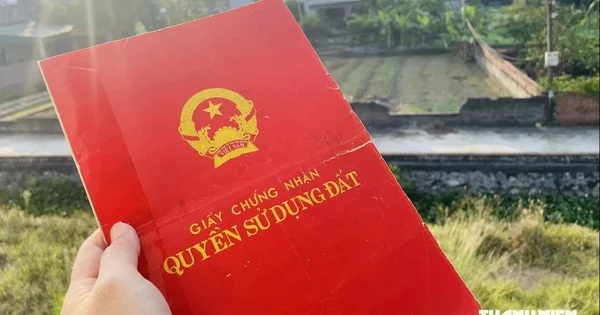
When a grandparent passes away without leaving a valid will, the distribution of their estate—particularly real estate—often becomes a source of confusion among surviving family members. A common misconception is that if a child (the direct heir) predeceases their parents, the grandchildren are automatically excluded from the succession process. However, the Civil Code of Vietnam provides specific mechanisms, such as "inheritance by substitution," to ensure that the rights of grandchildren are protected in these scenarios. This legal framework serves to maintain family equity and prevent the unintended loss of assets for the next generation.
Legal Foundations of Inheritance in Vietnam
In the absence of a legally recognized will, or when a will is deemed invalid, the estate must be distributed according to the law of intestate succession as defined by the 2015 Civil Code of Vietnam. Under Article 649, legal inheritance is governed by a strict order of priority, ensuring that assets are transferred to the closest living relatives.
The law categorizes heirs into specific "ranks" or classes. The first rank includes the spouse, biological and adoptive parents, and biological and adoptive children of the deceased. If no heirs from the first rank are available to inherit, the estate moves to the second rank, which includes paternal and maternal grandparents, biological siblings, and grandchildren.
However, the law acknowledges that life events, such as the premature death of a primary heir, can disrupt this orderly progression. This is where the principle of inheritance by substitution becomes critical.
Understanding Inheritance by Substitution
Inheritance by substitution (thừa kế thế vị) is a legislative safeguard designed to protect the interests of descendants when a primary heir in the first rank passes away before the testator. According to Colonel Nguyen Thai Binh, Deputy Head of the Veterans’ Association’s Legal Committee and former Deputy Director of the Criminal Investigation Department at the Ministry of National Defense, this provision is central to understanding how family assets are preserved across generations.
Under Article 652 of the Civil Code, if a child of the deceased dies before or at the same time as the parent (the grandparent), the grandchildren are entitled to the share of the estate that their parent would have inherited had they survived. This right extends further to great-grandchildren if the grandchildren also predecease the grandparent.
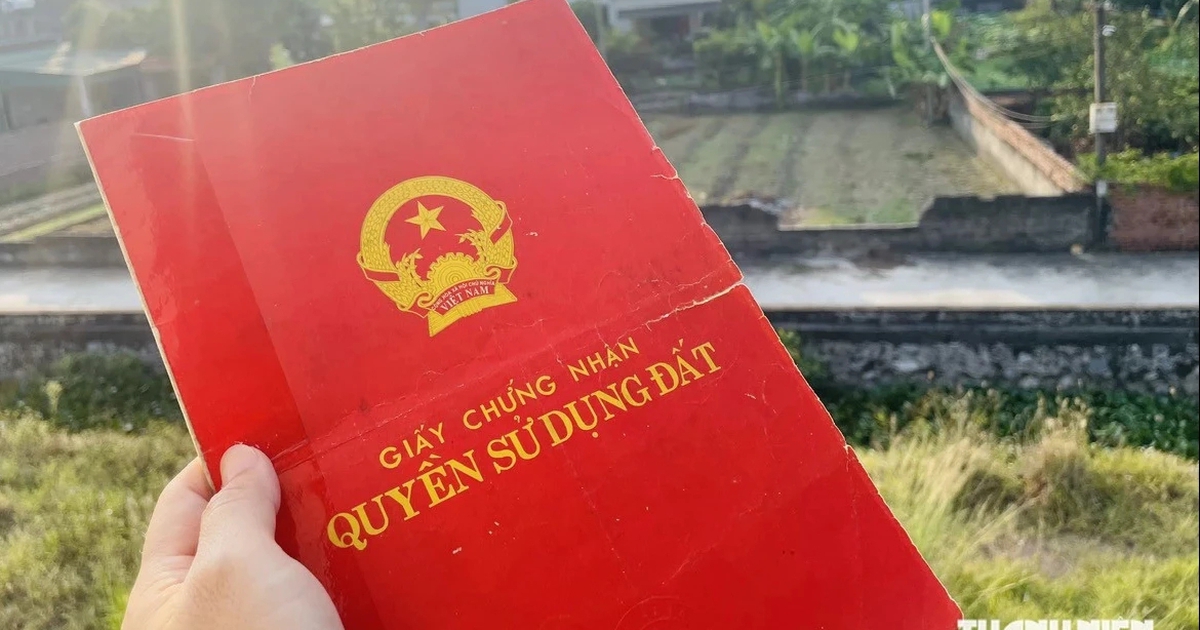
For example, if an individual named Person A has two children, B and C, and B dies before A, when A eventually passes away, B’s child (D) is legally entitled to step into B’s place. D receives the portion of the estate that B would have been entitled to, while C continues to receive their own share. This mechanism ensures that the death of a parent does not result in the total forfeiture of the family lineage’s claim to the estate.
Chronology and Triggers for Legal Succession
The transition from testamentary succession (governed by a will) to legal succession is not automatic. It is triggered by specific legal circumstances. According to Article 650 of the Civil Code, legal succession applies in the following scenarios:
- Absence of a Will: The deceased did not prepare a written or oral will before death.
- Invalid Wills: The existing will fails to meet legal requirements, such as lacking required signatures, failing to meet formal notarization standards, or being prepared under duress or while the testator lacked capacity.
- Partial Invalidation: Portions of the will are found to be invalid or contrary to law, necessitating that the affected portion be distributed via legal succession.
- Disqualification or Refusal: Designated heirs in the will may predecease the testator, be disqualified from inheriting due to legal violations, or formally renounce their right to the inheritance.
In any of these cases, the law steps in to act as the "default" instrument for distribution, ensuring that heirs are treated according to the established ranks of consanguinity.
Analyzing the Hierarchical Structure of Heirs
To fully grasp how assets are partitioned, one must look at the specific composition of the inheritance ranks defined by Article 651:
- First Rank: Spouses, biological/adoptive parents, and biological/adoptive children. These individuals have the highest priority and share the estate equally.
- Second Rank: Paternal/maternal grandparents, biological siblings, and grandchildren. These individuals only inherit if there are no surviving heirs in the first rank, or if all first-rank heirs have been disinherited, have renounced their share, or have passed away.
- Third Rank: Paternal/maternal great-grandparents, biological aunts/uncles, and great-grandchildren. These individuals follow the same rules of exclusion as the second rank.
The principle of equality is paramount: all individuals within the same rank are entitled to an equal portion of the estate. It is only when a higher rank is entirely vacant that the next rank is eligible to receive the inheritance.
Complex Family Dynamics: Stepchildren and Spouses
The legal system also accounts for non-traditional family structures to ensure fairness. Under Article 653, adopted children and adoptive parents are treated the same as biological relatives regarding inheritance rights.
Furthermore, Articles 654 and 655 address unique scenarios involving step-relationships and marital status:
- Stepparents and Stepchildren: If a relationship involving care and upbringing exists that mirrors a natural parent-child bond, the law allows for inheritance rights, even in the absence of biological ties.
- Pending Divorces: A critical clarification for many families is the status of spouses during divorce proceedings. If a couple has not received a final, legally effective court judgment or decision granting a divorce at the time of death, the surviving spouse retains their full rights as an heir. This remains true even if the couple has already divided their assets while living apart.
- Remarriage: A surviving spouse who enters into a new marriage after the death of their partner does not lose their right to inherit from the deceased spouse’s estate. The right to inherit is fixed at the moment of the testator’s death.
Broader Implications and Socio-Legal Impact
The complexity of these laws often leads to protracted disputes within families, particularly when high-value real estate is involved. Legal experts observe that many disputes arise not from a lack of clarity in the law, but from a lack of communication between family members.
"The law provides a safety net," notes Colonel Binh. "However, the most effective way to avoid fragmentation of property and family discord is through proactive estate planning."
The implications of these rules are significant for urban development and land management in Vietnam. As property values rise, the legal certainty provided by the Civil Code becomes an essential tool for preventing homelessness and ensuring that the elderly or surviving dependents are not left without support.
For the average citizen, the takeaway is clear: while the law of substitution provides a necessary fallback to protect grandchildren and other descendants, it is not a substitute for a clear, legally sound will. Estate planning reduces the burden on the judicial system and minimizes the emotional and financial toll on families. In cases where a will does not exist, understanding these ranks and the rights of substitution is the first step toward a peaceful and equitable settlement of family assets.
Ultimately, the law seeks to balance the autonomy of the individual—through the freedom to bequeath—with the societal need to support the family unit through structured, transparent, and equitable inheritance laws. Whether through the direct distribution of the first rank or the protective mechanism of substitution, the goal remains the preservation of family integrity and the orderly transfer of wealth.
Related posts: