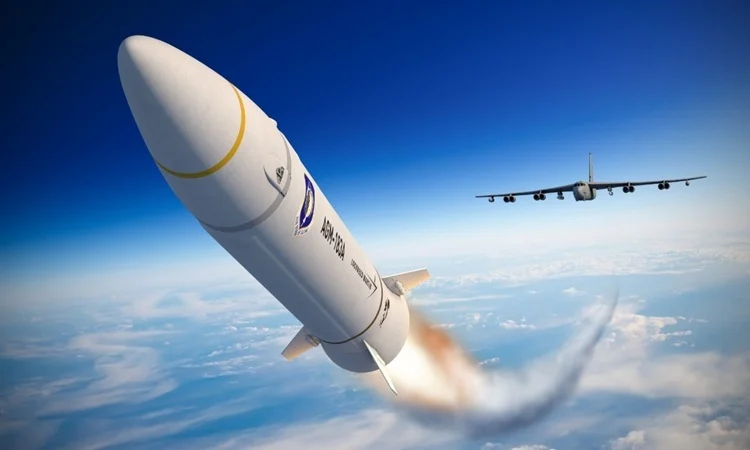
The development of hypersonic missile technology has ushered in a new era of global defense competition, characterized by the unprecedented challenge of mastering extreme thermal environments. Operating at speeds exceeding Mach 5—approximately 6,174 kilometers per hour—these vehicles are subjected to intense aerodynamic heating that can rapidly disintegrate conventional aerospace materials. To survive, modern hypersonic systems must integrate a sophisticated suite of advanced materials, protective coatings, active cooling technologies, and optimized aerodynamic configurations.
The Physics of the Thermal Barrier
At hypersonic velocities, the air in front of the vehicle is compressed so violently that temperatures can soar beyond 1,300°C at the stagnation points—the leading edges of the nose cone and wings. According to data from industry experts at Mentis Science, the heat flux generated on the surface of a hypersonic vehicle can be three to seven times higher than the solar radiation intensity experienced on the Earth’s surface.
This environment creates a staggering thermal gradient; sensors and materials may experience temperatures ranging from -170°C to over 3,000°C within a distance of only a few centimeters. This extreme thermal loading not only induces significant structural stress but also triggers chemical degradation, often leading to the rapid melting of traditional metallic airframes. Engineers are tasked with the "trilemma" of hypersonic design: maintaining structural integrity under immense heat, managing aerodynamic efficiency, and protecting sensitive internal guidance and propulsion systems.
Evolution of Hypersonic Propulsion and Design
The pursuit of hypersonic flight is not a recent endeavor, but it has accelerated significantly in the last decade. Historically, projects like the X-15 rocket plane in the 1960s laid the groundwork for high-speed flight, but modern missiles, such as the AGM-183A Air-Launched Rapid Response Weapon (ARRW), face more sustained thermal exposure.
The timeline of hypersonic development has shifted from experimental flight testing to tactical deployment integration. In the early 2000s, focus was primarily on re-entry vehicles for ballistic missiles, which only needed to survive the descent. Today’s cruise-style hypersonic vehicles must maintain maneuverability throughout their flight path, requiring materials that can withstand continuous thermal stress rather than just a brief spike upon re-entry.
Material Science: The First Line of Defense
Conventional aerospace alloys, including various aluminum and titanium mixtures, lose their strength and structural properties when exposed to the sustained, extreme temperatures characteristic of hypersonic flight. Consequently, researchers have pivoted toward advanced ceramic matrix composites (CMCs) and specialized refractory materials.
Carbon-Carbon (C/C) composites, created by reinforcing carbon fibers within a carbon matrix, have emerged as the industry standard. These materials can withstand temperatures nearing 1,100°C without losing their shape or structural integrity. However, they possess a critical vulnerability: when exposed to oxygen at temperatures above 500°C, they suffer from rapid oxidation, effectively causing the material to "burn away."
To mitigate this, engineers apply complex protective coatings such as silicon carbide, hafnium diboride, or zirconium diboride. These coatings act as an oxidation barrier but introduce their own engineering headaches. They are expensive, difficult to manufacture, and prone to cracking or peeling under the intense pressure and thermal expansion cycles of a hypersonic flight profile.

Disposable vs. Reusable Thermal Protection Systems
A major design trade-off exists between "ablative" and "non-ablative" thermal protection systems (TPS). Many early hypersonic designs utilize ablative shielding, a sacrificial layer that chars, melts, or erodes away, carrying heat energy with it and protecting the underlying structure. This is a proven technology, long used on space capsules returning to Earth.
However, for tactical missiles that require precise aerodynamic geometry for sustained flight, the loss of material is problematic. As the shape of the nose or wings changes due to erosion, the flight dynamics shift, making the missile unstable or less accurate. NASA and other research bodies are currently exploring non-ablative systems that use passive insulation and advanced heat sinks, though these are significantly heavier and more complex to integrate into a missile body.
Active Cooling: The Next Frontier
Beyond passive materials, some advanced designs incorporate active cooling technologies. In these systems, a coolant—often the fuel itself—is circulated through internal channels within the airframe before being injected into the engine. This process absorbs heat from the most vulnerable areas of the structure, effectively "pre-heating" the fuel for more efficient combustion while cooling the skin of the missile.
A 2026 study published in the journal Applied Thermal Engineering evaluated hybrid structures that combine ceramic insulation with active coolant channels. The research indicated that while using hydrocarbon fuels as a heat sink is promising, the system requires extremely high-pressure pumps and precise flow control to be effective. If the cooling system fails even for a fraction of a second, the localized heat buildup can lead to a catastrophic structural failure.
Broader Strategic Implications
The necessity of managing heat has profound implications for the global arms race. A nation’s ability to field a successful hypersonic weapon is inextricably linked to its domestic manufacturing capacity for advanced materials. The reliance on rare earth metals like hafnium and zirconium for protective coatings creates potential supply chain bottlenecks that national security agencies are now working to address.
Furthermore, the requirement for aerodynamic optimization means that engineers must balance the "sharpness" of the vehicle’s nose—which reduces drag—against the heat-loading consequences of a smaller leading edge. A sharper nose allows for higher speeds but concentrates heat in a smaller area, increasing the risk of structural failure. Conversely, a blunter nose dissipates heat over a wider surface but creates more drag, necessitating more powerful (and larger) propulsion systems.
Future Research and Development
Looking ahead, the focus of the international scientific community is on "smart" materials that can heal their own thermal cracks or adapt their emissivity to radiate heat away more effectively. There is also an ongoing push to standardize the testing of these materials in ground-based plasma wind tunnels, which simulate the extreme conditions of hypersonic flight without the cost and risk of a full-scale test launch.
As the industry matures, the integration of AI-driven design tools is expected to play a larger role. Computational Fluid Dynamics (CFD) models are now being used to simulate millions of flight scenarios, allowing engineers to predict exactly where a protective coating might fail and reinforcing those areas before the vehicle is ever built.
Ultimately, the mastery of the thermal environment remains the defining bottleneck for hypersonic technology. Whether through breakthroughs in material durability, more efficient active cooling, or novel aerodynamic shaping, the nation that solves these complex physics problems most effectively will hold a distinct tactical advantage in the high-stakes environment of modern, long-range defense. The journey from the early experiments of the 20th century to the sophisticated, maneuverable missiles of the 2020s has been a testament to human ingenuity in the face of the most extreme physical constraints known to modern engineering.