Dien May Xanh Shifts Strategic Focus from Domestic Expansion to Operational Efficiency and Indonesian Growth

The retail landscape in Southeast Asia is undergoing a profound structural transformation, and at the forefront of this evolution is Vietnam’s premier electronics retailer, Dien May Xanh. Following more than two decades of aggressive physical expansion that cemented its footprint across 34 provinces and cities nationwide, the company has officially signaled a definitive pivot in its corporate strategy. Moving away from a growth model historically anchored in the relentless opening of new brick-and-mortar storefronts, Dien May Xanh is entering a mature phase defined by operational optimization, technological integration, and targeted international expansion.
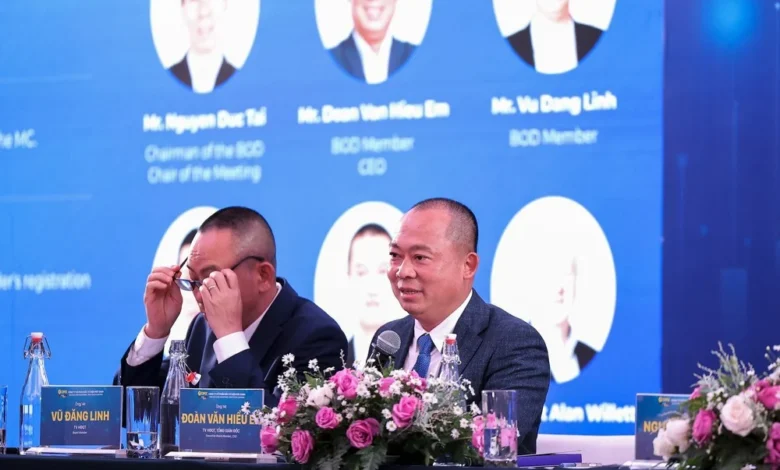
This strategic recalibration was formally unveiled by Doan Van Hieu Em, Member of the Board of Directors and Chief Executive Officer of Dien May Xanh Investment Joint Stock Company (a subsidiary of Mobile World Investment Corporation, stock code: DMX), during an extraordinary general meeting of shareholders on October 29. The announcement marks a critical inflection point for a retail giant that has long been synonymous with ubiquitous neighborhood superstores, signaling that the company’s leadership is prioritizing sustainable profitability, margin enhancement, and next-generation retail concepts over mere scale.
From Quantity to Quality: A Paradigm Shift in Domestic Retail
For years, the narrative of Dien May Xanh’s success was inextricably linked to spatial saturation. The company raced to capture market share by blanketing urban and rural areas with physical outlets, becoming a household name for consumer electronics and information and communication technology (ICT) products. However, with the domestic market now largely mature and densely covered, executive leadership has recognized that continuing to open new stores in Vietnam yields diminishing marginal returns.
"Over the next five years, specifically for the Dien May Xanh chain in the Vietnamese market, we will certainly not expand the number of stores," Mr. Hieu Em stated during the briefing. "If any, our focus is strictly limited to securing new real estate locations strictly for replacement purposes—repairing, patching, and replacing underperforming or expiring leases."
This "shift from quantity to quality" does not imply stagnation, but rather a deepening of operational focus. By capping its domestic store count, Dien May Xanh is alleviating the heavy capital expenditure and administrative burdens associated with launching dozens of new locations each month. Instead, management is channeling its energy and financial resources into maximizing the efficiency of its existing retail network, optimizing supply chain logistics, and enhancing the productivity of every square meter of retail space.
Financial Resilience and Ambitious Long-Term Targets
The fruits of this strategic pivot are already evident in the company’s financial performance. During the extraordinary shareholder meeting, leadership presented financial results for the first nine months of the year that significantly outperformed market expectations, validating the new business model.

Dien May Xanh reported a robust year-on-year revenue increase of approximately 30%, successfully completing 81% of its annual revenue plan. Even more striking was the bottom-line growth: after-tax profit for the nine-month period reached VND 7,701 billion, comfortably surpassing the full-year target of VND 7,350 billion. Bolstered by this momentum, corporate leadership has set an ambitious post-tax profit target of VND 10,500 billion for fiscal year 2026, representing an 83% surge compared to the previous year.
Looking even further ahead, the company has cast its vision toward 2030, aiming to double its revenue and triple its after-tax profit. According to internal analyses presented by the board, this aggressive long-term trajectory is entirely feasible precisely because capital will no longer be diverted toward aggressive store acquisition.
Instead, the enterprise is capitalizing on structural cost efficiencies. Mr. Hieu Em highlighted the company’s innovative approach to cost management, noting a systemic effort to convert traditional fixed costs into variable costs. For instance, commercial lease agreements have been restructured to align directly with individual store performance. If a retail location is forced to temporarily close for 15 to 20 days due to municipal road construction or infrastructure upgrades, landlords now share the operational burden, tying rental expenses directly to actual realized revenue.
Furthermore, Vu Dang Linh, a member of the Board of Directors, pointed out that while revenue has climbed dramatically, the operational overhead and corporate headcount have remained remarkably stable. This dynamic has driven labor productivity to unprecedented highs. Simultaneously, depreciation expenses across long-established stores are tapering off because the company is no longer continuously outfitting waves of brand-new outlets. Together, these operational adjustments have structurally improved the ratio of operating expenses to revenue, fortifying profit margins.
Dissecting Market Growth: Beyond Inflation and Price Hikes
A key topic of discussion during the shareholder assembly centered on the underlying drivers of the company’s 30% revenue growth, specifically parsing out how much of this expansion stemmed from rising retail prices versus actual sales volume.
Addressing shareholder inquiries, management referenced broader macroeconomic data for the retail services sector during the first nine months of the year. While the wider retail sector experienced a total value growth of approximately 13.4%—driven by an 8% increase in sales volume—the ICT and consumer electronics sector exhibited distinct characteristics. Within this specific vertical, physical sales volumes grew by a modest 5%, while total transaction value expanded by roughly 20%.
When isolating Dien May Xanh’s contribution, the market’s overall physical sales volume remained relatively flat, while the company’s average transaction value grew by about 5%. While product selling prices did experience some upward pressure, Mr. Hieu Em emphasized that the primary beneficiary of margin health was not opportunistic price gouging, but rather disciplined inventory management. The company successfully procured large volumes of stock at pre-inflation cost baselines before broader market price adjustments took effect.

A more profound driver of transaction value, however, has been the strategic deployment of consumer financial solutions. Dien May Xanh has systematically evolved from a traditional physical goods merchant into an integrated provider of financial services and lifecycle support.
"If a customer initially walks in intending to purchase a product valued at VND 5 to 7 million, our comprehensive suite of financial solutions enables them to acquire a product worth VND 15 to 20 million," Mr. Hieu Em explained, providing a concrete example of how financing bridges the gap between consumer desire and purchasing power. By embedding financial partnerships, extended warranties, and post-purchase maintenance into the retail journey, the company captures higher-value transactions without relying solely on macroeconomic inflation.
Concurrently, the digital and online sales channels have received renewed institutional focus. Having built a dominant physical infrastructure over the past two decades, Dien May Xanh is now leveraging its omnichannel capabilities to capture traffic that originates digitally but converts either online or via localized fulfillment hubs.
International Expansion: The Indonesian Frontier
While the domestic market in Vietnam enters a phase of intensive consolidation and qualitative enhancement, Dien May Xanh’s geographic expansion ambitions are pivoting decisively toward international waters. The board of directors has identified Indonesia as the primary canvas for future physical retail growth.
EraBlue, the joint-venture consumer electronics retail chain operating in Indonesia, has been formally designated as a core growth engine for the upcoming five-year strategic cycle. Having tested the operational waters, localized supply chains, and consumer preferences in Southeast Asia’s most populous nation, management is prepared to accelerate store rollouts across Indonesian urban centers. This cross-border expansion allows the parent company to replicate its proven retail playbook in a high-potential, under-penetrated market while maintaining capital discipline at home.
Pioneering New Horizons: The House of Future Initiative
In tandem with its overseas expansion, Dien May Xanh has initiated exploratory steps into retail domains it has bypassed for two decades. Most notable among these long-term ventures is the conceptual development of House of Future, an experimental ecosystem centered on artificial intelligence (AI), robotics, and smart home technology.
Management was quick to clarify that House of Future is not a traditional retail store designed for fast-moving inventory turnover. Rather, executive leadership envisions the model as a living technological laboratory or "showcase home." The physical space will be structured into functional residential zones where consumers can interact directly with cutting-edge AI assistants, household robotics, integrated smart home automation, and emerging tech prototypes.

"The primary objective is for customers to experience advanced technology firsthand, rather than engaging in immediate commercial transactions within the space," Mr. Hieu Em noted.
Through this immersive environment, Dien May Xanh aims to gauge authentic consumer demand, study adoption barriers, and curate innovative product categories before introducing them to the mainstream retail network. The company has intentionally refrained from setting near-term revenue or profitability targets for the House of Future initiative. Instead, leadership views the project as an essential R&D investment designed to incubate an entirely new retail sector in Vietnam over the next decade.
Conclusion: A Mature Retailer for a New Era
The strategic pivot executed by Dien May Xanh encapsulates a masterclass in corporate adaptability. By transitioning its domestic network from a volume-driven growth model to a margin-focused, efficiency-obsessed operating structure, the company has successfully protected its profitability against macroeconomic headwinds.
Simultaneously, by channeling capital expenditure into overseas expansion through EraBlue in Indonesia and planting exploratory technological seeds via initiatives like House of Future, Dien May Xanh has positioned itself for sustainable, diversified growth through 2030 and beyond. For Vietnam’s retail sector, this transition marks the maturation of a homegrown enterprise capable of balancing rigorous domestic cash generation with forward-looking international and technological innovation.
Related posts: