From Corporate Hustle to Coastal Serenity: Inside Runner-Up Diem Chau’s Life-Changing Relocation to Da Nang With Her Five Children


Runner-up Diem Chau’s decision to relocate from Ho Chi Minh City to Da Nang with her five children has marked a profound transformation in her lifestyle, balancing a significant drop in corporate revenue with a deeply fulfilling family-centric routine. Although her initial business income plummeted by 50% to 60%, the former beauty queen traded the hectic metropolitan rat race for a slower, more deliberate existence centered entirely around her children’s upbringing, well-being, and daily engagement.
Financial Realignment and the Pursuit of Simple Living

The transition required a fundamental financial and operational recalibration. In her latest routines, Diem Chau starts her mornings early at local markets, sourcing fresh marine produce, including prawns, clams, mud crabs, squid, pork, and local fish, alongside freshly harvested green vegetables. Her daily grocery expenditure hovers around 5 million VND, a budget carefully allocated to provision the family while she spends a large portion of her day preparing, sorting, and preserving fresh ingredients for daily meals.
Reflecting on her previous life in Ho Chi Minh City, the runner-up noted the stark contrast. Formerly, she would leave for work early while her children were still asleep and return late at night after they had already gone to bed, occasionally missing meaningful contact for weeks at a time. Even when at home, her demanding schedule left her little more than fleeting moments to check on schoolwork, leaving her uncertain whether her guidance resonated.
Realizing that continuous accumulation of wealth held little purpose if it meant neglecting her primary responsibility toward her children, Chau evaluated her core priorities. "The ultimate goal of earning money is to care for the children. If we abandon them and fail to support their education, what is the point of working?" she stated, explaining the driving philosophy behind her relocation to Da Nang, a city she selected specifically for its high-quality educational institutions and natural environment.

A Chronology of Upheaval and Adaptation
The journey to stability in Da Nang was gradual and fraught with logistical hurdles. Initially arriving in the coastal city in July 2025, Chau and her family first rented an 80-square-meter apartment for 13 million VND per month. They subsequently moved to a townhouse located in the urban center before finally settling into a sprawling 450-square-meter villa in a high-end southern residential enclave by June 2026.
This spacious residence, featuring four bedrooms, a yard, and a swimming pool, blends tropical modern architecture with rustic and Scandinavian design elements. While the home came fully furnished with wooden interiors, Chau supplemented the furnishings with necessary bedding. The children occupy three smaller bedrooms, while the primary suite is designated for Chau and visiting family members, including her mother, who frequently travels from afar to visit.

Managing properties across regions introduced significant financial juggling. Unable to immediately sell her 210-square-meter penthouse in Phu My Hung, Ho Chi Minh City, Chau opted to lease it out. The rental income from the Ho Chi Minh City property directly covers the lease for the expansive Da Nang villa, creating a sustainable financial loop that maintains her asset portfolio while funding her family’s current lifestyle.
Impact on Business and Digital Content Creation
The relocation initially sent shockwaves through Chau’s professional operations. Managing business ventures remotely while simultaneously restructuring her personal life and caring for five children proved challenging, leading to an immediate 50% to 60% contraction in business revenues.

However, Chau compensated for the commercial shortfall by expanding her digital footprint. She began documenting her daily domestic routines, local market visits, and culinary explorations on social media platforms. Her content—featuring seaside excursions, gardening, and local travel—resonated with online audiences, transforming her personal narrative into a viable channel for online retail and affiliate marketing streams. This diversification not only supplemented her household income but also established her presence within local culinary and tourism promotion networks.
Educational Realignment and Family Dynamics
The relocation strategy extended to her children’s education as well. In a strategic maneuver, Chau recently relocated one of her children back to Ho Chi Minh City to attend a specific institution renowned for its comprehensive approach to physical, psychological, intellectual, and cognitive development. Despite initial concerns regarding the transition, the child successfully integrated into the new academic environment, establishing peer connections and reducing reliance on electronic devices.
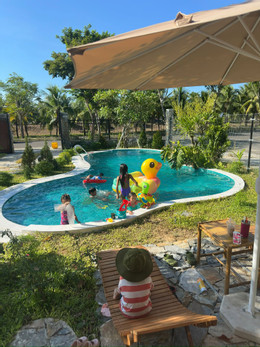
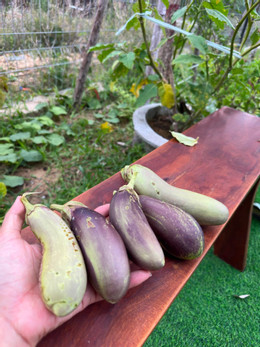
Meanwhile, the children residing with her in Da Nang experience an outdoor-oriented upbringing. Daily routines frequently involve swimming, river wading, boating, and athletic activities, complemented by home gardening where the family cultivates vegetables and herbs. According to Chau, the children spend their weekdays focused on home-cooked meals and schoolwork, occasionally venturing out to explore local dining establishments and contribute to her regional culinary content creation.
Broader Socio-Economic Implications of Metropolitan Exodus
Diem Chau’s relocation mirrors a broader post-pandemic socioeconomic trend observed among urban professionals and public figures in Vietnam, who are increasingly trading high-stress metropolitan centers for secondary coastal cities like Da Nang, Nha Trang, and Quy Nhon. This movement is driven by a desire for improved air quality, reduced living density, and enhanced work-life integration.
Urban analysts note that while such geographic shifts often entail short-term financial sacrifices—exemplified by Chau’s initial 50% drop in revenue—they frequently yield long-term psychological and health benefits. The availability of robust digital infrastructure allows modern entrepreneurs to decentralize their operations, proving that high-revenue generation is no longer strictly tethered to central business districts like Ho Chi Minh City or Hanoi. Furthermore, the rise of regional content creation provides a financial cushion for families seeking alternative lifestyles, transforming personal relocation narratives into marketable media assets.
Looking ahead, Chau remains steadfast in her decision. Observing her children thriving, tanned, and physically robust after more than a year in Da Nang, she considers the initial risks fully justified, validating a lifestyle pivot that prioritizes long-term familial well-being over unyielding urban accumulation.