Prime Minister Pham Minh Chinh Urges Private Sector Breakthrough at High-Level Government Meeting on National Economic Development


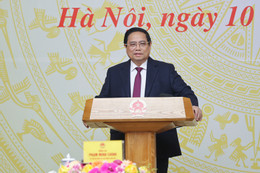
The landscape of Vietnam’s economic strategy is undergoing a profound transformation, anchored by private sector dynamism and cutting-edge technological integration. On the morning of February 10, Prime Minister Pham Minh Chinh presided over a pivotal high-level meeting in Hanoi, bringing together key government officials and leading private enterprise executives. The primary agenda focused on formulating comprehensive tasks and decisive solutions to empower private businesses to accelerate, achieve breakthroughs, and significantly contribute to rapid and sustainable national development in a newly emerging geopolitical and economic era.
Amidst global economic uncertainties and shifting technological paradigms, the Vietnamese government has signaled a resolute commitment to fostering an enabling environment for private corporations. The dialogue underscored the indispensable role of the private sector not merely as a participant in market dynamics, but as a core engine driving national competitiveness, innovation-led growth, and integration into global value chains.
Setting the Stage: High-Level Dialogue and Government-Private Partnership
The high-level gathering convened against the backdrop of Vietnam’s ongoing post-pandemic economic recovery and strategic pivot toward advanced industries. Opening the conference, Prime Minister Pham Minh Chinh articulated a clear and appreciative acknowledgment of the private sector’s contributions to the nation’s socio-economic resilience. He emphasized that Vietnam’s recent achievements—ranging from navigating the disruptions of the COVID-19 pandemic to stabilizing macroeconomic indicators amidst global headwinds—were inextricably linked to the dedication and active participation of the business community, particularly large-scale domestic enterprises.
Recognizing the hurdles faced by enterprises, the Prime Minister conveyed a deep sense of governmental empathy and solidarity. He reiterated that the administration remains steadfast in its commitment to accompanying businesses through operational challenges. In a particularly striking metaphor, Prime Minister Chinh described institutional and regulatory bottlenecks as both the "bottlenecks of bottlenecks" and the "breakthroughs of breakthroughs," signaling an urgent administrative resolve to untangle regulatory red tape and streamline bureaucratic procedures that hinder corporate momentum.
The meeting served as an open forum for captains of industry to voice strategic visions, present structural bottlenecks, and propose actionable policy reforms. Among the prominent corporate leaders addressing the forum were FPT Corporation Chairman Truong Gia Binh and CMC Corporation Chairman Nguyen Trung Chinh, both of whom offered profound insights into digital transformation, artificial intelligence (AI), and national strategic infrastructure.

The Imperative of Technological Sovereignty and AI Democratization
A central theme of the discussions was the urgent necessity to harness science, technology, and artificial intelligence (AI) as primary catalysts for national advancement. FPT Corporation Chairman Truong Gia Binh captured the palpable sense of national aspiration, declaring that Vietnam stands on the threshold of a historic era with the potential to emerge as a leading progressive nation on the global stage.
Drawing historical parallels to periods of immense national hardship, Mr. Binh invoked the legacy of President Ho Chi Minh, who famously championed the "eradication of illiteracy" (bình dân học vụ) during the nascent years of the revolutionary government when the state was weak and resource-constrained. Applying this philosophy to the contemporary digital landscape, the FPT Chairman proposed the "democratization of AI" (bình dân hóa AI).
Mr. Binh pointed to recent global technological milestones, notably the emergence of advanced, cost-effective AI models such as DeepSeek, which have democratized access to artificial intelligence capabilities, enabling small and medium-sized enterprises (SMEs) to adopt and leverage advanced computational tools previously restricted to tech giants. He forcefully argued that Vietnam cannot afford to lag behind in the current technological revolution and must immediately unlock its scientific and technological potential.
To achieve this, Mr. Binh put forward a bold and direct proposal: the rapid integration of artificial intelligence into the educational curricula across all levels of schooling, beginning as early as the first grade. He emphasized that while private enterprises are ready to act as direct implementers of these educational technologies, decisive state leadership is indispensable to positioning Vietnam as a globally recognized AI-driven nation.
Resolution 57 as a Strategic Roadmap for National Elevation
Complementing the discourse on artificial intelligence, CMC Corporation Chairman Nguyen Trung Chinh brought critical attention to the alignment between scientific research, technological application, and market dynamics. Mr. Chinh highlighted long-standing structural inefficiencies where scientific research has historically remained decoupled from technological execution, and technology has functioned independently of market and enterprise demands. He expressed strong optimism that the impending administrative consolidation between the Ministry of Science and Technology and the Ministry of Information and Communications will effectively resolve these systemic disconnects.
A focal point of Mr. Chinh’s address was the strategic significance of Resolution 57, which he characterized as an essential blueprint designed to propel Vietnam toward a higher trajectory of development.
"Resolution 57 has been formulated as a strategic roadmap that we firmly believe will help the country soar and achieve even more robust development," Mr. Chinh stated. He recalled CMC’s strategic declaration in 2024 regarding its pivot toward artificial intelligence, noting that the corporation had formally advised the government to capitalize on AI as a core national competency and technological capability that the Vietnamese people can utilize to build a prosperous nation.
Reinforcing this international outlook, Mr. Chinh shared insights from the recent World Economic Forum (WEF) annual meeting in Davos, Switzerland, held in January 2025. He proposed the establishment of a permanent "Viet House" at Davos during future forums, enabling Vietnamese technology corporations to showcase innovative ideas and technological solutions to the global community on a continuous basis.
National Missions and Corporate Proposals: Infrastructure and Human Capital
During the high-level dialogue, CMC Corporation accepted two major national strategic missions. The first involves the construction of a hyperscale data center infrastructure designed to support not only Vietnam’s domestic digital economy but also the wider regional market. With a planned investment scale of up to 80 megawatts (MW)—representing nearly double Vietnam’s current total operational capacity of approximately 50 MW—this infrastructure project addresses a foundational bottleneck in the nation’s digital transition.
The second mission entails the evolution of C.OpenAI. Originally launched by CMC in 2017, the initiative has transitioned into developing core artificial intelligence capabilities tailored by Vietnamese intellect for domestic utilization.
To successfully execute these ambitious national mandates, Chairman Nguyen Trung Chinh submitted three specific policy recommendations to the government:
- Institutional Accountability and Streamlined Timelines: The government must complete its regulatory framework by establishing binding Key Performance Indicators (KPIs) for ministries, sectors, and local authorities, mandating explicit timeframes for administrative processing and dispute resolution concerning enterprise projects.
- Concessional Financing for Infrastructure Investments: Over the next five years, CMC plans to invest between $700 million and $1 billion in digital and technological infrastructure. The corporation requested targeted financial assistance, specifically advocating for preferential loan policies with subsidized interest rates over a 10-year period to mitigate capital constraints.
- Flexible Regulatory Frameworks for Educational Expansion: Addressing human resource development, CMC sought to establish university branch campuses across various localities. However, current regulations mandating a minimum campus footprint of two hectares present significant logistical barriers in dense urban centers such as Hanoi, Da Nang, and Ho Chi Minh City. Mr. Chinh noted that modern multi-story facilities, such as CMC’s existing 10,000-square-meter building, can adequately accommodate thousands of AI students, and urged regulatory flexibility to accelerate educational deployment without compromising academic standards.
Government Concluding Remarks and Eight Strategic Directives
In his concluding address at the conference, Prime Minister Pham Minh Chinh reaffirmed the fundamental tenets of Vietnam’s economic model, reiterating that the private economic sector serves as a crucial driving force for economic development and an indispensable pillar of the socialist-oriented market economy.

Expressing profound admiration, pride, and unwavering confidence in the capabilities and future trajectory of Vietnam’s business community and entrepreneurial class, the Prime Minister outlined eight strategic expectations and directives for the private sector:
- Pioneering Innovation and Digital Transformation: Lead the charge in innovation, digital and green transformation, and the proactive research, development, and application of science and technology.
- Contributing to Strategic Breakthroughs: Provide substantive and effective contributions to the nation’s three strategic breakthroughs: institutional refinement, infrastructure development, and human resource enhancement.
- Accelerating Growth Momentum: Generate robust economic momentum to achieve rapid, comprehensive, inclusive, and sustainable national development.
- Diversifying Economic Models: Actively promote the digital economy, green economy, circular economy, sharing economy, knowledge economy, and creative economy.
- Enhancing Social Responsibility: Take an active role in ensuring social security, with particular emphasis on national initiatives to eradicate temporary and dilapidated housing and construct social housing units for industrial workers.
- Integrating into Global Value Chains: Incorporate an increasing number of domestic enterprises into global production, supply, and value chains, thereby elevating national brand equity and international competitiveness.
- Strengthening Public-Private Collaboration: Maintain open, constructive, and transparent communication channels with state regulatory bodies to continuously identify and resolve operational impediments.
- Upholding National Sovereignty and Ethics: Maintain high standards of corporate governance, business ethics, environmental stewardship, and compliance with national laws to ensure long-term, reputable growth.
Analytical Implications and Future Outlook
The strategic dialogue between the government and private sector leaders underscores a decisive turning point in Vietnam’s economic policy framework. By directly addressing structural bottlenecks—ranging from regulatory sluggishness and financing constraints to educational infrastructure requirements—the administration has signaled a pragmatic approach to governance.
The convergence of state backing and private sector agility in high-tech domains such as artificial intelligence, cloud computing, and advanced infrastructure reflects a synchronized national effort to escape the middle-income trap. As Resolution 57 begins to permeate legislative and administrative frameworks, the successful execution of these public-private partnerships will likely determine whether Vietnam can effectively solidify its position as a formidable digital economy and technological hub in Southeast Asia and beyond.
Related posts: