The United States Navy is currently operating under intense operational strain as it strives to maintain a maritime security umbrella over the Strait of Hormuz, a critical global chokepoint. Amidst persistent threats from Iranian military forces, U.S. carrier strike groups are locked in a high-stakes, around-the-clock defensive posture designed to ensure the free flow of energy supplies to the global market. The intensity of this mission has reached a fever pitch, testing the endurance of both personnel and hardware stationed in the Middle East.
The Crucible of Operations: Life Aboard the USS George Washington
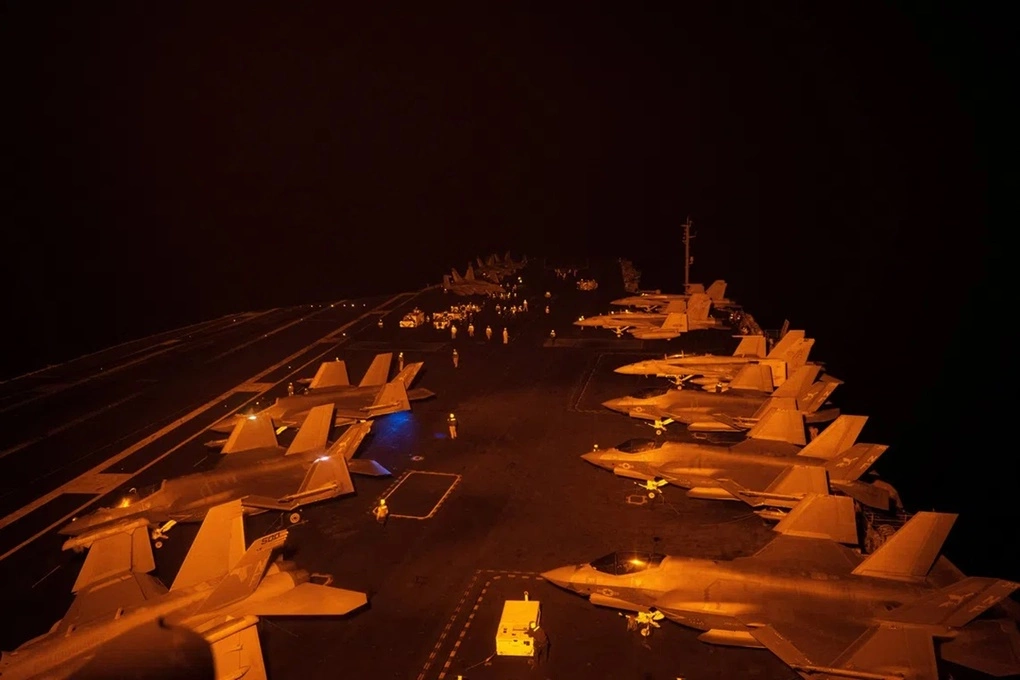
Under the cover of darkness, squadrons of F-35C Lightning II and F/A-18 Super Hornet fighter jets launch from the flight deck of the USS George Washington. Their primary directive is to serve as a mobile, high-speed deterrent against Iranian cruise missile batteries and unmanned aerial vehicles (UAVs). The deck operations are a masterclass in organized chaos, where flight crews, ordnance handlers, and aircraft maintenance teams work in synchronized, grueling cycles.
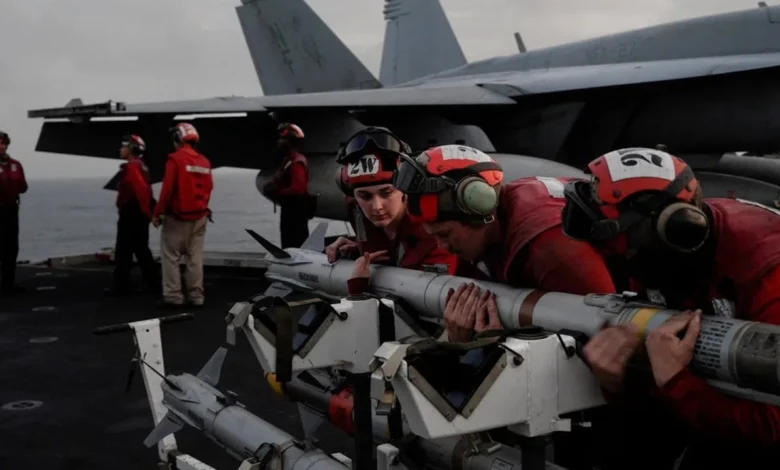
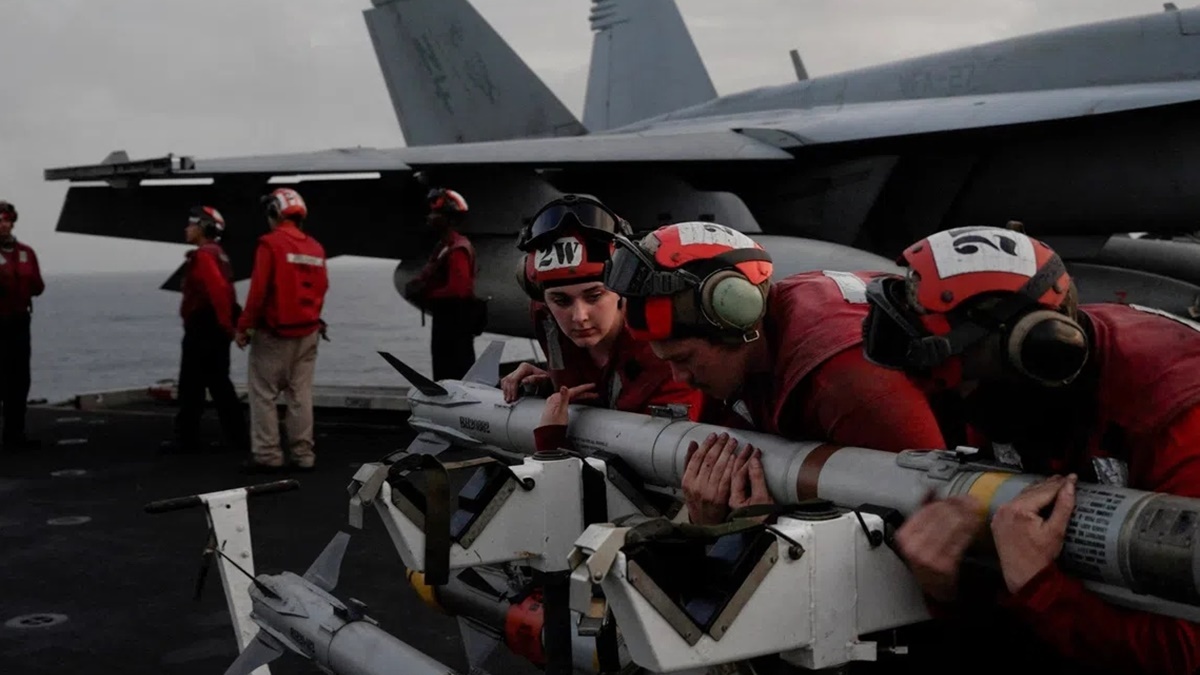
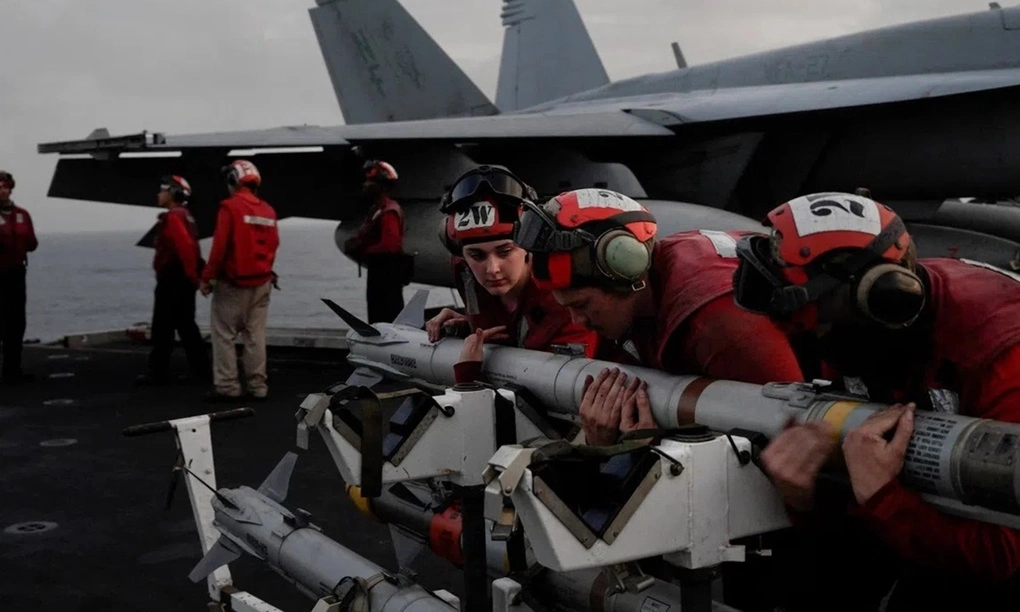
The physical and mental toll on the sailors is significant. Maintenance crews frequently work double shifts to ensure the aircraft remain airworthy, while ordnance teams scramble to reload missiles and electronic warfare pods between sorties. According to Chief Petty Officer Addie Schaefer, a technician with the ship’s maintenance division, the sheer volume of flight hours required to maintain a persistent presence significantly increases the risk of mechanical wear. "The more frequently these jets launch, the higher the likelihood of maintenance issues. It is a constant, invisible battle behind the scenes to ensure we can keep the skies clear," she remarked.
For the pilots, the environment is equally demanding. Missions over the Strait of Hormuz are described as "tightrope walks," where pilots have only seconds to react to incoming threats or rapid maneuvers by Iranian drones. One pilot noted that their unit has maintained a 100% protection record for merchant vessels in their sector, but admitted that the increasing frequency of simultaneous attacks by Iranian assets is pushing their response capabilities to the limit.
Historical Context and Strategic Importance
The Strait of Hormuz is arguably the world’s most important energy chokepoint. Approximately 20% of the world’s total oil consumption passes through this narrow passage between Iran and Oman. Historically, the U.S. has maintained a presence here to guarantee the stability of these trade routes. However, recent months have seen a sharp escalation in tensions.
In the past six months, U.S. forces have successfully escorted over 3,000 vessels through the region. This operation, while successful in volume, has been marked by a series of hostile incidents. Since August, Iran’s Islamic Revolutionary Guard Corps (IRGC) Navy has engaged in a series of aggressive posturing maneuvers, including the harassment of oil tankers and the use of "dark" vessels that attempt to bypass communication protocols.
On October 12, the IRGC claimed responsibility for an attack on a large oil tanker, alleging that the vessel was attempting to circumvent maritime security warnings and had turned off its automatic identification system (AIS). This followed a series of similar provocations that have forced the U.S. to commit additional assets, including a second carrier strike group, a guided-missile submarine, and over 10 destroyers, to the region.
The Economic and Strategic Cost of Persistence
The financial burden of this mission is substantial. According to estimates from the U.S. Congressional Budget Office, the ongoing tensions with Tehran are costing the Pentagon between $2 billion and $3 billion per month. This expenditure covers not only fuel and munitions but also the rapid depletion of critical spare parts and the maintenance of aging naval infrastructure.
The logistical strain is also affecting the deployment cycle of the fleet. Ships that were scheduled for rotation are being held on-station for extended periods, setting new records for days at sea without a port call. Rear Admiral Daryl Caudle, a senior naval commander, has acknowledged the necessity of adjusting operational plans to mitigate this stress. The Navy has established a maintenance hub at the base on Diego Garcia and is planning for more frequent port calls to allow crews to rest. "Our sailors are prepared to perform, but they need these breaks to maintain their operational effectiveness and morale," Caudle stated.
Diplomatic and Geopolitical Implications
The situation in the Middle East has become a central point of concern for the incoming administration, with President-elect Donald Trump signaling a potential for more aggressive policies toward Iran. Analysts suggest that while the U.S. is currently holding the line, the sustainability of this mission is in doubt without broader international participation.
Dana Stroul, a former deputy assistant secretary of defense for the Middle East, believes that the current cycle of conflict is a test of attrition. "The question is whether the United States or Iran has the greater capacity for endurance," Stroul argued. "The current pressure campaign, a mix of economic sanctions and maritime blockades, has not yet yielded the strategic concessions Washington desires from Tehran."

The lack of an international coalition to share the burden of escorting merchant vessels remains a critical weakness. While the United Kingdom and other allies have expressed concern, the U.S. continues to shoulder the vast majority of the risk and expense.
Future Outlook: A Race Against Attrition
As the situation evolves, military planners are looking for ways to optimize their presence. The U.S. is currently reviewing its force posture in the region, with experts like Michael O’Hanlon of the Brookings Institution suggesting that the U.S. must communicate a clear, long-term commitment. "Iran is banking on the idea that the U.S. will eventually tire of the cost and the risk," O’Hanlon said. "The only way to deter further escalation is to signal that the U.S. is prepared to stay as long as necessary, regardless of the fiscal or logistical pressure."
The "race against attrition" is not just about fuel or flight hours; it is a battle for influence. As long as oil continues to flow, the U.S. maintains a tactical victory. However, the recurring reports of fire-fights, tanker incidents, and the increasing frequency of drone interceptions indicate that the status quo is increasingly fragile.
The U.S. Navy remains the primary guarantor of maritime security in the region, but the combination of hardware degradation, personnel fatigue, and the high financial cost of maintaining such a dense combat presence poses a significant challenge. Whether through a shift in diplomatic strategy or a re-evaluation of the military footprint, the coming months will be decisive in determining the stability of the Strait of Hormuz and the future of U.S. naval operations in the Middle East.
Conclusion
The current operational tempo in the Strait of Hormuz is a testament to the resilience of the U.S. military, but it also highlights the limitations of a strategy heavily reliant on high-end naval assets in a low-intensity, high-frequency conflict zone. As the IRGC continues to test the boundaries of international maritime law, the U.S. faces the difficult task of balancing immediate security needs with the long-term sustainability of its forces. The upcoming months will likely see a recalibration of these efforts, with both Washington and Tehran watching closely to see who will be the first to blink in this high-stakes game of naval chess.