Former Director sues company for nearly 10 billion VND in performance bonuses only to be awarded 1.6 billion VND by the court


A high-stakes legal battle over executive compensation recently reached its conclusion at the Ho Chi Minh City People’s Court, shedding light on the complexities of performance-based incentives and the contractual obligations of corporations toward their departing leadership. The case, involving a former Director of Individual Customer Sales at a joint-stock company, highlights a significant discrepancy between employee expectations based on internal performance metrics and a company’s strict adherence to its internal bonus policies. Following a lengthy dispute, the appellate court ruled that the company must pay the former director approximately 1.6 billion VND in performance bonuses, a figure significantly lower than the nearly 10 billion VND originally claimed by the plaintiff.
The Genesis of the Dispute
The conflict began with the departure of Mr. D., who held the position of Director of Individual Customer Sales at a major joint-stock company. Mr. D. had entered into an indefinite labor contract with the firm on March 2, 2024. As part of his executive role, his compensation package was tied to Key Performance Indicators (KPIs), which served as the primary benchmark for annual performance evaluations and subsequent bonus allocations.
Under the company’s internal incentive structure, managers were evaluated based on their ability to meet specific financial targets, with bonuses calculated as a percentage of the total profit generated by their respective divisions. On December 20, 2023, following preliminary discussions with the General Director, the Human Resources department formally issued the KPI targets for the 2024 fiscal year.
The dispute arose when Mr. D. contended that he had successfully met the performance thresholds set for his department. Data from the company indicated that the profit for the Individual Customer Sales division for 2024 exceeded 332.57 billion VND. Based on this figure and his interpretation of the KPI achievement rate—which he calculated to be 87.2%—Mr. D. argued that he was entitled to a bonus equivalent to 3% of the division’s total profit. This led to his initial claim of approximately 9.97 billion VND in outstanding incentive payments.
Chronology of Events
The timeline of this dispute underscores a breakdown in communication regarding the finality of performance assessments.
- March 2, 2024: Mr. D. enters into an indefinite labor contract with the company.
- December 20, 2023: Human Resources formally communicates the 2024 KPI metrics.
- January 23, 2025: The HR department issues a preliminary notification stating that Mr. D.’s performance achievement for 2024 was 53.1%.
- February 4, 2025: The General Director sends an email to Mr. D. acknowledging an achievement rate of 87.2%, which the plaintiff interpreted as a formal approval of his performance.
- February 26, 2025: Mr. D. and the company mutually agree to terminate the labor contract.
- February 28, 2025: The date the company traditionally distributes annual performance bonuses.
- May 2026: The District 1 People’s Court, Ho Chi Minh City, issues a first-instance ruling, rejecting Mr. D.’s claims in their entirety.
- September 11, 2026: The Ho Chi Minh City People’s Court issues an appellate ruling, partially overturning the lower court’s decision and ordering a payment of 1.6 billion VND.
The Legal Argument: Performance vs. Policy
During the legal proceedings, the company vehemently denied the plaintiff’s claim for 10 billion VND. The defense rested on the argument that the company had no formal, signed authorization from the Board of Directors to pay such a bonus. Furthermore, the company asserted that the KPI documents and profit reports were confidential internal data and did not constitute an automatic "entitlement" or a binding contract for a specific monetary payout.
The company further cited its internal "HR015" policy, which governs bonus distribution. According to this policy, employees must meet two specific criteria to be eligible for the annual performance bonus: they must be actively employed at the time of distribution, and the bonus must be formally approved by the General Director. Because Mr. D. had signed a mutual termination agreement on February 26, 2025—just two days before the bonus payout date of February 28—the company argued he was no longer an active employee eligible for the reward.
Appellate Court Findings
The appellate court, in its final judgment, took a more nuanced view of the labor relationship. While the court acknowledged that the company had a right to manage its internal policies, it found that the termination of Mr. D.’s contract was a mutual agreement, not a unilateral resignation. Consequently, the court ruled that the company could not invoke the "active employment" clause to deny an earned bonus for the 2024 fiscal year, which had already concluded before the termination date.
However, the court also rejected the plaintiff’s reliance on the 87.2% KPI figure. During the hearing, the former General Director testified that the 87.2% figure was merely a draft result discussed during performance reviews and had never been formally ratified through the company’s internal approval processes. The court noted that there was no evidentiary trail showing that the 87.2% figure had replaced the earlier 53.1% calculation provided by the HR department in January 2025.
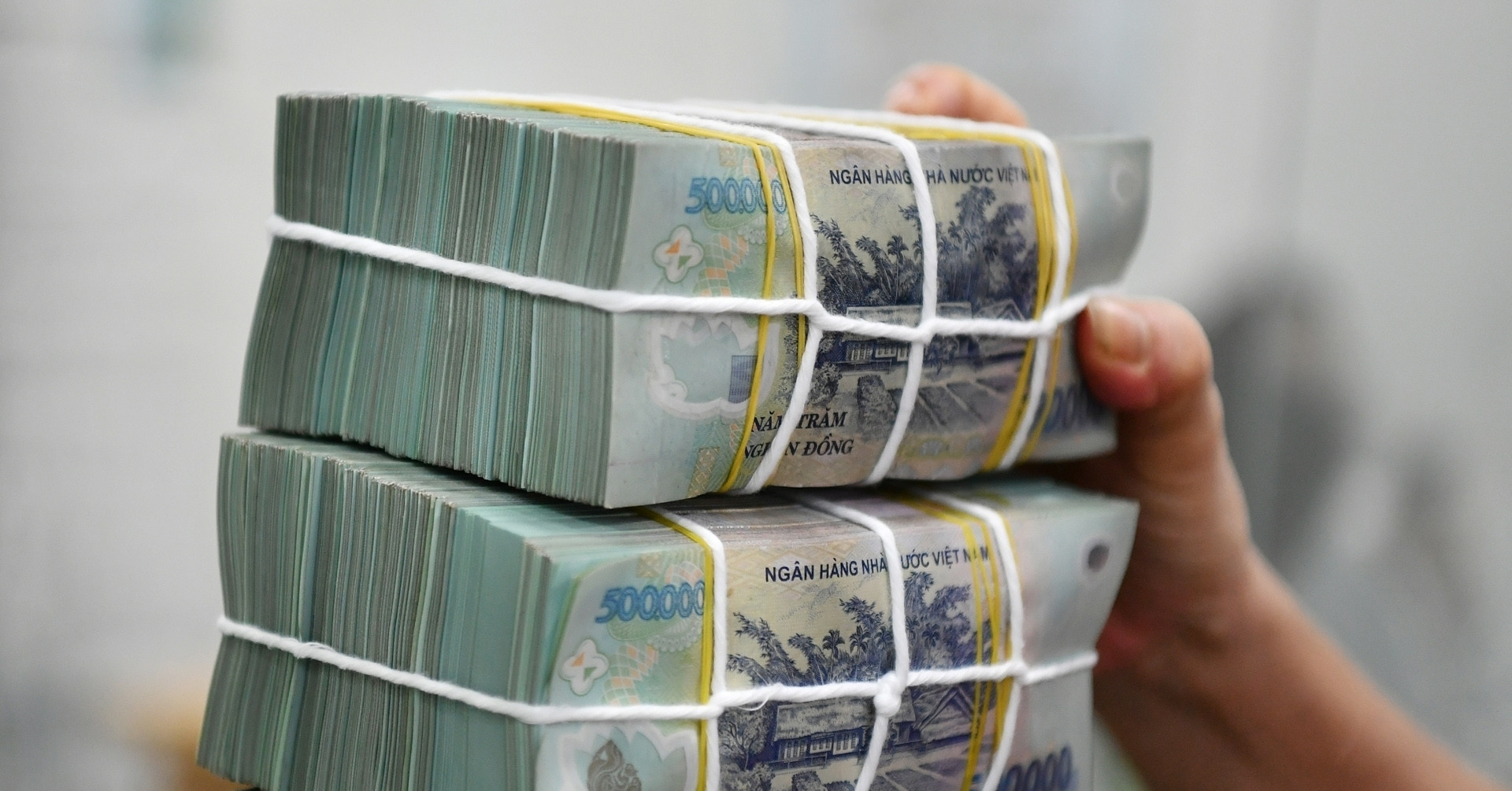
Consequently, the court determined that the 53.1% achievement rate was the only figure supported by official company documentation. Applying this lower percentage, the court calculated the appropriate bonus to be approximately 1.662 billion VND.
Implications for Corporate Governance
This case serves as a cautionary tale for both corporate employers and high-level executives regarding the importance of transparency in performance management. The dispute highlights several critical issues in contemporary labor law:
- Clarity in Incentive Contracts: Disputes often arise when "performance-based" bonuses are not clearly defined in the initial labor contract. Ambiguity regarding whether a bonus is "discretionary" or "guaranteed" upon reaching a metric often leads to protracted litigation.
- The "Active Employee" Clause: Companies often use internal policies to restrict bonuses to those currently on the payroll. While these policies are common, courts are increasingly scrutinizing them, especially in cases where an employee has contributed to a full year of profit and is let go shortly before the payout date.
- Internal Documentation Integrity: The case illustrates the danger of having multiple, conflicting "draft" performance reports. For businesses, maintaining a rigorous, auditable process for final performance sign-offs is essential to prevent legal liabilities. If a company communicates a performance metric—even in an email—it can be used as evidence in court, even if the company later claims it was "not final."
Conclusion
The ruling by the Ho Chi Minh City People’s Court clarifies that while an employee is entitled to bonuses for work performed, those entitlements must be grounded in verified, formally approved data. By awarding Mr. D. 1.6 billion VND rather than the requested 10 billion VND, the court balanced the employee’s right to compensation for his 2024 performance with the company’s right to enforce its internal performance benchmarks.
This judgment is likely to influence how companies draft their internal compensation policies moving forward, specifically regarding the need to explicitly define the conditions under which a bonus is earned versus when it is merely a discretionary reward. For employees, the case underscores the necessity of securing formal, written, and signed approval of performance outcomes before the conclusion of an employment relationship to ensure that any promised financial rewards are legally enforceable. The case remains a significant precedent for labor dispute resolutions in Vietnam’s evolving corporate landscape.