New Fuel Mandates Clash With Luxury Engineering as Mercedes-AMG G63 Breakdown Sparks E20 Ethanol Debate in India

The delicate balance between national environmental policies and the
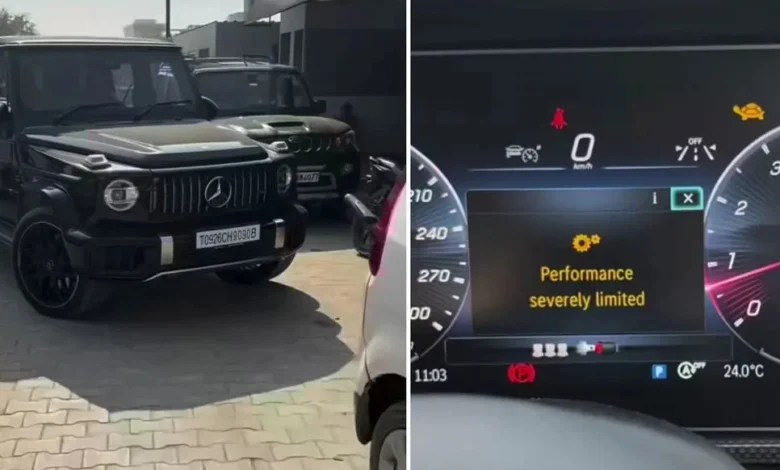
sophisticated engineering of high-performance luxury automobiles has once again been thrust into the global automotive spotlight. A recent incident involving a brand-new Mercedes-AMG G63 in India—where the high-performance sport utility vehicle suddenly suffered a catastrophic failure and was forced into emergency limp mode—has reignited an intense industry-wide debate over fuel compatibility, specifically the rapid transition toward high-ethanol fuel blends.
The episode, which quickly circulated across digital platforms via a video shared by automotive enthusiast Rattan Dhillon, highlights growing anxieties among luxury vehicle owners regarding the operational safety of using modern fuel formulations in engines meticulously calibrated for different specifications. As governments worldwide push for greener energy matrices by increasing the percentage of renewable additives in fossil fuels, the friction between regulatory mandates and automotive engineering tolerances is becoming increasingly pronounced, leaving consumers and service centers to navigate the mechanical fallout.
The Breakdown: A Luxury SUV Crippled by Fuel Concerns
According to details shared by Dhillon on the social media platform X (formerly Twitter), the ordeal began unexpectedly during a routine drive in his newly acquired Mercedes-AMG G63. The six-figure luxury powerhouse, renowned for its handcrafted biturbo V8 engine and uncompromising performance credentials, suddenly illuminated warning indicators on the dashboard and shifted abruptly into limp mode—a designated fail-safe operational state designed to protect the powertrain from catastrophic internal damage by severely restricting power output and vehicle speed.
Upon experiencing the sudden drop in performance, the owner noticed an unusual alteration in the engine’s acoustic profile before bringing the vehicle to a halt. Recognizing that continued operation could permanently damage the complex powertrain components, arrangements were made to transport the SUV directly to a specialized repair facility on a flatbed tow truck.
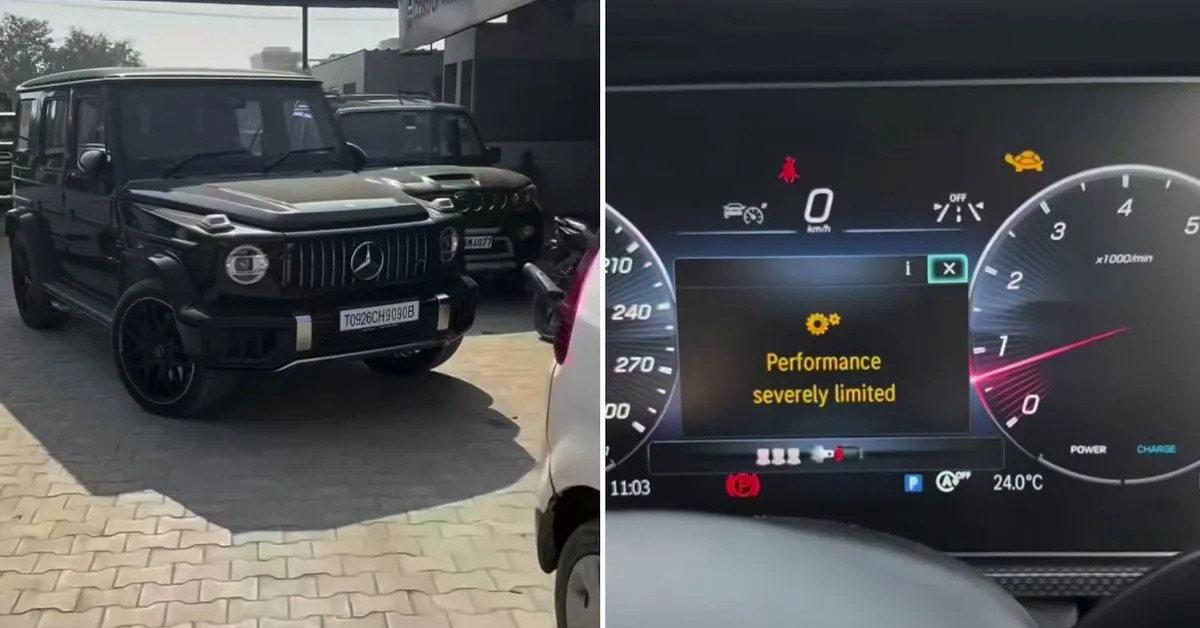
In documentation accompanying his viral video, Dhillon highlighted a critical detail printed on the inner side of the vehicle’s fuel filler cap. According to Mercedes-Benz’s factory specifications, the high-performance SUV is explicitly certified to operate on fuel blends containing up to 5 percent (E5) or 10 percent (E10) ethanol. However, the fuel pumped into the vehicle shortly before the failure occurred was XP95, a premium offering supplied by state-owned petroleum giant IndianOil. While the numerical designation "95" denotes the Research Octane Number (RON)—indicating superior knock resistance rather than the fuel’s renewable content percentage—industry reports confirm that XP95 is increasingly blended with up to 20 percent ethanol, effectively aligning its chemical composition with E20 standards.
Understanding India’s E20 Fuel Push and the XP95 Confusion
To comprehend the root of the owner’s frustration and the broader technical implications of the incident, it is essential to examine India’s evolving national energy policy. Driven by a commitment to reduce carbon emissions, decrease heavy reliance on costly crude oil imports, and support domestic agricultural sectors, the Indian government has aggressively accelerated the rollout of E20 fuel—gasoline blended with 20 percent ethanol. The roadmap originally targeted nationwide availability by 2025, prompting fuel retailers to introduce higher-ethanol blends across various product lines.
The confusion surrounding premium fuels like IndianOil’s XP95 underscores a significant information gap for motorists. Marketed as a high-octane performance fuel designed to curb engine knocking, reduce carbon deposits, and keep internal components cleaner via specialized additive packages, XP95 has become a popular choice among owners of high-end cars. However, because modern iterations of XP95 contain up to 20 percent ethanol, they present a hidden hazard for vehicles whose fuel systems, elastomer seals, and fuel pumps were engineered solely for E5 or E10 tolerances.
Ethanol possesses distinct chemical properties that differentiate it from traditional petroleum gasoline. It is hygroscopic, meaning it readily absorbs moisture from the atmosphere, which can lead to phase separation over time, water accumulation in the tank, and subsequent corrosion of metal fuel system components. Furthermore, high concentrations of ethanol can degrade rubber hoses, gaskets, and plastic fuel pump components, leading to premature clogs, filter degradation, and fuel delivery failures. While modern flex-fuel engines feature reinforced internal architecture specifically treated to resist ethanol-induced corrosion, high-performance European imports often rely on delicate, high-pressure direct-injection systems optimized for pure gasoline or strictly controlled low-blend ratios.
Broader Industry Implications and Recurring Luxury Car Failures
The mechanical distress experienced by the Mercedes-AMG G63 owner is far from an isolated anomaly within India’s luxury automotive sector. In recent months, independent high-end repair garages and specialized service centers have reported a noticeable surge in fuel system failures, clogged injectors, and degraded fuel pumps across various elite automotive brands, including Land Rover, Audi, Porsche, and core Mercedes-Benz models.
Earlier, independent automotive repair outfits shared video documentation illustrating severe varnish buildup, filter blockages, and contamination in luxury vehicles that had utilized standard commercial fuel blends containing elevated ethanol levels. Mechanics note that high-pressure fuel pumps and precision injectors found in modern twin-turbocharged engines operate under extreme tolerances. Even minor chemical deviations or particulate buildup resulting from ethanol degradation can disrupt the precise fuel spray patterns required for optimal combustion, triggering immediate fault codes and forcing the engine management computer to intervene.

For owners of exotic and ultra-luxury vehicles seeking alternatives, specialized ultra-premium fuels such as XP100 or Power 100—which boast a 100 octane rating and are typically formulated with lower or alternative chemical properties—represent a safer refuge. However, these specialized high-octane fuels carry a substantially higher price tag, retailing at approximately 160 rupees per liter (roughly equivalent to $1.90 or 47,000 Vietnamese Dong per liter), and suffer from severely limited distribution networks, making them inaccessible for daily driving needs across the vast majority of fuel stations in the country.
Expert Analysis and the Path Forward for Fuel Transition
Automotive analysts and industry watchdogs emphasize that the ongoing friction between E20 mandates and legacy or imported vehicle fleets highlights a critical logistical oversight in policy implementation. While the transition toward renewable biofuels is an essential pillar of global environmental strategy, the rollout must be accompanied by a phased infrastructure framework that preserves dual-fuel availability at retail stations.
Experts argue that petroleum marketing companies and regulatory bodies must maintain an uninterrupted supply of conventional lower-blend options, such as E5 and E10, to adequately service the millions of existing vehicles—both domestic and imported—that lack the mechanical capability to safely process E20 fuel. Without parallel safeguards, vehicle owners are left in an untenable position, forced to navigate ambiguous labeling at the pump and shoulder exorbitant repair bills resulting from fuel incompatibility that falls outside standard manufacturer warranty parameters.
As the debate intensifies, affected vehicle owners and automotive associations are calling for greater transparency from fuel retailers regarding exact ethanol concentration disclosures at every dispensing unit. For manufacturers like Mercedes-Benz and other luxury automakers, the incident serves as a stark reminder of the localized challenges global products face in transitional energy markets. Until regulatory harmonization catches up with advanced automotive engineering, owners of high-performance imports in regions undergoing rapid fuel transitions must exercise heightened vigilance regarding their choice of service stations, ensuring that the fuel coursing through their multi-million-dollar engines aligns strictly with factory-certified chemical tolerances.