The Anatomy of Real Estate Manipulation: Fake Price Slashing Plagues Hanoi’s Apartment Market

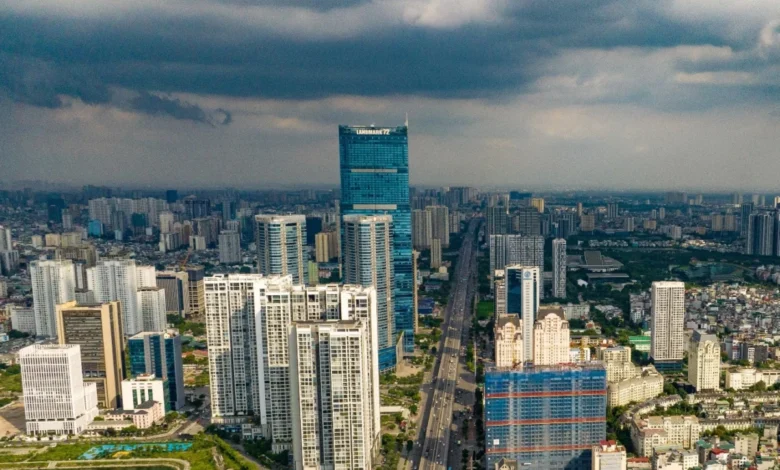
The urban housing market in Hanoi has increasingly become a battleground of psychological warfare between opportunistic speculators and vulnerable property owners. In recent months, a sophisticated wave of real estate manipulation has surfaced across property forums and classified listing sites, where groups of speculative investors systematically post advertisements for apartments priced significantly below market value. For prospective buyers responding to these too-good-to-be-true listings, the reality is almost universally disappointing—dead numbers, switched-off phones, or abrupt disconnections. However, the deeper danger of this coordinated deception lies not just in fooling buyers, but in terrifying legitimate homeowners into panic-selling their valuable assets at a severe loss.
The Mechanism of Psychological Distortion in Property Listings
The strategy of artificial price slashing has evolved beyond simple bait-and-switch tactics historically used by low-level brokers. Previously, rogue agents might list a non-existent bargain simply to capture customer leads, subsequently redirecting those inquiries toward properties priced in line with the broader market. Today, however, organized syndicates deploy networks of dummy accounts to flood property portals with dozens of heavily discounted listings within the exact same building complex or residential zone.
The primary objective of this mass digital deception is to manufacture a false consensus that the local market is undergoing a catastrophic correction. When a homeowner scrolls through online platforms and encounters a dozen identical units in their building listed at five hundred million to one billion Vietnamese Dong below the going rate, the psychological pressure can be immense. Fear of missing the exit window, inability to service mounting bank loans, and dread of a market crash often override rational judgment. Unwary sellers, acting in haste on the back of fabricated data, become prime targets for predatory syndicates poised to scoop up undervalued assets before quietly reselling them at true market value.
Real-life encounters illustrate the sheer scale of this phenomenon. Mr. Hoang Minh Tuan, a 38-year-old resident of Hanoi searching for an apartment to house his aging parents, spent weeks monitoring online property groups. He noticed several listings for units exceeding 60 square meters priced hundreds of millions of Dong below standard market evaluations. Out of nearly a dozen attempts to contact the listed agents, the majority resulted in busy signals, automated number errors, or claims that the property had just been sold.

Similarly, Ms. Nguyen Thu Trang, a property investor scouting opportunities in western Hanoi, fell victim to a comparable scenario. Attracted by a social media listing advertising an apartment slashed by nearly 800 million Dong due to the owner’s urgent financial needs, she dialed the contact number immediately. The respondent on the other end reacted aggressively upon hearing her offer to buy, abruptly shouting that she had dialed the wrong number before cutting the connection and blocking her line. When she attempted to call back from an alternative phone number, the subscription was already rendered unreachable.
Panic Among Homeowners and the Reality on the Ground
The ripple effects of these coordinated online hoaxes extend far beyond frustrating frustrated buyers; they actively destabilize property owners who lack immediate access to verified market intelligence. Mr. Le Quoc Viet, the owner of a two-bedroom apartment located in the Nam Tu Liem district, experienced firsthand the harrowing psychological toll of these fabricated price drops. Before listing his property, Mr. Viet conducted a routine survey of neighborhood chat groups, only to experience severe panic upon discovering numerous comparable units advertised at prices slashed by as much as a billion Dong.
Fearing that market liquidity was evaporating overnight and that he would fail to liquidate his asset in time to stave off commercial bank debt, Mr. Viet seriously considered slashing his own asking price to secure an immediate sale. Fortunately, before executing the transaction, he decided to consult directly with the building’s management board. To his immense relief, he discovered that actual transaction volumes within the building remained remarkably stable, with zero evidence of any distress sales or panicky liquidations.
Real estate experts emphasize that genuine price drops in the current Hanoi market are heavily concentrated in very specific segments. Properties experiencing significant downward adjustments are generally located far from city centers, feature incomplete public infrastructure, or belong to speculative projects with high investor concentration and low actual resident occupancy. Conversely, established urban areas featuring high resident density, fully operational community ecosystems, and mature amenities demonstrate remarkable price resilience. Actual transfer values in these prime locations typically adjust only marginally in alignment with broader macroeconomic shifts, completely contradicting the dramatic 20 to 25 percent plunges advertised by online shadow networks.
Market Fundamentals and the Shift Toward Value
Industry professionals note that the capital’s apartment market is currently undergoing a fundamental structural transition. Mr. Tran Van Hung, a veteran real estate broker in Hanoi, points out that sustained high interest rates over recent quarters have naturally cooled liquidity, pushing prospective buyers into a wait-and-see stance driven by caution. However, underlying residential demand remains robust and does not support the wholesale price collapses advertised across social media channels.
According to Ms. Le Hoang Lan Ngoc, Senior Director and Head of Strategy Consulting at Cushman & Wakefield Vietnam, the market is shifting decisively from growth driven by speculation and expectations to growth anchored in real utility value. Projects backed by transparent legal frameworks, clear construction progress, reliable infrastructure connectivity, and financially sound developers are maintaining healthy liquidity and strong growth potential. Meanwhile, residential products that fail to align with genuine housing needs require extended periods of market digestion.
In districts such as My Dinh, where certain two-bedroom apartments have been advertised online at artificially depressed entry points, behind the enticing headline figures often lie complex legal disputes or hidden liabilities. Industry watchdogs have repeatedly warned that unusually cheap listings serve as red flags, signaling either fraudulent marketing campaigns or systemic legal vulnerabilities that require extreme caution from prospective buyers.
Expert Recommendations to Navigate the Digital Mirage
Faced with an increasingly complex labyrinth of truth and fabrication across digital platforms, real estate analysts and regulatory bodies urge both buyers and sellers to exercise heightened vigilance. Online classifieds and social media groups should never be utilized as the sole benchmark for asset valuation.
For sellers, the primary defense against predatory pricing manipulation is direct verification. Property owners are strongly advised to consult actual transaction records maintained by building management boards, independent notary offices, or reputable brokerage firms operating physically within the local area. Relying on floating digital advertisements without on-the-ground verification exposes owners to the risk of falling prey to coordinated suppression tactics engineered by speculative cartels.
For buyers, conducting comprehensive due diligence remains paramount. Verifying the developer’s legal profile, inspecting construction milestones firsthand, and reviewing historical transaction data within the specific residential community help filter out manipulative noise. As Hanoi’s real estate sector matures into an era defined by intrinsic value rather than speculative froth, navigating the market requires a commitment to factual accuracy, patience, and a healthy skepticism toward digital anomalies designed to manipulate public perception.