Ho Chi Minh City Tax Department Emphasizes Taxpayer-Centric Service and Public Sector Ethics in New Administrative Reform Initiative

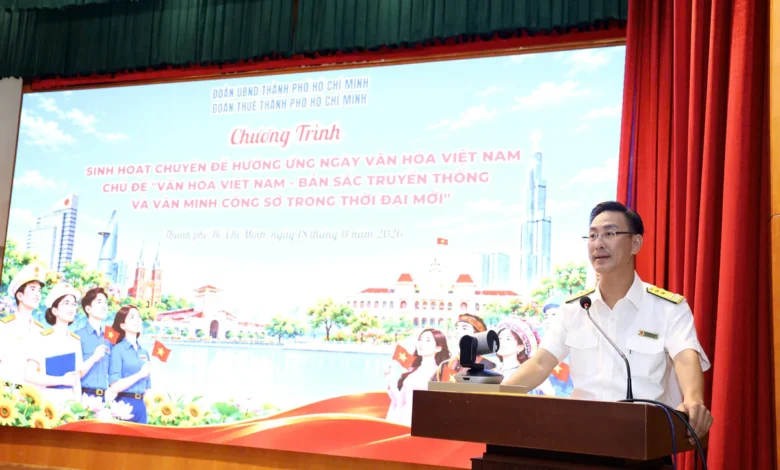
The Ho Chi Minh City Tax Department has officially reinforced its commitment to transforming public sector ethics and administrative culture, declaring that taxpayers must be placed firmly at the center of all public administrative services. This strategic directive was a core focus during a specialized thematic seminar held on November 18, 2026, themed Vietnamese Culture: Traditional Identity and Civil Servant Civility in the New Era. The high-profile event was organized by the Ho Chi Minh City Tax Department’s Ho Chi Minh Communist Youth Union to proactively respond to Vietnam’s upcoming National Cultural Day on November 24, with the broader objective of substantially elevating the quality of administrative services provided to citizens and business enterprises.
The seminar convened key leadership figures, including municipal party representatives, department directors, and union delegates from 32 subordinate tax branches across Ho Chi Minh City. A central component of the academic and practical discourse was delivered by Associate Professor Dr. Nguyen Quoc Dung, former Director of the Ho Chi Minh Academy of Politics Region II, who provided deep theoretical insights paired with practical case studies on public sector ethics and effective administrative communication.
Strategic Imperatives for the Modern Tax Professional
Addressing the assembled officials, Mr. Doan Minh Dung, Head of the Ho Chi Minh City Tax Department, underscored that building a robust civil service culture and maintaining strict professional ethics are not merely secondary administrative goals, but vital, strategic imperatives. These elements are essential for shaping the core values, moral qualities, professional integrity, and institutional resilience of the city’s tax workforce during a period of rapid economic and digital transformation.
To operationalize this vision, the leadership outlined three foundational directives for the tax sector’s youth union and administrative personnel:
First, the department mandates a complete redefining of the modern tax officer’s identity. Every union member and tax official is expected to cultivate pristine professional etiquette, civil communication practices, and an attitude characterized by total dedication, professionalism, and empathy. This professional ethos must be directly tied to the ongoing campaign of studying and following the ideology, morality, and style of Ho Chi Minh, translated into tangible, everyday actions. Crucially, the directive establishes that the satisfaction of the taxpayer must serve as the primary metric of institutional and individual success.
Second, the Youth Union of the Ho Chi Minh City Tax Department is tasked with acting as the vanguard in the ongoing national push for digital transformation and administrative reform. In an era where technological integration dictates economic efficiency, every young tax officer must function as a digital ambassador and a proactive communicator. Their role is to guide and support taxpayers seamlessly through advanced digital platforms, electronic tax filings, and automated compliance systems. Embracing this vanguard role requires tax personnel to take direct ownership of complex challenges, embodying the spirit of daring to think, daring to act, and taking full responsibility for the collective public good.
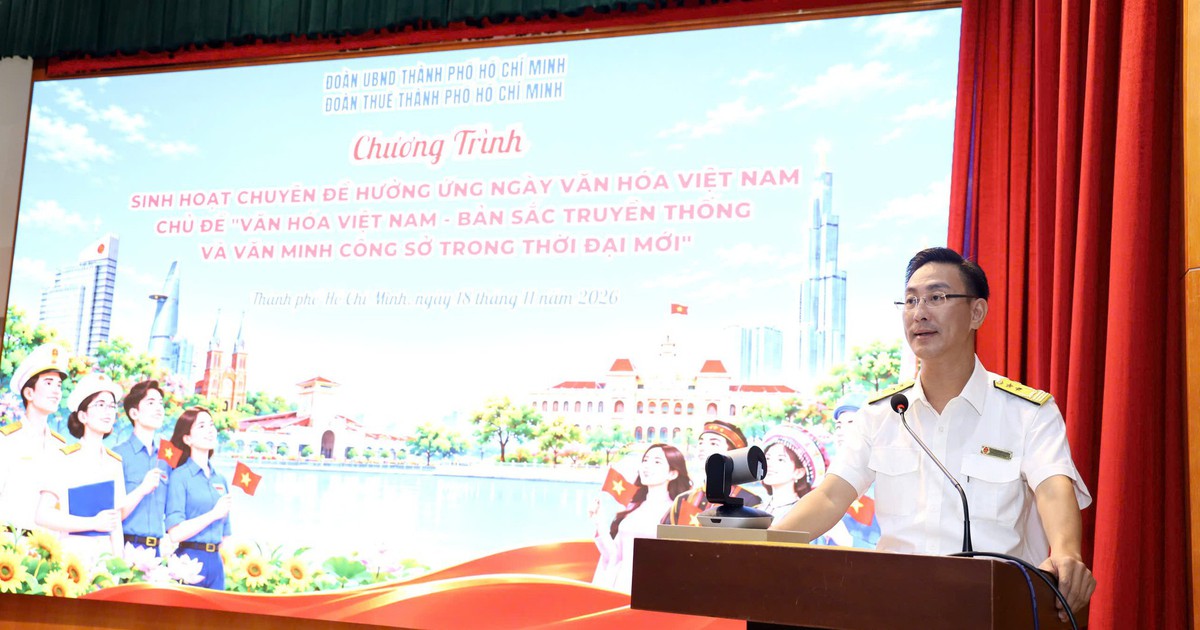
Third, the administration is heavily invested in cultivating a resilient, vibrant public sector work environment. Leadership aims to transform every tax office from a transactional bureaucracy into a genuine cultural hub—spaces where progressive ideas are championed, exemplary service is recognized, and ethical role models are actively celebrated. This proactive talent-nurturing framework is designed to discover and groom elite youth union members, ensuring a steady, high-quality succession pipeline of future leaders for the taxation sector.
Bridging Theory and Practice: Cultural Competence in Tax Administration
A major highlight of the November 18 seminar was the interactive dialogue led by Associate Professor Dr. Nguyen Quoc Dung. Dr. Dung engaged directly with young tax officers, presenting realistic workplace scenarios, citizen grievance interactions, and complex communication challenges frequently encountered within frontline tax offices.
Expounding on the practical application of administrative culture, Dr. Dung noted that true institutional culture is rarely found in abstract theoretical frameworks; rather, it manifests tangibly in everyday human interactions.
"Culture is not something distant or abstract," Dr. Dung emphasized during the interactive session. "It lies right in the friendly greetings exchanged with taxpayers, in the absolute transparency of handling dossier records, and in the profound sense of responsibility held by every single tax civil servant."
He issued a stern caution against administrative complacency, urging tax officers to completely eradicate the habit of postponing tasks or leaving files half-finished under the pretext of handling them tomorrow. He championed a rigorous work ethic summarized by the guiding principle of "doing the work completely without leaving any tasks unfinished," warning against the bureaucratic tendency to drag out document processing for arbitrary reasons. By embedding culture into every communication, every document reviewed, and every daily effort to assist citizens and enterprises, the tax sector can systematically shed outdated bureaucratic stereotypes.
Institutional Reception and Action Plan
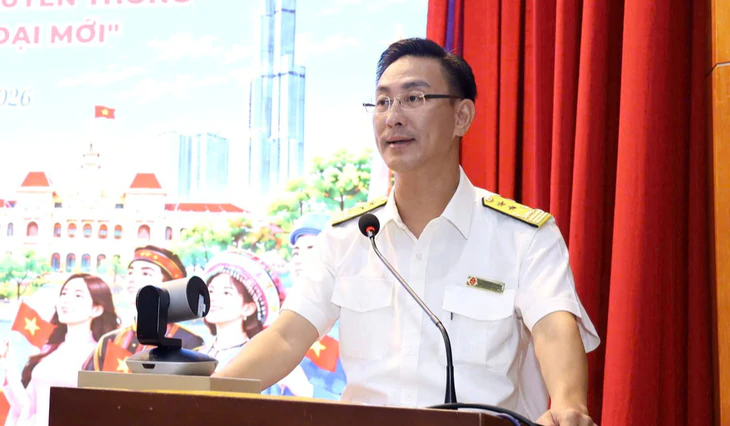
Responding directly to the strategic guidance provided by the department leadership and guest scholars, Ms. Giang Thuy Xuan Huong, Secretary of the Ho Chi Minh City Tax Department Youth Union, affirmed that the true core value of the seminar rests entirely on actionable implementation at the grassroots level.
Ms. Huong confirmed that all subordinate youth union chapters will immediately translate these high-level directives into practical, results-driven emulation movements. These initiatives are designed to systematically forge a generation of civil servants who are not only intellectually and technically proficient in tax law and digital platforms, but also impeccably standardized in their behavioral culture and public service ethics.
Background Context and Broader Implications
This strategic seminar occurs against the backdrop of an increasingly dynamic economic landscape in Ho Chi Minh City, which serves as Vietnam’s primary financial and commercial engine. As the city experiences rapid expansion in the number of newly registered enterprises, foreign direct investment inflows, and digital commerce, the demands placed on local tax authorities have grown exponentially.
Historically, tax administration in developing economies has faced systemic challenges related to bureaucratic friction, protracted processing times, and occasional friction in taxpayer-officer relations. In response, the Vietnamese government and the General Department of Taxation have made administrative reform and digital modernization top national priorities over recent years. The integration of electronic invoicing, automated tax returns, and online public service portals has dramatically reduced physical touchpoints and processing times. However, policymakers recognize that digital infrastructure alone is insufficient without a parallel cultural evolution among the human workforce operating these systems.
By framing taxpayer satisfaction as the ultimate benchmark of institutional performance, the Ho Chi Minh City Tax Department is aligning its internal governance with international best practices in public administration. This approach recognizes that reducing compliance burdens and fostering a transparent, taxpayer-friendly environment directly enhances the broader investment climate, stimulates business growth, and strengthens voluntary tax compliance.
Timeline and Chronological Development
- Early November 2026: The Ho Chi Minh City Tax Department formulates plans for a specialized cultural and ethical training initiative, aligning with the national observance of Vietnamese Cultural Day.
- November 18, 2026: The Ho Chi Minh City Tax Department Youth Union hosts the official thematic seminar titled Vietnamese Culture: Traditional Identity and Civil Servant Civility in the New Era. Key addresses are delivered by Department Head Doan Minh Dung and former Academy Director PGS.TS Nguyen Quoc Dung, drawing representatives from 32 subordinate tax branches.
- November 24, 2026 (Upcoming): The broader observance of National Cultural Day serves as an organizational milestone for tax branches to evaluate initial grassroots implementations of the newly established behavioral codes and digital service standards.
- Ongoing (2026–2027): Subordinate tax branches roll out localized action plans focusing on reducing file processing times, eliminating bureaucratic delays, and expanding digital literacy campaigns for local taxpayers and small-to-medium enterprises.
Fact-Based Analysis of Future Implications
The concerted push by the Ho Chi Minh City Tax Department to merge digital transformation with strict ethical standards carries several notable implications for the region’s economic ecosystem:
- Reduction of Administrative Friction: By enforcing a strict "complete the work today" policy and prioritizing taxpayer satisfaction, the department aims to drastically lower the indirect costs and time losses historically associated with tax compliance and dispute resolution.
- Enhanced Voluntary Compliance: A supportive, professional, and transparent administrative environment naturally cultivates trust between the state and the business community. Enhanced trust is widely documented by economic analysts to correlate positively with higher rates of voluntary tax compliance and reduced tax evasion.
- Talent Retention and Institutional Modernization: By transforming tax offices into dynamic cultural hubs that reward innovation and high ethical standards, the sector positions itself as an attractive career destination for top-tier graduates, ensuring long-term institutional competence.
Ultimately, the initiatives unveiled at the November seminar signal a decisive step forward in Vietnam’s ongoing administrative modernization—proving that technological advancement and human-centric cultural values must advance hand in hand to build a modern, professional, honest, and innovative tax administration.