Minister Nguyen Manh Hung Urges CMC Corporation to Embrace National Mission and Lead Vietnam into the Digital Era

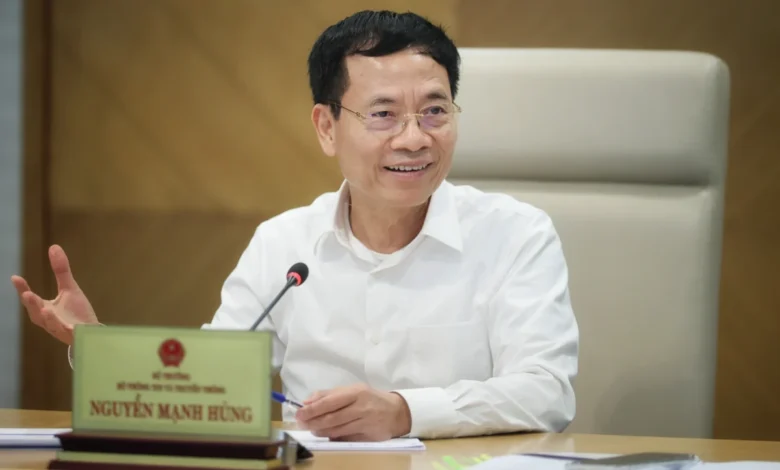
The Ministry of Information and Communications (MIC) has charted a bold new trajectory for CMC Corporation, one of Vietnam’s pioneering technology conglomerates. During a landmark working session held at the ministry’s headquarters in Hanoi, Minister Nguyen Manh Hung emphasized that as CMC transitions into a major global technology enterprise, its ultimate path to unprecedented scale lies in aligning its corporate ambitions directly with the national mission. This high-level strategic meeting marks a critical juncture in Vietnam’s broader digital transformation agenda, underscoring the indispensable partnership between state regulators and private technology giants.
A Historic Strategic Alignment
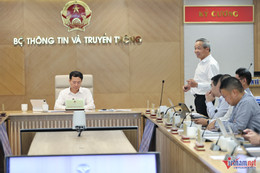
On the afternoon of October 25, Minister Nguyen Manh Hung convened a special closed-door meeting with the board of directors and core leadership of CMC Corporation. The session was also attended by Deputy Ministers Nguyen Thanh Lam and Bui Hoang Phuong, alongside heads of various key departments within the MIC. For CMC, which has accumulated 31 years of operational experience in Vietnam’s technology sector, this gathering represents the first time its senior leadership has engaged in an exclusive, high-level strategic dialogue with the top echelon of the ministry.

The initiative by the MIC to invite CMC for such an intensive consultation highlights the government’s deep recognition of the company’s past contributions to the national tech landscape. More importantly, it demonstrates official confidence in CMC’s capacity to evolve into a globally recognized technology powerhouse. The meeting served as a platform to review past achievements, evaluate current mid-term performance for the 2024 financial year, and synchronize corporate expansion plans with national development goals leading up to 2028.
Charting an Ambitious Course to 2028
Opening the session, Dang Tung Son, Senior Vice President and Chief Strategy Officer of CMC Corporation, presented a comprehensive report detailing the company’s financial health, core operational milestones, and future outlook. Over its three-decade history, CMC has transformed from a modest IT hardware and software distributor into a comprehensive digital solutions provider, encompassing cloud computing, data centers, system integration, and global IT outsourcing.
Looking forward, CMC has unveiled a remarkably aggressive growth strategy for the next four years. By 2028, the corporation aims to establish itself as a globally competitive provider of core technology and Artificial Intelligence (AI) solutions, adhering strictly to international standards. To realize this vision, CMC has set targets to triple its revenue and expand its workforce from its current size to over 10,000 employees. Notably, the company plans to dedicate approximately 40% of its total human resources specifically to the development and deployment of AI technologies.
Minister Nguyen Manh Hung commended these ambitious targets but stressed that achieving such scale requires a fundamental shift in mindset. He reiterated that national leadership, led by top political figures, has officially declared that Vietnam must master its own core technologies if it is to successfully escape the middle-income trap and achieve developed-nation status by 2045.
Mastering Technology and National Sovereignty
The core message delivered by the Minister centered on the concept of technological self-reliance. Minister Hung pointed out that mastering technology begins with mastering application, which must inevitably progress toward mastering the foundational design and manufacturing processes. For Vietnamese tech giants like CMC, this requires a substantial and sustained commitment to research and development (R&D).
"For a business to grow significantly and become a true pillar of the nation, it must tie its destiny to the national mission," Minister Hung asserted during the discussions. He emphasized that enterprises possessing the financial capacity and market influence of CMC carry a social responsibility to solve the country’s most complex structural problems.

Furthermore, the MIC leadership advised CMC to prioritize internal digital transformation before offering similar services to external clients. By digitizing its own internal operations first, the corporation can accumulate invaluable practical experience, deeply understand the operational friction points of digital migration, and subsequently deliver more robust, battle-tested solutions to the broader market.
Strategic Guidance on Infrastructure and Artificial Intelligence
A significant portion of the four-hour meeting was dedicated to addressing operational bottlenecks, investment hurdles, and strategic expansion avenues raised by CMC’s leadership. The MIC provided actionable guidance on several critical fronts, notably regarding telecommunications infrastructure and advanced technology investments.
When CMC raised concerns regarding the complex regulatory procedures involved in securing land allocations for critical national infrastructure—specifically the landing stations for new international submarine fiber-optic cables—the ministry stepped in with clear regulatory solutions. Ministry leaders guided CMC through the latest provisions of the revised Land Law and directed the Department of Telecommunications to draft formal proposals for the Prime Minister. These proposals aim to encourage provincial authorities to integrate submarine cable landing stations into local land-use master plans, thereby bolstering the resilience and security of Vietnam’s international connectivity backbone.

On the technological front, Minister Hung advised CMC to diversify its strategic focus by treating Artificial Intelligence and semiconductor manufacturing as parallel, mutually reinforcing pillars. Regarding AI development specifically, the ministry recommended a pragmatic approach: instead of attempting to build massive, general-purpose foundational models that compete directly with global tech titans, Vietnamese enterprises should focus on specialized, domain-specific, and enterprise-grade AI applications. These localized AI solutions can be tailored to individual businesses, government agencies, and specific economic sectors by integrating proprietary domestic data to ensure absolute data sovereignty and operational security.
The Broader Economic Implications
The strategic dialogue between the MIC and CMC Corporation reflects a broader paradigm shift in Vietnam’s economic policy. As the nation accelerates its transition toward a digital economy—which the government aims to contribute roughly 30% of Gross Domestic Product by 2030—the role of indigenous technology enterprises has never been more critical.
Historically, Vietnam’s tech sector relied heavily on software outsourcing and hardware assembly for foreign multinational corporations. While these activities generated employment and initial capital accumulation, they left domestic firms vulnerable to global supply chain fluctuations and low profit margins. By challenging companies like CMC to transition toward infrastructure ownership, proprietary AI development, and global brand building, the MIC is actively fostering an ecosystem of national champions capable of competing on the international stage.

The collaborative stance of the ministry also signals a maturing regulatory environment. Rather than acting purely as an administrative oversight body, the MIC positions itself as a supportive partner—an institutional "sounding board" where domestic technology enterprises can seek regulatory guidance, resolve administrative roadblocks, and align commercial interests with national strategic priorities.
Commitment to Global Integration
In response to the strategic directives provided by the ministry, Nguyen Trung Chinh, Chairman of CMC Corporation, expressed profound gratitude for the candid, insightful, and supportive feedback from Minister Hung and the departmental leaders. He reaffirmed that while the 2028 development targets present immense operational challenges, CMC is fully committed to mobilizing its internal resources to realize them.
"To materialize these ambitious goals, alongside our own corporate determination, we deeply appreciate the continued accompaniment, guidance, and support of the Ministry of Information and Communications," Mr. Chinh stated. He emphasized that CMC’s ultimate aspiration extends beyond commercial success; the corporation aims to project Vietnamese intellectual capability onto the global stage, proving that domestic enterprises can successfully solve complex technological challenges internationally and elevate Vietnam’s standing in the global digital economy.

As Vietnam stands on the threshold of a new era of national strength and technological self-reliance, the partnership between state regulators and private innovators like CMC Corporation will serve as a vital engine for sustainable economic growth and digital prosperity.