India Inaugurates First Domestically Developed Hydrogen Train, Marking a Pivotal Step Towards Sustainable Rail Transport

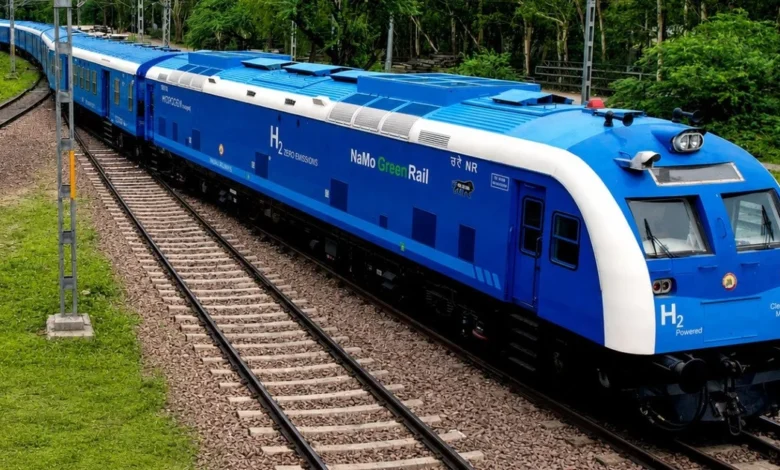
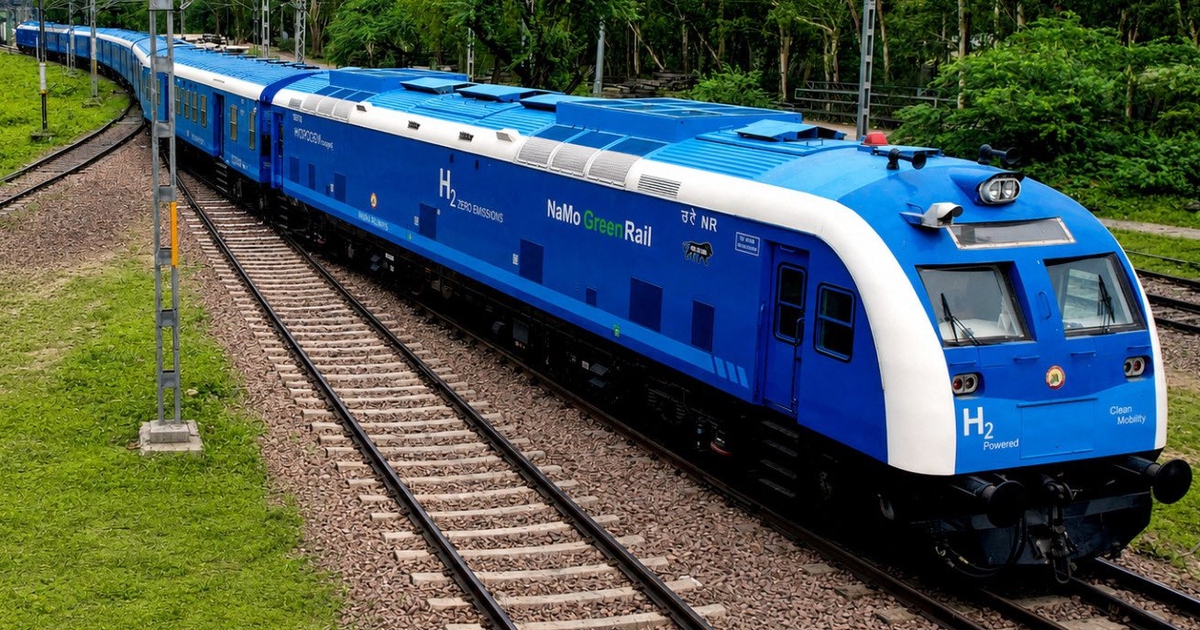
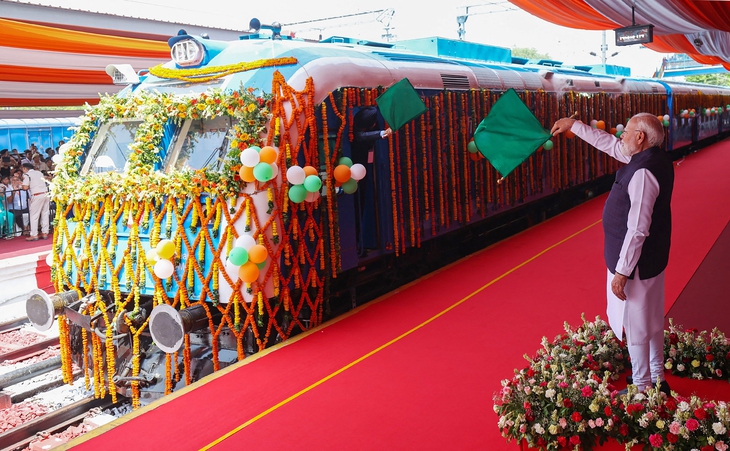
In a significant stride towards decarbonizing its vast railway network, India officially launched its inaugural hydrogen-powered train on July 17, 2026. The indigenously manufactured train, named NaMo Green Rail, commenced operations on a 89-kilometer route connecting Jind and Sonipat in the northern state of Haryana. This milestone positions India among a select group of nations, including Germany, Japan, China, and the United States, that are actively experimenting with or deploying low-emission railway technologies to reduce their reliance on fossil fuels and mitigate environmental impact.
The introduction of the NaMo Green Rail underscores India’s commitment to achieving its ambitious sustainable development goals and bolstering energy independence. Prime Minister Narendra Modi hailed the occasion as "a very meaningful day for India’s strong and sustainable development goals," emphasizing the nation’s resolve to innovate in green energy solutions.
A Leap Towards Green Mobility
The newly commissioned hydrogen train comprises 10 coaches and is powered by a 1,200-kilowatt hydrogen fuel cell system. Railway officials proudly declared this to be the most powerful fuel cell system ever deployed in a train globally, highlighting the scale of India’s engineering ambition. Unlike conventional diesel trains that emit harmful pollutants, hydrogen fuel cell trains operate by converting hydrogen and oxygen into electricity, with the sole byproducts being water and water vapor. This zero-emission technology is crucial for improving air quality along railway corridors and significantly reducing the carbon footprint of the transportation sector.
The initial route, connecting Jind and Sonipat, serves as a pilot project to assess the train’s performance, efficiency, and viability under real-world operating conditions. The 89-kilometer stretch in Haryana will provide invaluable data for future expansion and refinement of the technology. The successful deployment of this train is expected to pave the way for more widespread adoption of hydrogen-powered locomotives across India’s extensive railway network.
India’s Ambitious Green Hydrogen Vision
The launch of the hydrogen train is a tangible outcome of India’s broader National Green Hydrogen Mission, inaugurated in early 2023. This mission aims to establish India as a global hub for the production, utilization, and export of green hydrogen, positioning the country at the forefront of the global energy transition. The mission targets an annual green hydrogen production capacity of 5 million metric tons by 2030, with an associated investment of approximately $100 billion. The strategic imperative behind this initiative is multifaceted: to reduce India’s substantial fossil fuel import bill, enhance energy security, and contribute significantly to its net-zero emissions target by 2070.
Railways, being a critical lifeline for India, present a significant opportunity for decarbonization. The sector currently accounts for a substantial portion of the nation’s overall emissions. By transitioning to hydrogen, India seeks to drastically cut these emissions, aligning with its commitments under the Paris Agreement and demonstrating leadership in climate action. This move is not merely about environmental stewardship but also about fostering a new green economy, creating jobs, and developing advanced indigenous technologies.
Global Railway Decarbonization Efforts
India’s foray into hydrogen-powered trains places it in an exclusive club of countries pioneering this technology. Germany was the first nation to introduce hydrogen trains into regular passenger service with Alstom’s Coradia iLint. These trains have been successfully operating in Lower Saxony since 2018, demonstrating the practical feasibility and environmental benefits of hydrogen fuel cells in rail applications. Other nations are rapidly following suit:
- Japan: Known for its advanced railway technologies, Japan is actively researching and developing hydrogen fuel cell trains, aiming for commercial deployment in the coming years, often integrating them with their high-speed rail network.
- China: A global leader in railway infrastructure, China has also embarked on developing its own hydrogen trains, leveraging its vast manufacturing capabilities and expansive rail network for potential large-scale implementation.
- United States: Several states and railway companies in the U.S. are exploring hydrogen power as an alternative to diesel, with pilot projects and research initiatives underway to adapt the technology to North American rail conditions.
These global efforts highlight a collective push within the railway industry to move away from fossil fuels, driven by both environmental concerns and the long-term economic benefits of green energy. India’s entry into this arena not only signifies its commitment but also its potential to contribute to global innovation in sustainable transport.
The Path to Domestic Manufacturing and Infrastructure
A key aspect emphasized by the Indian Railway Ministry is that the NaMo Green Rail has been "completely developed in India." This aligns with the government’s "Make in India" initiative, promoting self-reliance in critical sectors. While the overarching design, integration, and much of the manufacturing were done domestically, officials acknowledged that some crucial components, including the advanced fuel cells themselves, were initially imported. This is a common practice in emerging technologies, with the expectation that domestic production capabilities for these specialized components will be scaled up over time, further reducing import dependence and fostering local expertise.
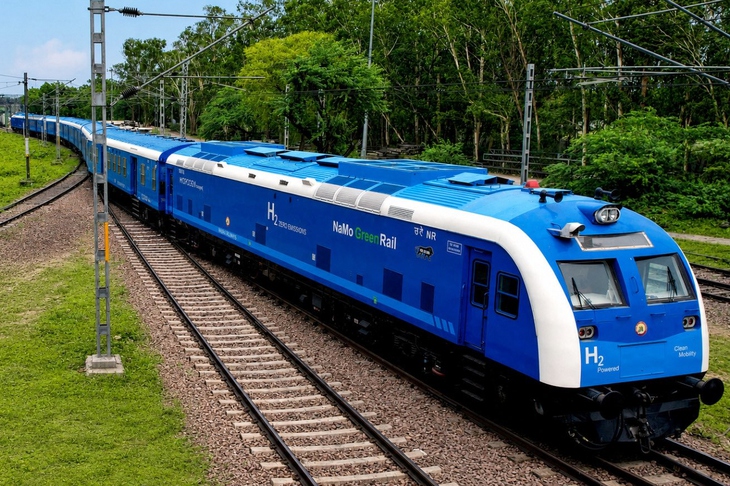
To support the operation of hydrogen trains, significant infrastructure development is essential. Coinciding with the train’s launch, the Railway Ministry also inaugurated India’s largest hydrogen storage and refueling facility in Jind. This state-of-the-art facility boasts a storage capacity of approximately 3,000 kilograms, sufficient to cater to the operational needs of multiple hydrogen trains. The establishment of such dedicated infrastructure is a critical step, as the availability of reliable refueling points is paramount for the practical viability and expansion of hydrogen-powered transport. Further investments in hydrogen production, storage, and distribution networks will be necessary as the fleet grows.
Economic and Environmental Implications
The initial cost of the hydrogen train project stands at approximately $12 million. Railway officials noted that this figure is "significantly higher" than the cost of establishing a conventional railway line of comparable scale. However, they expressed confidence that these costs are expected to decrease substantially as the technology matures, production scales up, and economies of scale are achieved. The long-term economic benefits are projected to outweigh the initial investment, primarily through reduced operational costs due to lower fuel expenses compared to diesel and minimized maintenance requirements associated with simpler propulsion systems.
Environmentally, the impact is profound. The complete elimination of direct emissions from trains translates into cleaner air, particularly in densely populated urban areas and along rural routes. This contributes directly to public health improvements and reduces the ecological footprint of the railway system. Furthermore, by embracing hydrogen, India strengthens its position in the global green energy market, potentially attracting further investment and fostering international collaborations in this burgeoning sector. The shift away from imported fossil fuels also bolsters India’s energy security, making its transportation sector less vulnerable to global oil price fluctuations and geopolitical instabilities.
The Evolving Landscape of Indian Railways
The introduction of the hydrogen train is the latest chapter in the long and storied history of Indian Railways, a network that has been transforming significantly since the first passenger train, pulled by a steam locomotive, ran from Mumbai in 1853. Today, Indian Railways operates one of the largest and busiest rail networks in the world, serving as the backbone of the nation’s transportation system.
According to official data, the network transported an astounding 7.41 billion passengers and 1.67 billion tons of freight last year. This immense scale underscores the critical importance of modernizing and greening the railway system. In recent years, New Delhi has invested hundreds of billions of dollars to upgrade its infrastructure, enhance safety, and expand its carrying capacity. This includes ambitious electrification projects, with a significant portion of the network already electrified, aiming for 100% electrification in the coming years.
Beyond electrification and hydrogen, India is also venturing into high-speed rail. The country is currently constructing its first high-speed rail line, utilizing Japan’s Shinkansen technology. Officials anticipate that the first section of this bullet train line, designed to operate at speeds of up to 320 km/h, will commence operations by 2027. These multi-pronged efforts – electrification, hydrogen power, and high-speed rail – collectively signify India’s comprehensive strategy to transform its railway system into a world-class, environmentally sustainable, and economically efficient mode of transport for the 21st century.
Challenges and the Road Ahead
Despite the celebratory launch, the widespread adoption of hydrogen trains in India faces several challenges. The high initial capital cost remains a significant barrier, requiring substantial government subsidies or innovative financing models. The development of a robust and widespread green hydrogen production and distribution infrastructure is another critical hurdle, demanding massive investments in renewable energy sources, electrolyzers, and logistical networks. Safety standards for handling, storing, and transporting hydrogen in railway applications will also need continuous refinement and strict adherence.
However, the strategic benefits—environmental protection, energy security, and technological leadership—provide compelling reasons for India to press forward. The pilot project in Haryana will be crucial in addressing technical and operational challenges, optimizing performance, and building public confidence in this innovative technology. As India continues its journey towards a net-zero future, the hydrogen train stands as a powerful symbol of its commitment to leveraging advanced technologies for sustainable development.