Special Excise Tax on Gasoline Cut to Zero Percent Starting November 1, Driving Potential Price Reductions Nationwide


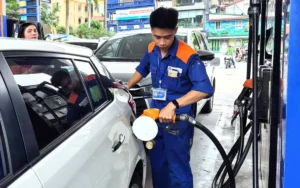
The Vietnamese government has officially issued Decree 45, implementing a temporary reduction of the special excise tax on all grades of gasoline to 0 percent. This landmark fiscal measure, signed on October 31, 2026, is scheduled to take effect immediately on November 1, 2026, and will remain in force through March 31, 2027. The policy marks a significant intervention by the state to mitigate inflationary pressures, stabilize the domestic energy market, and provide tangible financial relief to consumers and businesses alike amid volatile global commodity trends.
Under the newly enacted decree, the special excise tax rate for all applicable gasoline variants will drop completely to 0 percent, erasing the current rates of 10 percent for traditional mineral gasoline, 8 percent for E5 biofuel, and 7 percent for E10 biofuel. This sweeping reduction creates a substantial structural opening for lower retail fuel prices across the country during the upcoming winter and spring months, a critical period that traditionally witnesses heightened energy demand for logistics, transportation, and manufacturing sectors.
Legislative Framework and Regulatory Flexibility
The decision to lower the special excise tax to zero underscores the government’s proactive stance in navigating complex macroeconomic challenges. According to the provisions outlined in Decree 45, the Ministry of Industry and Trade holds the administrative authority to monitor market dynamics continuously. Should socio-economic developments, national energy security imperatives, or severe domestic market fluctuations require adjustments—whether shortening or extending the effective period of the policy—the Ministry of Industry and Trade is empowered to formulate formal recommendations. These proposals will subsequently be submitted to the Ministry of Finance, which will review the suggestions before forwarding them to the Government for official deliberation and final approval.
This built-in regulatory flexibility ensures that fiscal authorities retain the necessary agility to respond to unforeseen geopolitical shifts, supply chain disruptions, or sudden spikes in international crude oil benchmarks. By establishing a predefined five-month window from November 1, 2026, to March 31, 2027, policymakers have balanced the immediate need for consumer relief with prudent fiscal governance, allowing for periodic reviews of the policy’s efficacy and budgetary impact.
Background Context and Recent Price Movements
To fully understand the significance of the zero-percent special excise tax policy, one must examine the baseline pricing environment that preceded it. During the regular retail price adjustment cycle managed jointly by the Ministry of Industry and Trade and the Ministry of Finance on October 29, domestic fuel prices experienced notable upward pressure. E5 RON92 gasoline was adjusted upward by 666 dong per liter, bringing its ceiling price to 26,027 dong per liter, while E10 RON95-III gasoline increased by 521 dong per liter to reach 25,734 dong per liter.

Prior to the implementation of Decree 45, these retail prices incorporated distinct tax burdens. Official Ministry of Industry and Trade data from the late October pricing period revealed that the specific tax-inclusive base price for E10 RON95-III stood at 22,501 dong per liter—marginally lower than the 22,551 dong per liter recorded for E5 RON92. Within these baseline figures, the special excise tax component accounted for approximately 1,575 dong per liter for E10 and 1,804 dong per liter for E5. Consequently, factoring in all constituent input variables, the baseline structural price for E10 sat 293 dong per liter lower than that of E5 during that specific operational cycle.
With the advent of November 1, the complete removal of the special excise tax means that these tax components will no longer be factored into the base price calculations. However, industry experts emphasize that the exact reduction reflected at the retail pump will ultimately depend on the comprehensive recalculation of base prices and the synthesis of all cost-forming components—including import tariffs, value-added tax, environmental protection fees, and foreign exchange rates—on the exact day the policy becomes active.
Broad Fiscal Support and Government Budget Allocation
The reduction of the special excise tax to 0 percent does not stand as an isolated measure; rather, it forms the cornerstone of a broader, sustained fiscal support strategy deployed by the Vietnamese government throughout the year. Speaking before the National Assembly during a plenary session dedicated to socio-economic affairs on the morning of October 31, Deputy Prime Minister Nguyen Van Thang provided critical insights into the state budget allocations dedicated to energy stabilization.
The Deputy Prime Minister revealed that the government projects a direct fiscal sacrifice of approximately 4,000 billion dong over the final two months of the year alone to accommodate the foregone revenue resulting from the slashed special excise tax on gasoline. When viewed in a broader timeline, this late-year injection builds upon a massive aggregate relief effort sustained since the beginning of the year. From January through October, the central government has funneled an estimated 64,000 billion dong into various tax and fee reduction packages specifically targeted at petroleum products.
This multi-trillion-dong fiscal commitment highlights the administration’s unwavering resolve to shield the domestic economy from external shocks. By repeatedly deploying targeted tax instruments, the state has actively absorbed a significant portion of the cost pressures that would otherwise have been passed down directly to end-consumers, corporate transport fleets, and agricultural producers.
Economic Implications and Sectoral Impacts
The removal of the special excise tax on gasoline is projected to yield profound ripple effects across multiple layers of the Vietnamese economy. Energy economists point out that fuel is a foundational input for virtually all economic activities, meaning that reductions in retail gasoline prices translate directly into lowered operational expenditures for logistics enterprises, passenger transport operators, and agricultural supply chains.

Mitigating Inflationary Pressures
Inflationary expectations in developing economies are highly sensitive to fluctuations in energy and transportation costs. By lowering the cost of petroleum products during the late-fourth-quarter peak business season—a time traditionally marked by increased commercial activity, retail stocking, and travel—the government aims to anchor consumer price index (CPI) growth within targeted bounds. Lower transportation overheads help stabilize the prices of consumer goods, foodstuffs, and raw materials, thereby protecting household purchasing power across both urban and rural demographics.
Supporting Corporate Competitiveness
Logistics and transport companies, which have faced compressed profit margins due to persistent global fuel volatility throughout recent years, stand to benefit significantly from the policy. A sustained reduction in fuel expenses allows transport providers to maintain competitive freight rates, easing the cost burden on manufacturing exporters and domestic retailers. This enhanced cost competitiveness is particularly vital as Vietnamese industries strive to meet export targets and maintain momentum in global supply chains.
Encouraging Biofuel Adoption
The restructuring of tax burdens across different fuel grades also plays an indirect role in steering consumer behavior toward environmentally friendlier alternatives. With both E5 and E10 fuels benefiting from the 0 percent special excise tax rate—down from their previous rates of 8 percent and 7 percent respectively—the relative price competitiveness of biofuels is preserved within the broader retail framework. This alignment supports national green growth strategies and carbon reduction commitments without imposing immediate financial penalties on consumers transitioning toward sustainable energy consumption.
Stakeholder Reactions and Future Outlook
Business associations, transport cooperatives, and consumer advocacy groups have largely welcomed the issuance of Decree 45, viewing the policy as a timely and pragmatic response to prevailing economic realities. Representatives from the logistics sector noted that while global crude oil markets remain susceptible to geopolitical tensions and supply adjustments by major producing nations, domestic fiscal interventions of this magnitude provide an essential buffer for local enterprises.
Looking ahead, market participants will closely monitor the operational rollout of the decree starting November 1. While the theoretical calculation points toward potential retail price decreases of up to nearly 1,800 dong per liter depending on the specific fuel grade and preceding tax bases, actual pump prices will continue to be governed by the standard bi-weekly pricing mechanism administered by the joint ministries.
As Vietnam navigates the final quarter of 2026 and looks toward the first quarter of 2027, the success of Decree 45 will be measured not only by immediate price relief at the pump but also by its broader macroeconomic success in sustaining consumer confidence, curbing core inflation, and providing a stable foundation for steady economic expansion.