Vietnam Accelerates National Digital Transformation with Major Government Support for 5G Infrastructure Deployment

On February 19, 2025, the National Assembly of Vietnam officially passed a landmark resolution aimed at creating a robust regulatory and financial framework to catalyze the nation’s science, technology, and digital transformation goals. Among the most significant components of this legislative achievement is the introduction of a state-funded support mechanism designed to accelerate the nationwide deployment of 5G infrastructure. By incentivizing telecommunications operators to rapidly expand their networks, the government intends to solidify Vietnam’s position as a regional leader in the digital economy.
The resolution mandates that telecommunications operators who commit to an aggressive expansion strategy—defined as the installation of at least 20,000 5G base stations that must be tested and operational by December 31, 2025—will be eligible for a direct financial subsidy. Specifically, the state will provide a subsidy equivalent to 15% of the average equipment cost per 5G base station commissioned within the 2025 calendar year. This move is a strategic departure from previous regulatory practices, marking the first time the Vietnamese government has provided direct financial backing for mobile infrastructure capital expenditure.
The Financial and Regulatory Framework
The scale of the state support is carefully calibrated to match the investment generated by the spectrum auctions held in 2024. The total budget for this subsidy initiative is capped at the total proceeds generated from the government’s 2024 wireless spectrum auctions. This ensures that the program is self-sustaining, effectively recycling the revenue collected from telecommunications companies back into the sector to ensure the rapid rollout of high-speed connectivity.
Furthermore, the resolution addresses long-standing bottlenecks in project procurement. To ensure that the ambitious target of 20,000 new stations is met within the constrained 2025-2030 window, the National Assembly has granted special authority to approve investment policies through "direct appointment" of contractors for specific projects. In scenarios where direct appointment is not utilized, the selection of contractors will follow internationally recognized procurement standards or bilateral agreements established between Vietnamese telecommunications enterprises and their international partners.
Strengthening International Connectivity
Beyond domestic mobile infrastructure, the resolution introduces critical policy shifts concerning the development of international telecommunications cable systems. Recognizing the vulnerability of current underwater cable infrastructure, the government is now prioritizing the expansion of connections where Vietnamese firms act as lead investors or significant equity holders.
Under the new guidelines, investment projects for international submarine cable routes that feature landing stations in Vietnam will be subject to streamlined administrative procedures. While these projects must adhere to strict national security and defense requirements, the move signals a shift toward a more proactive, state-supported approach to global connectivity. Minister of Information and Communications Nguyen Manh Hung emphasized that the current reliance on a limited number of international cables presents a strategic risk to the nation’s digital sovereignty. By encouraging local firms to lead these infrastructure investments, the government aims to ensure long-term, resilient access to the global internet backbone.
The Role of 5G in Economic Growth
The drive toward 5G is not merely about consumer data speeds; it is a foundational pillar for Vietnam’s broader economic ambitions. According to industry experts, including Rita Mokbel, Chairperson of the Board of Ericsson Vietnam, the 5G ecosystem is poised to become a critical driver of the country’s digital economy. Projections indicate that the digital economy could contribute as much as 20% of Vietnam’s GDP by the end of 2025, a goal that is inextricably linked to the successful deployment of next-generation mobile technology.
5G’s low latency and high-capacity capabilities are expected to revolutionize key industrial sectors. Manufacturing, logistics, and "smart city" initiatives are the primary beneficiaries of this technology. For instance, private 5G networks in manufacturing facilities will enable advanced automation, real-time supply chain management, and enhanced operational efficiency. These improvements are expected to reduce costs for enterprises while simultaneously opening new revenue streams for telecommunications operators through specialized industrial services.
Market Status: The Current Landscape
Vietnam’s major telecommunications providers have already begun preparing for this surge in demand, with varying degrees of current coverage and deployment strategies.
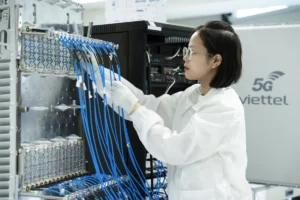
- Viettel: As the market leader, Viettel has reported an existing footprint of over 6,500 5G base stations. Their network currently covers 100% of the provincial and municipal centers across all 63 provinces, in addition to critical infrastructure such as industrial parks, airports, and hospitals. Viettel’s 5G NSA (Non-Standalone) network offers speeds ranging from 700Mbps to 1Gbps, providing the low-latency environment necessary for applications like remote surgery, autonomous vehicles, and smart factory control. As of January 2025, Viettel reported 5.5 million 5G subscribers, just five months after its official launch, highlighting the rapid consumer appetite for the technology.
- VNPT: The corporation has successfully deployed 5G coverage across the central areas of all 63 provinces and cities, covering over 700 administrative units at the district level. VNPT reports that it currently maintains approximately 3 million active 5G subscribers, focusing its efforts on key economic zones and political centers.
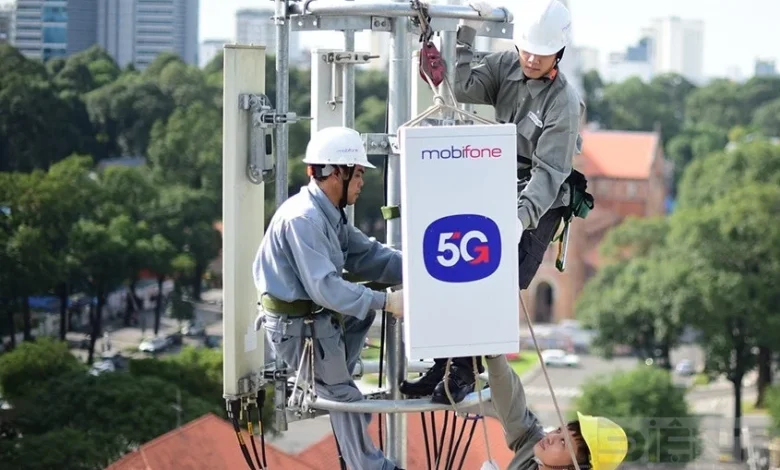
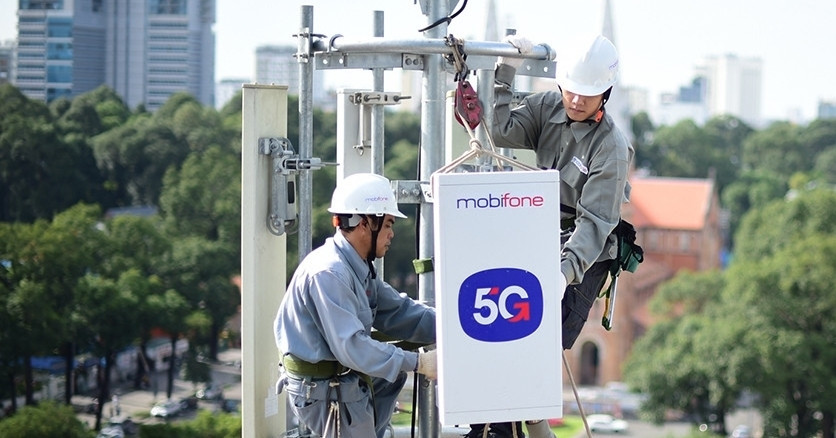
- MobiFone: While it has yet to hold a widespread formal commercial launch, MobiFone is actively expanding its infrastructure and optimizing spectrum usage. The company has stated its long-term objective to bring 5G coverage to 100% of all communes nationwide. Its current strategy focuses on providing high-speed connectivity to meet the growing demand for mobile data in both urban and rural settings.
Strategic Implications and Future Outlook
The government’s decision to intervene financially in the 5G rollout reflects an understanding of the "middle-mile" challenge. Minister Nguyen Manh Hung noted that while operators are willing to invest, the previous pace—averaging roughly 5,000 stations per year—was insufficient to meet the national requirement for near-universal coverage. By providing a 15% subsidy, the government is de-risking the aggressive expansion, allowing firms to focus on densifying the network rather than strictly prioritizing high-density, high-revenue urban areas.
The focus on security and international cable resilience also highlights a broader geopolitical awareness. In an era where digital infrastructure is synonymous with national security, the emphasis on local investment and regulatory oversight for submarine cables is a strategic imperative. This ensures that the growth of the digital economy does not come at the expense of infrastructure stability or data security.
As Vietnam moves toward the end of 2025, the focus will shift from policy enactment to technical execution. The integration of 5G across the industrial and public sectors will likely serve as a benchmark for the nation’s ability to transition from a manufacturing-heavy economy to a high-tech, digital-first powerhouse. With the legislative hurdles now cleared, the burden of proof rests on the telecommunications sector to leverage this unprecedented state support to build a network capable of supporting the next decade of national development.
The rapid growth in subscriber numbers—notably Viettel’s 5.5 million users—suggests that the market is ready for the transition. If the current momentum is sustained, the 20,000-station milestone could not only be met but surpassed, setting the stage for a period of accelerated innovation and competitiveness in the Southeast Asian market. The synergy between government policy, state-led investment, and private sector operational agility marks a significant turning point in Vietnam’s digital history.