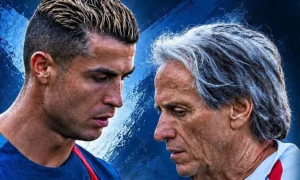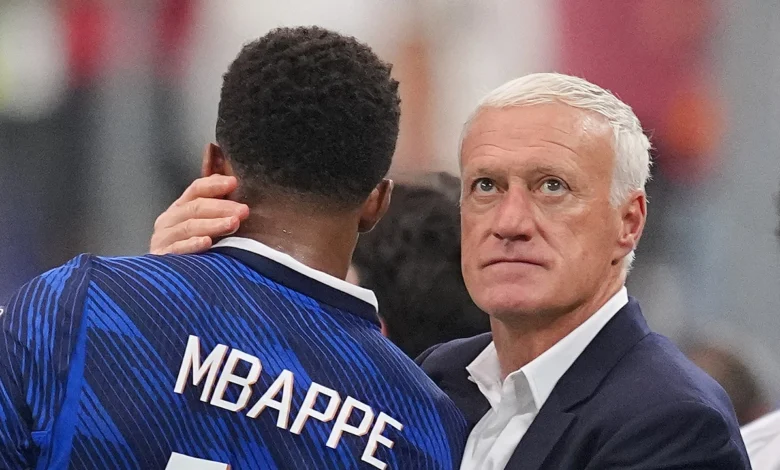
Manchester United has reportedly initiated contact with Didier Deschamps to gauge his interest in replacing Michael Carrick, whose position at Old Trafford has become increasingly precarious amid a turbulent start to the 2026-2027 campaign. While the 58-year-old World Cup-winning manager is currently enjoying a hiatus following his 14-year tenure with Les Bleus, sources close to the club indicate that the United hierarchy views him as a strategic solution to their ongoing tactical stagnation.
A Period of Instability at Old Trafford
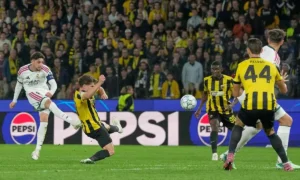
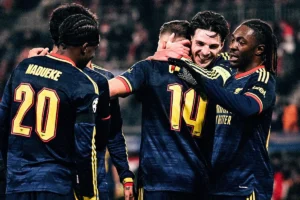
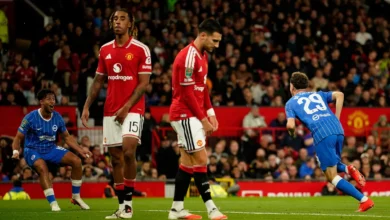
The current situation at Manchester United is characterized by inconsistent performance and mounting pressure from a disgruntled fanbase. Despite a recent, dramatic comeback victory against AS Roma in the UEFA Champions League, the club finds itself languishing in 17th place in the Premier League. The recent 0-2 defeat to Chelsea at Stamford Bridge served as a flashpoint, highlighting the widening gap between the team’s current output and the club’s historical expectations.
Michael Carrick, who assumed leadership with the intent of stabilizing the squad, has struggled to implement a cohesive identity. His tactical decisions, combined with a series of high-profile transfer investments that have failed to yield immediate returns, have left the boardroom searching for a more experienced hand. Although Carrick has survived multiple emergency meetings with the club’s leadership, the margin for error has vanished.
The Deschamps Factor: A Proven Winner
Didier Deschamps, who stepped down as France manager following the 2026 World Cup in North America, stands as one of the most decorated figures in modern football. His tenure with France, which concluded on July 28, 2026, was the most successful in the nation’s history. Under his guidance, France achieved the pinnacle of international football at the 2018 World Cup in Russia, followed by a victory in the 2021 UEFA Nations League and consistent deep runs in major tournaments, including the finals of Euro 2016 and the 2022 World Cup.
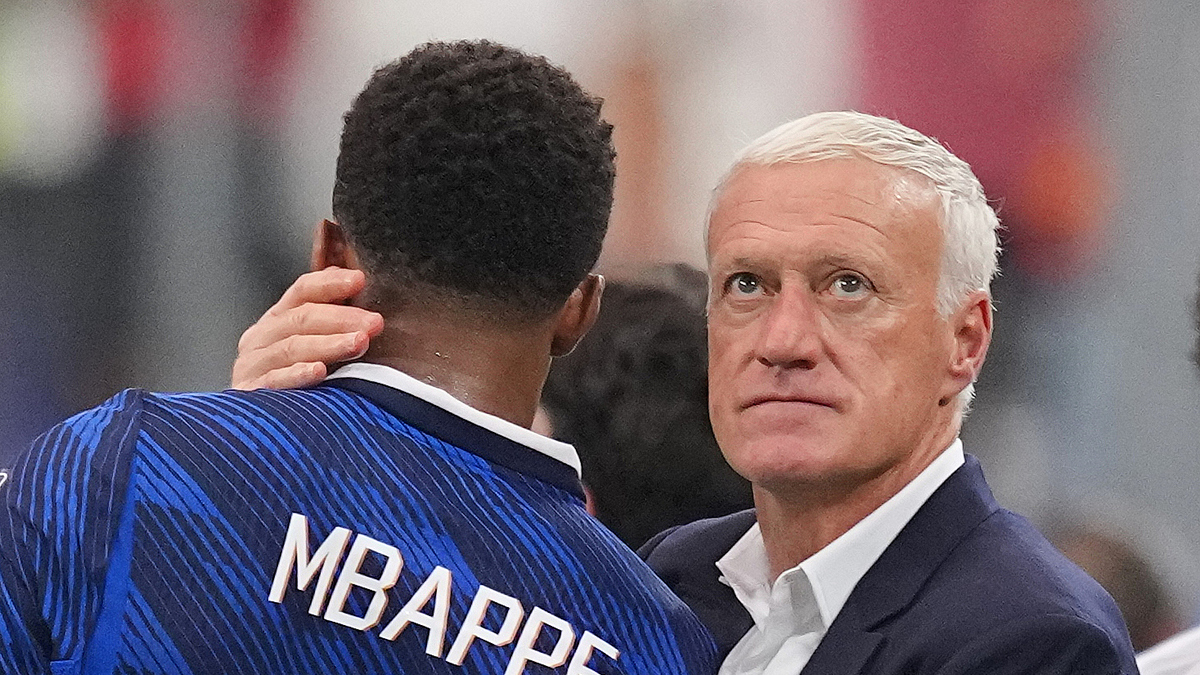
However, moving from the international stage to the high-intensity environment of the Premier League presents a distinct challenge. According to reports from the French publication Foot Mercato, Deschamps has been approached by the Manchester United board, yet he remains hesitant. He is reportedly not interested in merely accepting a job to satisfy immediate media pressure; rather, he is seeking a comprehensive, long-term project that aligns with his professional standards.
The Competition for the Managerial Hot Seat
While Deschamps is a primary target, he is not the only candidate on Manchester United’s radar. The club’s recruitment department has curated an extensive shortlist to prepare for a potential transition. Among the names currently favored by the board are Eddie Howe, Julian Nagelsmann, and Unai Emery. These managers represent a mix of Premier League experience and tactical innovation, qualities the club deems essential for a rebuild.
Further down the list, names such as Erik ten Hag, Wayne Rooney, and Roy Keane continue to be monitored, though they are currently considered secondary options compared to the tactical pedigree of Deschamps or Nagelsmann. Furthermore, Manchester United is not alone in their interest; Juventus has also reportedly made contact with the Frenchman to explore his availability as a potential successor to Luciano Spalletti, though that position is reportedly less enticing to Deschamps than a challenge in England.
Historical Context and Career Chronology
Should Deschamps accept an offer from Manchester United, it would mark his return to English football after more than 26 years. As a player, he famously featured for Chelsea during the 1999-2000 season, where he made 47 appearances and helped the club secure an FA Cup trophy.
His managerial career began at AS Monaco in 2001, where he quickly made his mark by leading the team to the 2003 French League Cup and the 2004 Champions League final, which they ultimately lost to Porto. Following a stint at Juventus, where he guided the club back to Serie A after their relegation scandal, he moved to Marseille in 2009. His time in Marseille was instrumental in ending the club’s 18-year wait for a league title during the 2009-2010 season, followed by three consecutive League Cup victories.
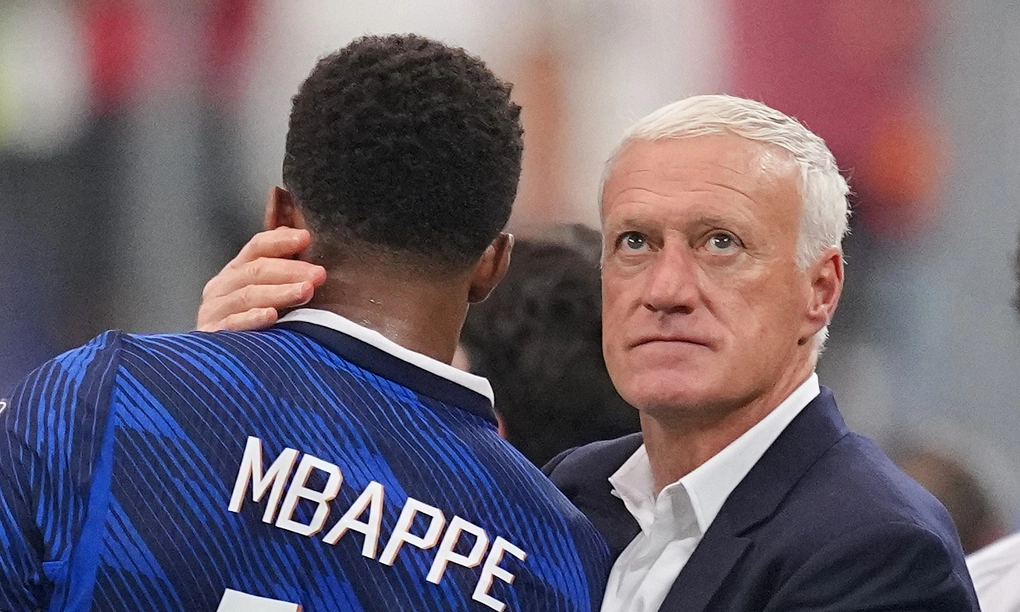
Deschamps remains one of only three men in history to win the World Cup as both a player and a manager, a feat shared only by Mario Zagallo and Franz Beckenbauer. This unique history of success is precisely what attracts Manchester United, who have struggled to replicate their past dominance in the post-Ferguson era.
Implications and Future Outlook
The pursuit of a new manager highlights the broader issues facing Manchester United’s executive structure. The club has been heavily criticized by fans and pundits alike for a lack of clear strategy regarding both personnel and long-term vision. The fact that the club is actively courting a figure of Deschamps’ stature suggests a shift toward seeking a disciplinarian who can impose order on a disjointed squad.
Deschamps, however, is known for his patience. He has signaled that he is willing to wait until the summer of 2027 if a suitable project does not materialize immediately. He has previously been linked to Real Madrid, a move that never came to fruition due to the preference of president Florentino Perez for Jose Mourinho. This history of caution suggests that Deschamps will not be swayed by the prestige of a club name alone.
For Manchester United, the coming weeks are critical. The board must decide whether to continue backing Carrick through the mid-season period or to make a drastic change. If the current trend of poor results continues, the club will likely be forced to accelerate their pursuit of a permanent successor, potentially increasing the financial and strategic stakes of their offer to managers of Deschamps’ caliber.
As the international break approaches, the noise surrounding the manager’s office at Old Trafford is set to intensify. Whether this leads to a new era under a veteran like Deschamps or a continuation of the current, volatile path remains the central question for the remainder of the 2026-2027 season. The club’s decision will not only define their immediate future but also signal their intentions to shareholders and supporters who are demanding a return to the elite tier of European football.