Vietnam Ministry of Information and Communications and VCCI Forge Strategic Partnership to Accelerate National Digital Transformation


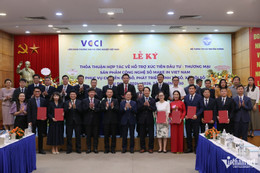
In a landmark move to catalyze the nation’s digital economy, the Ministry of Information and Communications (MIC) and the Vietnam Chamber of Commerce and Industry (VCCI) have officially entered into a comprehensive strategic partnership. This collaboration, signed on July 30, 2024, establishes a formal framework to promote the adoption of "Make in Vietnam" digital technologies across the business sector, setting an ambitious roadmap for the 2024–2026 period with a long-term vision extending to 2030.
The agreement marks a pivotal shift in how the government intends to facilitate the digital transition for Vietnam’s vast network of enterprises. By leveraging VCCI’s extensive reach among the business community and the MIC’s technical expertise, the initiative aims to bridge the gap between digital solution providers and traditional businesses, ultimately driving productivity and enhancing national competitiveness in the global digital landscape.
A New Paradigm for Digital Transformation
The partnership was solidified during a meeting between Minister of Information and Communications Nguyen Manh Hung and VCCI Chairman Pham Tan Cong. Departing from traditional, highly structured event protocols, the meeting focused on a candid dialogue regarding the practical hurdles businesses face in their digital adoption journey.
Minister Nguyen Manh Hung emphasized that after four years of spearheading national digital transformation efforts, the Ministry has identified a critical bottleneck: the commitment of leadership. According to the Minister, successful transformation is not merely a technical challenge but a management prerogative. "Digital transformation must start from the top," Minister Hung stated, noting that leaders must be willing to change habits and directly engage with digital tools to understand their impact.

The core philosophy of this new collaboration is to encourage VCCI to undergo its own internal digital transformation before promoting the practice to its members. By modeling the transition—adopting data-driven management and digital workflows—VCCI is expected to provide a practical case study that will build trust and momentum among the broader business community.
Chronology and Strategic Objectives
The national digital transformation program, which has now entered its fifth year, has transitioned from an awareness-raising phase to a phase of deep implementation. The timeline for this collaboration is set as follows:
- Phase 1 (Immediate – 3 months): The MIC will assist VCCI in a comprehensive digital overhaul of its internal operations. This serves as a pilot project to prove the efficacy of the proposed digital solutions.
- Phase 2 (2024-2026): Systematic implementation of the strategic agreement, focusing on connecting one million Vietnamese enterprises with digital technology providers.
- Phase 3 (Vision 2030): Full integration of "Make in Vietnam" solutions into the regional and global value chains, cementing Vietnam’s position as a digital hub.
The agreement specifically outlines a mechanism where the MIC provides a vetted list of high-quality "Make in Vietnam" digital solutions, services, and platforms. VCCI, in turn, will conduct surveys and research to identify the specific needs of its member associations and businesses, effectively creating a demand-driven marketplace for local tech firms.
Supporting Data and the Digital Landscape
Vietnam’s digital economy has been one of the fastest-growing in Southeast Asia. According to recent reports from industry analysts and the General Statistics Office of Vietnam, the digital economy’s contribution to the national GDP has been climbing steadily, with a target of reaching 20% by 2025.
However, the disparity in digital maturity remains a challenge. While large enterprises and multinational corporations in Vietnam have made significant strides, small and medium-sized enterprises (SMEs)—which make up over 97% of the total business population—often lag due to a lack of awareness, technical expertise, or budget constraints.

The partnership aims to address this by:
- Reducing Barriers to Entry: By providing curated, cost-effective, and locally supported solutions, the initiative removes the confusion often associated with choosing the right digital tools.
- Market Expansion: Domestic tech companies, including industry leaders such as Viettel, VNPT, MobiFone, FPT, CMC, and MISA, have already signaled their participation. These firms will now have a direct channel to engage with a vast, diverse client base, fostering a virtuous cycle of innovation and revenue growth.
- Knowledge Transfer: The collaboration includes provisions for intellectual property protection and technology transfer, ensuring that businesses not only adopt digital tools but also understand how to secure and scale them.
Official Responses and Institutional Commitment
VCCI Chairman Pham Tan Cong acknowledged the historical weight of the moment. "Digital transformation is an opportunity for economic growth and enterprise development," he noted. "For tech companies, it represents a market; for others, it is the key to competitiveness and economic efficiency."
Chairman Cong admitted that, in the past, there was a sense of hesitation—a "wait-and-see" approach—due to institutional complexities and a lack of clear guidance. However, the Minister’s direct, hands-on encouragement has provided a new sense of clarity. VCCI has committed to being a pioneer, with the Chairman asserting that the organization is ready to "dare to do, dare to pioneer, and dare to transform."
The Ministry of Information and Communications has committed to providing continuous consulting and strategic support. Nguyen Khac Lich, Director of the Authority of Information Technology and Communications Industry (under the MIC), highlighted that the partnership is designed to be highly tactical. The Ministry will provide a curated list of "top 10" solutions across various sectors, which VCCI will help deploy and monitor for performance.
Broader Impact and Economic Implications
The implications of this partnership extend beyond simple technology adoption. By creating a unified front for digital transformation, the Vietnamese government is signaling a shift toward a "platform-based" economy.

Enhancing Global Competitiveness: As Vietnam seeks to move up the global value chain, the digitization of manufacturing, logistics, and professional services is non-negotiable. The focus on "Make in Vietnam" solutions is particularly strategic, as it encourages the development of domestic intellectual property, reducing reliance on expensive foreign software and keeping capital within the local ecosystem.
Data-Driven Governance: A crucial component of the agreement is the aggregation of data regarding the needs of the business community. This data will allow the government to draft more effective policies, refine digital regulations, and provide targeted support where it is needed most.
The Human Element: Minister Hung’s emphasis on leadership is a recognition that technological tools are useless without the human will to adopt them. By making digital transformation a boardroom topic, the partnership aims to shift corporate culture in Vietnam toward one that is agile, adaptive, and resilient to the rapid shifts of the modern market.
Looking Ahead: The Road to 2030
As the partnership moves into its implementation phase, the success of the initiative will be measured not just by the number of enterprises that sign up, but by the tangible gains in efficiency and growth reported by those businesses. The collaboration between the MIC and VCCI creates a unique synergy: the MIC provides the technical roadmap and the policy support, while VCCI provides the operational infrastructure and the direct link to the private sector.
In the coming years, this initiative is expected to become the cornerstone of Vietnam’s digital strategy. With a clear focus on actionable steps—such as the planned "1 million enterprise" outreach and the regular forums for connecting supply and demand—the government and the private sector are finally aligning their efforts to ensure that no business is left behind in the race toward a digital-first economy.
The message is clear: for the Vietnamese enterprise, the digital transformation is no longer a luxury or an abstract goal. It is a mandatory requirement for long-term survival and prosperity. With this new strategic alliance, the tools and the framework for that journey are now firmly in place.
Related posts: