Vietnam accelerates 5G nationwide deployment with historic state support for telecommunications infrastructure

The National Assembly of Vietnam officially passed a landmark resolution on February 19, 2025, introducing a series of strategic policies and mechanisms designed to create a breakthrough in scientific, technological, and digital transformation. At the heart of this legislative shift is a historic commitment of state budget resources to incentivize telecommunications enterprises to rapidly expand 5G network infrastructure across the country. This policy marks the first time the Vietnamese government has provided direct financial assistance to telecommunications carriers for infrastructure development, signaling a top-down mandate to transition the nation into a high-speed digital economy.
Strategic Objectives and Financial Mechanisms
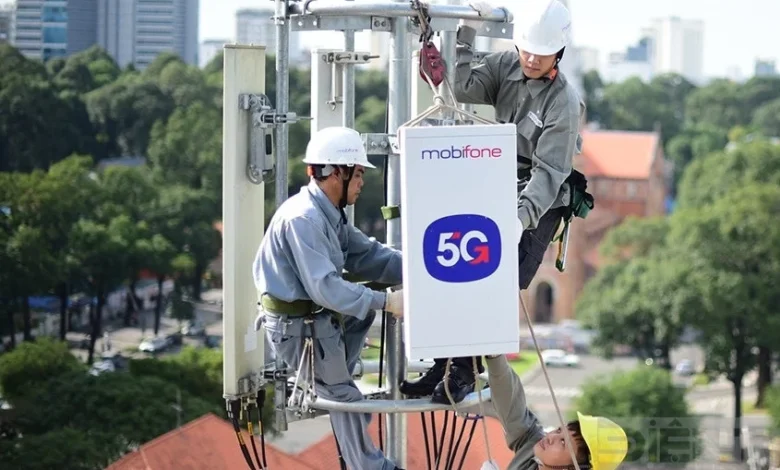
Under the newly enacted resolution, the government has set an ambitious target for the domestic telecommunications sector: the deployment of at least 20,000 operational 5G base transceiver stations (BTS) by the end of 2025. To facilitate this rapid rollout, the state will provide a financial subsidy equivalent to 15% of the average equipment cost for each 5G base station commissioned within the specified timeframe.
The total funding allocated for this support is strictly capped, ensuring that the aggregate state expenditure does not exceed the total proceeds generated from the government’s 2024 spectrum auctions for 5G radio frequencies. This fiscal design ensures that the program is self-sustaining, utilizing revenue from the industry itself to reinvest into the expansion of its core digital backbone. To qualify for this support, operators must ensure that their newly installed base stations are fully operational and verified by relevant authorities before the December 31, 2025, deadline.
Strengthening Global Connectivity
Beyond terrestrial 5G, the resolution addresses the critical need for robust international connectivity. It introduces specific policies to accelerate the development of undersea fiber-optic cable routes, particularly those where Vietnamese telecommunications companies hold equity or act as primary investors.
Recognizing that existing undersea infrastructure is insufficient and faces periodic maintenance risks, the new framework streamlines the investment and permitting process for these projects. Under the new guidelines, these international connectivity projects are granted the same priority status as major national investment projects. This shift includes the authorization of "direct contracting" for bidding packages between 2025 and 2030, a move intended to bypass the traditional bureaucratic hurdles that have historically delayed infrastructure projects. These efforts are strictly subject to national security and defense audits, ensuring that the expansion of the digital gateway aligns with Vietnam’s sovereign security requirements.
Industry Context and Current Status
The push for 5G comes at a pivotal moment for Vietnam’s digital transformation. According to Ministry of Information and Communications (MIC) data, prior to this resolution, the pace of 5G infrastructure development was relatively modest, with the industry collectively adding approximately 5,000 base stations annually. The jump to 20,000 in a single year represents a four-fold increase in deployment speed, requiring unprecedented cooperation between the state and the "big three" carriers: Viettel, VNPT, and MobiFone.
Viettel’s Lead in the 5G Race
Viettel, the nation’s largest operator, has already established a significant footprint. As of early 2025, the company operates over 6,500 5G base stations, covering 100% of the districts across all 63 provinces and municipalities, as well as critical hubs like industrial zones, airports, and major hospitals. Viettel’s reported performance metrics are promising, with average speeds ranging from 700 Mbps to 1 Gbps—roughly ten times faster than current 4G standards. By January 2025, the carrier reported 5.5 million 5G subscribers, nearly halfway to its annual target of 10 million, reflecting a robust consumer appetite for high-speed mobile data.
VNPT and MobiFone’s Expansion
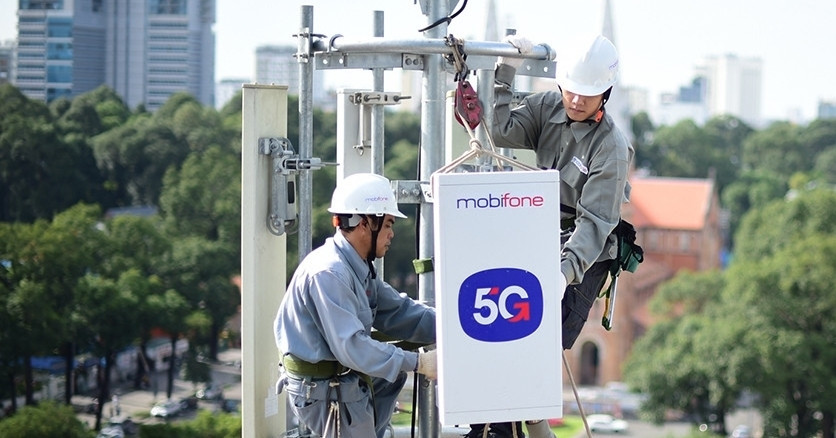
VNPT has focused its efforts on strategic density, ensuring 5G coverage across the central areas of all 63 provinces and 705 administrative districts. With approximately 3 million active 5G subscribers, VNPT is leveraging its existing fiber-optic footprint to backhaul the high-capacity traffic generated by 5G nodes. Meanwhile, MobiFone, while continuing its phase of service rollout, is aggressively expanding its spectral portfolio to reach 100% of communes nationwide. The company aims to position itself as a key provider for ultra-fast, low-latency connectivity, targeting the growing demand for IoT (Internet of Things) integration in urban settings.
Economic and Industrial Implications
The rollout of 5G is not merely a consumer upgrade; it is an industrial imperative. Rita Mokbel, Chairperson of the Board at Ericsson Vietnam, has underscored the transformative potential of the technology, noting that 5G serves as the foundation for the "Industry 4.0" revolution.
"5G will be a critical tool for Vietnam to achieve its goal of building a digital economy, which is projected to contribute 20% of the nation’s GDP by 2025," Mokbel stated. She highlighted that sectors such as manufacturing, logistics, and smart city management stand to benefit the most. In a manufacturing context, private 5G networks enable real-time automation, remote surgery, and high-precision robotics, all of which are essential for increasing labor productivity and optimizing resource management.
Furthermore, the low latency of 5G—nearly zero in optimal conditions—enables applications that were previously impossible on 4G, such as autonomous vehicle fleets, remote machine control in factories, and synchronized high-definition AR/VR training programs. For the carriers, the transition also opens new revenue streams beyond basic data plans, allowing them to provide customized, high-reliability network slices for enterprise clients.
Chronology of the 5G Transition in Vietnam
- 2020-2023: Initial testing phases and pilot programs for 5G services in major cities like Hanoi, Ho Chi Minh City, and Da Nang.
- 2024: The Ministry of Information and Communications conducts successful spectrum auctions for 5G frequencies, establishing a financial base for future infrastructure support.
- January 2025: Viettel reports a surge in 5G adoption, reaching 5.5 million subscribers within five months of full commercial launch.
- February 19, 2025: The National Assembly passes the landmark resolution, authorizing state subsidies and streamlined permitting for 5G and international fiber-optic projects.
- March–December 2025 (Projected): An accelerated 10-month window for the deployment of 20,000 new 5G base stations across the country.
Analysis: Challenges and Future Outlook
While the policy provides a clear pathway for expansion, the challenge remains in the logistics of execution. Deploying 20,000 base stations within a single calendar year requires a massive mobilization of technical personnel, equipment supply chain synchronization, and local site coordination.
The inclusion of international fiber-optic cable support is equally vital. Vietnam’s dependence on a limited number of subsea cables has historically made the country vulnerable to internet connectivity outages. By encouraging private-public partnerships and streamlining the approval process, the government is aiming to diversify its external digital links, thereby enhancing national digital resilience.
The financial support model, while generous, is also a calculated risk. By pegging the subsidy to 15% of the equipment cost, the government ensures that operators remain fiscally responsible while offloading a portion of the "first-mover" costs associated with 5G hardware. This effectively balances the need for rapid national development with the fiscal constraints of the telecom operators.
As Vietnam moves toward the end of 2025, the success of this initiative will be measured not just by the number of base stations erected, but by the tangible impact on the economy. If the transition to 5G successfully enables large-scale industrial automation and fosters a more resilient digital infrastructure, it could serve as a model for other developing nations seeking to bridge the digital divide and leapfrog into the next generation of global connectivity. The legislative support provided by the National Assembly has effectively cleared the path; the burden of execution now rests on the telecommunications operators to turn these policies into a high-speed reality for the nation.
Related posts: