Siêu dự án gần 86.000 tỷ, có lượng đất, cát cần dùng lớn chưa từng có, đủ lấp đầy 3 lần hồ Tây…phấn đấu hoàn thành trong một năm nữa

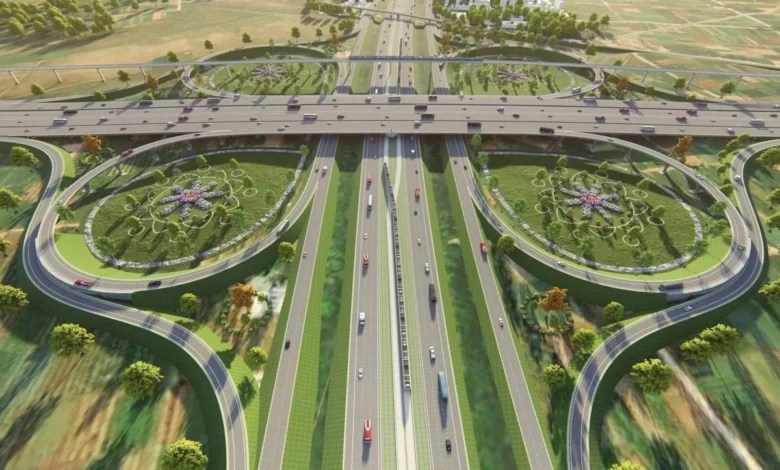
The Ring Road 4 Capital Region project represents a monumental shift in the infrastructural landscape of Northern Vietnam. Stretching across Hanoi, Hung Yen, and Bac Ninh, this massive arterial route is designed to alleviate chronic traffic congestion, stimulate regional economic integration, and serve as a catalyst for future urbanization. With a total investment estimated at approximately 85.813 trillion VND, the project is structured into seven distinct sub-projects, reflecting its technical complexity and regional scope.
Project Scope and Technical Specifications
Spanning a total length of 112.8 kilometers, the project is a multi-modal transit corridor that transcends traditional highway design. The segment traversing Hanoi accounts for 58.2 kilometers, while Hung Yen and Bac Ninh host 19.3 kilometers and 25.6 kilometers, respectively. An additional 9.7 kilometers of the alignment connects to the existing Noi Bai–Ha Long expressway, effectively creating a seamless bypass that encircles the capital.
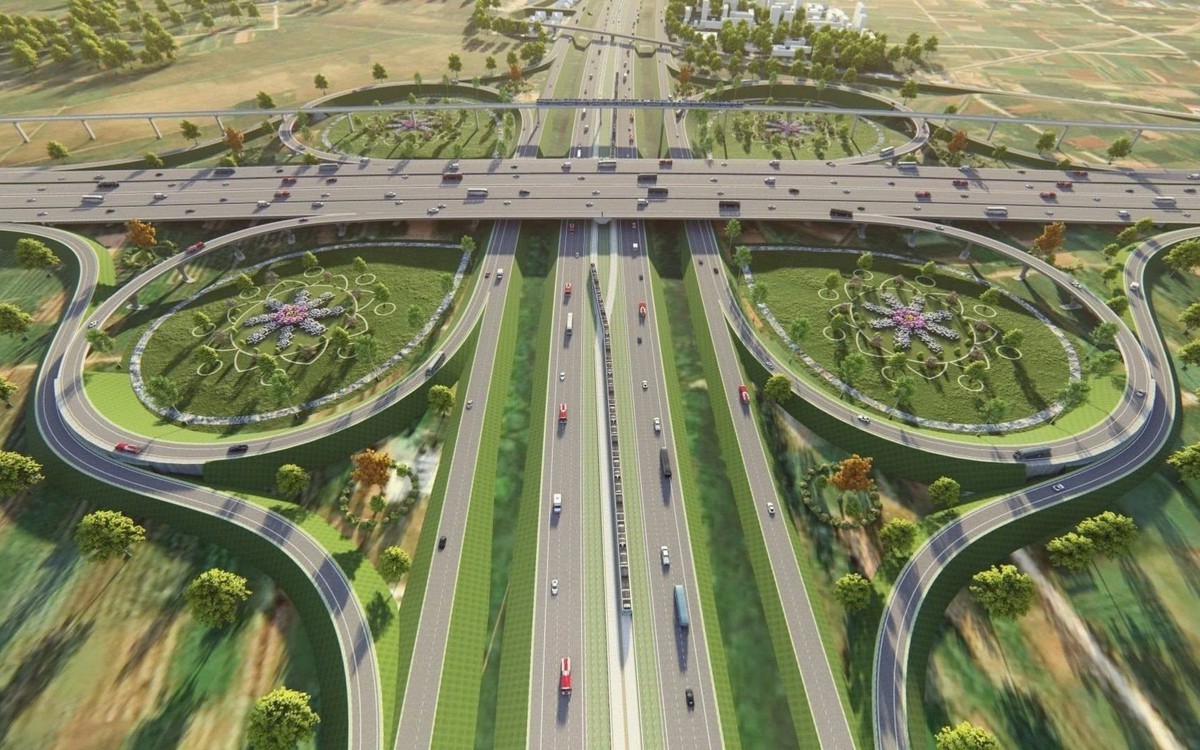
The project is designed under a multi-level traffic model. At its core lies a four-lane high-speed expressway with a design speed of 100 km/h, flanked by parallel frontage roads. In the initial phase, the expressway will feature a width of approximately 17 meters, with bridges extending to 18 meters. Future-proofing remains a core component of the master plan; upon completion of the final phase, the expressway will be expanded to six lanes, accompanied by emergency lanes to ensure uninterrupted traffic flow.
Remarkably, approximately 70% of the main alignment—roughly 80 kilometers—will be elevated to navigate existing terrain and minimize disruptions to local infrastructure, while the remainder will be constructed at grade.
Unprecedented Resource Requirements
The sheer scale of the project is underscored by the staggering volume of materials required for construction. Project engineers estimate that the embankment and ground improvement processes will necessitate over 12 million cubic meters of fill soil, approximately 10.4 million cubic meters of sand for base reinforcement and soft ground treatment, and 7.5 million cubic meters of construction-grade stone.
To visualize this magnitude, the total volume of materials required is equivalent to filling the West Lake in Hanoi three times over. This logistical challenge has required the establishment of specialized supply chains and stringent quality control measures to ensure that the structural integrity of the arterial route meets international safety standards. Furthermore, the land clearance operation is equally historic, involving the acquisition of nearly 1,400 hectares—nearly three times the surface area of West Lake—making it the largest land-clearing effort for a transportation project in the history of Hanoi.
Chronology and Implementation Status
The project’s progress is a testament to the accelerated pace of public works in the current fiscal period. By late 2026, the compensation, site clearance, and resettlement efforts have reached a completion rate exceeding 99%. This efficiency has cleared the path for the simultaneous deployment of various construction work packages across all three provinces.
The project timeline has been aggressive, with government authorities prioritizing the completion of critical sections. In specific segments, such as the 11-kilometer stretch involving ten bridges and complex interchange tunnels, construction teams have mobilized over 600 workers, aiming to achieve a significant milestone of traffic flow within the next three months. The bridge components, particularly the Hong Ha, Me So, and Hoai Thuong bridges, represent the most significant engineering challenges due to the necessity of working within active riverbeds and dealing with complex geological conditions.
Strategic Economic Implications
Ring Road 4 is widely regarded as a "lifeline" for the Northern Key Economic Zone. Its design philosophy moves beyond mere connectivity; it serves as a backbone for industrial and urban development. By providing a bypass that avoids the dense urban center of Hanoi, the highway will facilitate the movement of goods from industrial clusters in Bac Ninh, Bac Giang, and Hung Yen directly to the Noi Bai International Airport and the port of Hai Phong.
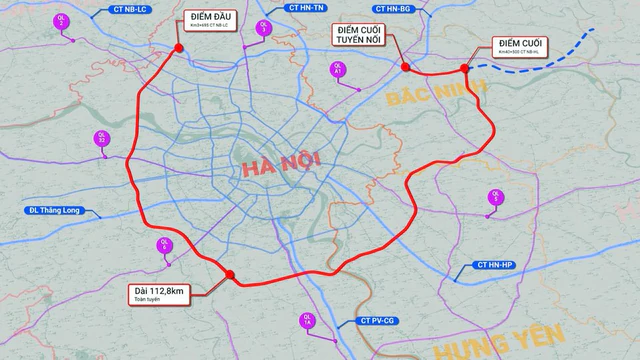
This redirection of logistics traffic is projected to significantly reduce transport time and operational costs for manufacturers, thereby increasing the competitiveness of the region’s exports. Furthermore, the project aligns with the Transit-Oriented Development (TOD) model. Along the 113-kilometer corridor, urban planning authorities have designated specific zones for industrial, commercial, and satellite urban development. This is expected to decentralize the capital’s population, drawing residents toward new, well-connected suburban hubs and alleviating the pressure on Hanoi’s inner city.
Official Perspectives and Future Outlook
Government officials have repeatedly emphasized the project’s role in the broader national strategy of regional integration. Representatives from the Ministry of Transport have noted that the project is not merely a road, but a foundational pillar for the next decade of economic growth in Northern Vietnam.
"The successful execution of Ring Road 4 demonstrates our capacity to manage large-scale, multi-provincial infrastructure projects," an official stated during a site inspection in mid-2026. "The synergy between Hanoi, Hung Yen, and Bac Ninh is unprecedented. We are seeing a high level of inter-provincial cooperation, which is essential for projects of this complexity."
While the logistical hurdles—such as material sourcing and navigating the intricacies of soft-ground engineering—remain, the project is moving forward with a clear vision. The emphasis on high-speed connectivity is balanced by a commitment to environmental mitigation and the preservation of existing drainage and ecological systems surrounding the river crossings.
Analysis of Regional Impact
The implications of Ring Road 4 extend far beyond the immediate construction phase. Once fully operational, the road is expected to:
- Decongest Urban Centers: By diverting heavy logistics and inter-regional traffic away from the capital’s ring roads (specifically Ring Road 3), the project will drastically reduce daily commute times for millions of citizens.
- Attract Foreign Direct Investment (FDI): Enhanced connectivity to key ports and airports makes the surrounding provinces more attractive to global electronics and manufacturing firms looking to establish regional headquarters.
- Foster Real Estate and Urban Growth: The development of satellite cities along the route is expected to create a more balanced urban distribution, preventing the hyper-concentration of services and housing within the historic Hanoi core.
- Standardize Infrastructure Quality: The adoption of advanced bridge construction techniques and multi-layered road design sets a new benchmark for future infrastructure projects across the country.
As construction progresses through the final phases, the focus will shift toward the installation of intelligent transport systems (ITS), including traffic monitoring cameras, electronic toll collection (ETC) gates, and real-time navigation aids. These systems are essential to maintaining the safety and efficiency of a highway designed to carry high volumes of high-speed traffic.
In conclusion, Ring Road 4 is more than a physical connection between provinces; it is a transformative project designed to unlock the economic potential of the Northern Capital Region. As the nation continues to modernize its infrastructure, the lessons learned from the execution of this project—from land acquisition strategies to complex river-crossing engineering—will likely serve as a blueprint for future large-scale transportation investments in Vietnam. The next few years will be critical as the project transitions from an active construction site to a functional artery that will define the trajectory of the region’s development for decades to come.