Indonesia arrests three suspects in high-level wiretapping scandal targeting President Prabowo Subianto and senior government officials

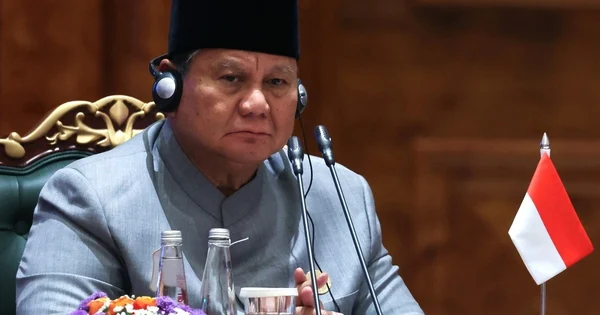
The Indonesian National Police have announced the apprehension of three individuals implicated in a sophisticated, long-running wiretapping operation that allegedly compromised the telecommunications of President Prabowo Subianto and several other high-ranking state officials. The arrests, confirmed by the Criminal Investigation Department (Bareskrim) on November 3, 2026, represent a significant security breach in the heart of the Indonesian government, sparking an urgent investigation into the vulnerabilities of the nation’s digital infrastructure.
The three suspects, identified by their initials as LSP, ASN, and EH, are currently being held at the national police headquarters in Jakarta. A fourth individual, identified as SU, is reportedly cooperating with authorities as a key witness. According to statements provided by the Minister of Law, Human Rights, Immigration, and Correctional Affairs, Yusril Ihza Mahendra, the suspect identified as LSP is a serving police officer currently on active duty, a detail that has added a layer of gravity and institutional embarrassment to the ongoing investigation.
Chronology of the Breach
The illicit operation was brought to light on October 30, 2026, when alert police officers detected anomalous patterns in network traffic and internal reporting systems. Following an internal audit and subsequent report to senior leadership, the Criminal Investigation Department launched a specialized operation to track the source of the irregularities.
Preliminary findings from the investigation suggest that the surveillance activity did not begin recently but has been ongoing for approximately one year. Witnesses indicate that the group systematically targeted the mobile devices of President Prabowo Subianto, as well as those belonging to senior government ministers, political figures, prominent members of the media, leaders of non-governmental organizations, and influential business executives.
By October 2026, as the internal investigation began to close in on the perpetrators, the suspects reportedly attempted to destroy evidence by remotely wiping data from the compromised devices. However, this act of destruction was detected by other security officers, leading to the rapid identification and eventual apprehension of the group. During subsequent raids, law enforcement seized a significant amount of digital evidence, including 11 mobile phones, one laptop, and four USB flash drives, all of which are currently undergoing forensic analysis.
The Scope of the Operation
The scale of the alleged wiretapping campaign is extensive, suggesting a coordinated effort to harvest sensitive information from the highest echelons of Indonesian society. The targets, which included state officials and civil society leaders, imply that the motives behind the operation were not merely confined to political espionage but potentially extended to economic intelligence and the manipulation of public discourse.
Minister Yusril Ihza Mahendra emphasized that the actions of the suspects were entirely unauthorized and disconnected from any official state-sanctioned investigations. "This was not a government operation," the Minister stated, moving to distance the administration from the criminal activities. "These individuals acted in direct violation of the law and the protocols governing state security."
The technical methodology employed by the group remains under investigation. While details regarding the specific software or hardware vulnerabilities exploited have not been fully disclosed to the public, the use of sophisticated techniques to access encrypted communications indicates a high level of technical proficiency among the suspects.
Legal Implications and Potential Penalties
The three suspects face a litany of charges, including illegal wiretapping, unauthorized access to electronic systems, and the intentional destruction of electronic evidence. Under Indonesian law, particularly the Law on Electronic Information and Transactions (ITE Law), such crimes carry severe penalties.
If convicted, the suspects could face up to 10 years in prison. The involvement of a serving police officer, LSP, introduces further complexities, as he will likely face an internal ethics tribunal in addition to criminal prosecution. Legal experts note that the prosecution will likely focus on proving the intent behind the wiretapping, which will determine the severity of the sentencing.
Security Implications and National Stability
The incident has sent shockwaves through the Indonesian political establishment, forcing a reassessment of cybersecurity protocols for government officials. For President Prabowo Subianto, the breach highlights the increasing difficulty of maintaining secure communications in an era of advanced cyber-espionage.

The fact that the operation remained undetected for over a year raises critical questions regarding the efficacy of existing security monitoring systems within the executive branch. Analysts suggest that the government will likely accelerate the implementation of more robust, multi-layered encryption protocols for all high-level communications.
Furthermore, the involvement of a police officer in the operation has triggered a debate regarding the vetting and internal monitoring of law enforcement personnel. The Indonesian National Police, under immense pressure to restore public trust, have pledged a "comprehensive and transparent" investigation. This includes determining whether the suspects acted alone or were part of a broader network of actors seeking to influence Indonesian policy or gain leverage over key decision-makers.
Broader Context of Digital Security in Indonesia
Indonesia has been a frequent target of both domestic and international cyber-attacks in recent years. With a rapidly digitizing economy and an increasingly complex political landscape, the nation has struggled to keep pace with the evolving threats posed by bad actors.
This particular case, however, is distinct due to the proximity of the targets to the head of state. Previous breaches in Indonesia have largely focused on financial institutions or corporate data, but the targeting of the President’s private communications marks a transition toward high-stakes political warfare. The incident also occurs against a backdrop of global concerns regarding the use of spyware, such as Pegasus, to monitor journalists and government officials, though there is no evidence yet to suggest the suspects were using such commercial-grade software.
As the forensic analysis of the seized devices continues, the government is expected to issue a formal briefing on the potential exposure of classified or sensitive information. The findings of this investigation will likely serve as a turning point for Indonesia’s national cybersecurity strategy, potentially leading to the creation of a dedicated task force focused exclusively on the protection of high-level government communication infrastructure.
For now, the focus remains on the judicial process. The public and the political class are watching closely to see how the justice system handles the case, particularly whether the investigation will lead to further arrests within the police force or other government institutions. The case of LSP, ASN, and EH serves as a stark reminder of the persistent threats facing modern governments, where the front lines of defense are no longer just physical borders, but the digital pathways that connect the machinery of the state.