Navigating the Shift: Why Manual Transmission Sedans Remain a Strategic Choice for Budget-Conscious Buyers in Vietnam


The Vietnamese automotive landscape has experienced a profound structural transformation over the past decade. Driven by rapid urbanization, worsening traffic congestion, and a growing consumer preference for convenience, automatic transmissions have steadily cemented their status as the dominant choice across almost every vehicle segment. For the modern urban commuter navigating bumper-to-bumper traffic in Hanoi or Ho Chi Minh City, the ease of a two-pedal layout is virtually undisputed. Yet, despite this overwhelming industry trend, manual transmission (MT) variants continue to carve out a resilient, highly practical niche within the domestic car market. This enduring presence is predominantly concentrated in the affordable sedan segments, where a distinct cohort of buyers—ranging from commercial fleet operators and ride-hailing drivers to pragmatic private owners—prioritizes upfront affordability, mechanical simplicity, and low operational overhead above all else.
The Economic Imperative of Three Pedals
To understand why manual transmissions refuse to fade into obsolescence in Vietnam, one must examine the fundamental economics of vehicle ownership and commercial operation. For individuals purchasing a car primarily to generate income—such as taxi drivers, technology-platform ride-hailers, and delivery contractors—every single million dong spent on the initial capital investment directly impacts the recovery timeline and overall profitability.

In the entry-level and B-segment sedan categories, the price differential between a manual transmission variant and its automatic counterpart typically ranges from tens of millions of dong. While this gap might appear modest to a luxury car buyer, it represents a substantial consideration for budget-driven operators seeking to minimize debt, lower bank financing requirements, and reduce insurance premiums tied to vehicle valuation. Furthermore, fleet managers often favor manual gearboxes for their mechanical robustness, straightforward maintenance requirements, and lower repair costs over hundreds of thousands of kilometers of arduous urban driving. Beyond purely commercial applications, a dedicated segment of traditional driving enthusiasts still champions manual transmissions, citing the unmatched sense of mechanical connection, direct power delivery, and granular control they afford the driver across varying road conditions.
Market Overview: Key Manual Sedan Options Available in Vietnam
Despite the broader industry shift toward automated convenience, several prominent automotive brands continue to feature manual transmission variants within their core product portfolios in Vietnam. These models serve as the backbone for cost-sensitive consumers and fleet buyers alike.
Mitsubishi Attrage MT: The Undisputed Price Leader
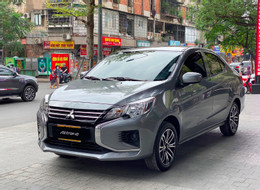
As one of the most accessible options in the local B-segment sedan market, the Mitsubishi Attrage MT occupies a critical entry point for frugal motorists. Listed with a retail price of 380 million VND, this import model—sourced directly from Thailand—is strategically engineered to appeal to customers who place absolute priority on economy and daily operating costs.
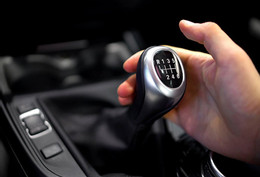
Under the hood, the Attrage MT is powered by a modest 1.2-liter three-cylinder gasoline engine, generating 78 horsepower and 100 Nm of torque, paired with a 5-speed manual transmission. While it represents the bare-bones baseline configuration of the Attrage lineup, lacking many of the creature comforts found in higher trims, its compelling acquisition cost makes it an exceptionally rational choice for commercial drivers and individuals seeking an ultra-low-cost daily commuter.
KIA Soluto MT: Maximum Affordability and Utility
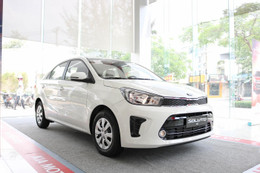
Competing directly with Mitsubishi in the ultra-budget category, THACO offers the KIA Soluto with starting prices beginning at 345 million VND for the standard MT variant, while the slightly upgraded MT Deluxe sits at 375 million VND. Both models utilize a more robust 1.4-liter engine producing up to 94 horsepower and 132 Nm of torque, mated to a 5-speed manual gearbox.
The base Soluto MT features a heavily stripped-down equipment list, including Simili vinyl seats, a basic CD entertainment system with four speakers, and dual front airbags. Conversely, the MT Deluxe variant introduces a 7-inch touchscreen infotainment system, leather upholstery, a rearview camera, and rear parking sensors. Despite the minor configuration differences, the Soluto series remains exceptionally popular among buyers whose primary objective is minimizing total cost of ownership.
Hyundai Accent 1.5 MT: Balancing Space and Economy
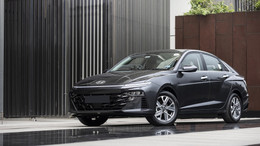
As one of the perennial best-sellers in the Vietnamese subcompact sedan market, the Hyundai Accent maintains its presence in the manual segment with the Accent 1.5 MT variant, priced at 439 million VND. Moving up slightly in price and physical footprint compared to the Attrage and Soluto, the Accent 1.5 MT is powered by a modern 1.5-liter engine delivering 115 horsepower and 144 Nm of torque, coupled with a 6-speed manual transmission.
The vehicle’s larger overall dimensions translate directly into superior interior cabin space and generous luggage capacity, making it a favorite among families and commercial operators who transport passengers frequently and require high levels of rear-seat comfort without sacrificing fuel efficiency.
Toyota Vios 1.5E MT: The Industry Benchmark for Commercial Fleets
No discussion of manual sedans in Vietnam is complete without mentioning the Toyota Vios. The Vios 1.5E MT, priced at 458 million VND, has long served as the default choice for commercial transport operators and traditional taxi companies across the country. Costing roughly 20 million VND more than its primary rival, the Hyundai Accent 1.5MT, the Vios justifies its price tag through legendary resale value, unmatched mechanical reliability, and ubiquitous parts availability.
Propelled by a 1.5-liter engine producing 106 horsepower and 140 Nm of torque through a 5-speed manual transmission, the 1.5E MT variant undercuts its automatic counterpart (the 1.5E AT) by approximately 30 million VND while retaining nearly identical core specifications. For business owners, this financial margin significantly reduces startup capital requirements.
KIA K3 Deluxe MT: A Rare Manual Option in the C-Segment
Moving up a class into the compact C-segment, the KIA K3 Deluxe MT stands out as a rare breed, offering a manual transmission configuration for buyers seeking a larger vehicle footprint at an accessible price point. Listed at a reference price of 549 million VND, the K3 Deluxe MT features a 1.6-liter gasoline engine that outputs 126 horsepower and 155 Nm of torque, paired with a 6-speed manual gearbox.
Despite being a manual-shift variant, the K3 does not skimp entirely on modern amenities, featuring an 8-inch infotainment touchscreen, electronic stability control, hill-start assist, and a rearview camera. It caters specifically to customers who require the expansive interior room and road presence of a C-segment sedan but are constrained by a tighter budget or simply prefer the engagement of a manual shifter.
Broader Market Implications and Future Outlook
The persistence of manual transmission sedans in Vietnam reflects a mature, highly segmented automotive market where manufacturers recognize that one size does not fit all. While marketing campaigns heavily promote autonomous driving technologies, advanced driver-assistance systems (ADAS), and smooth continuously variable transmissions (CVTs) or dual-clutch automatics, the baseline manual economy car fulfills an essential socioeconomic function.
Industry analysts note that as Vietnam’s middle class expands and ride-hailing platforms evolve toward stricter vehicle age and quality regulations, the market share of manual transmission passenger vehicles will inevitably continue its gradual, long-term decline. Urbanization and tightening emissions standards will further pressure automakers to phase out older engine and transmission combinations in favor of electrified or highly automated powertrains.
Nevertheless, as long as commercial passenger transport, independent contracting, and budget-driven private ownership remain vital economic drivers in the country, the humble manual sedan will retain its hard-fought foothold. For thousands of Vietnamese motorists taking their first step toward vehicle ownership or launching a small business, the three-pedal configuration remains an indispensable tool for economic advancement.