Massive Fire Destroys Nữ Hoàng Karaoke Parlor in Đồng Nai, Prompting Heavy Excavator Deployment to Douse Flames

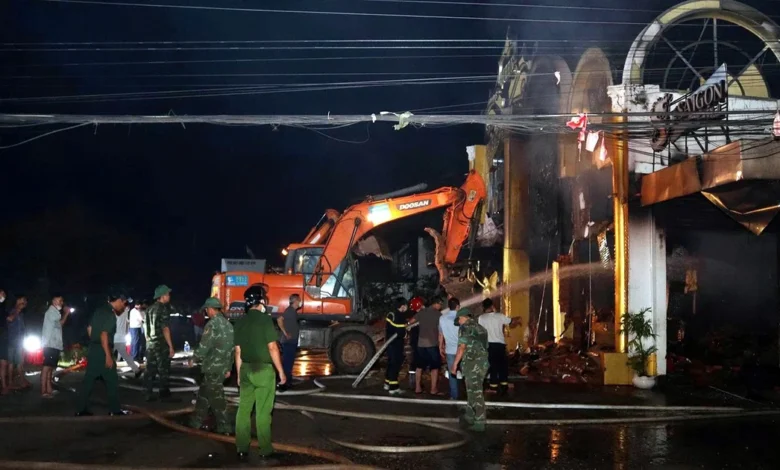
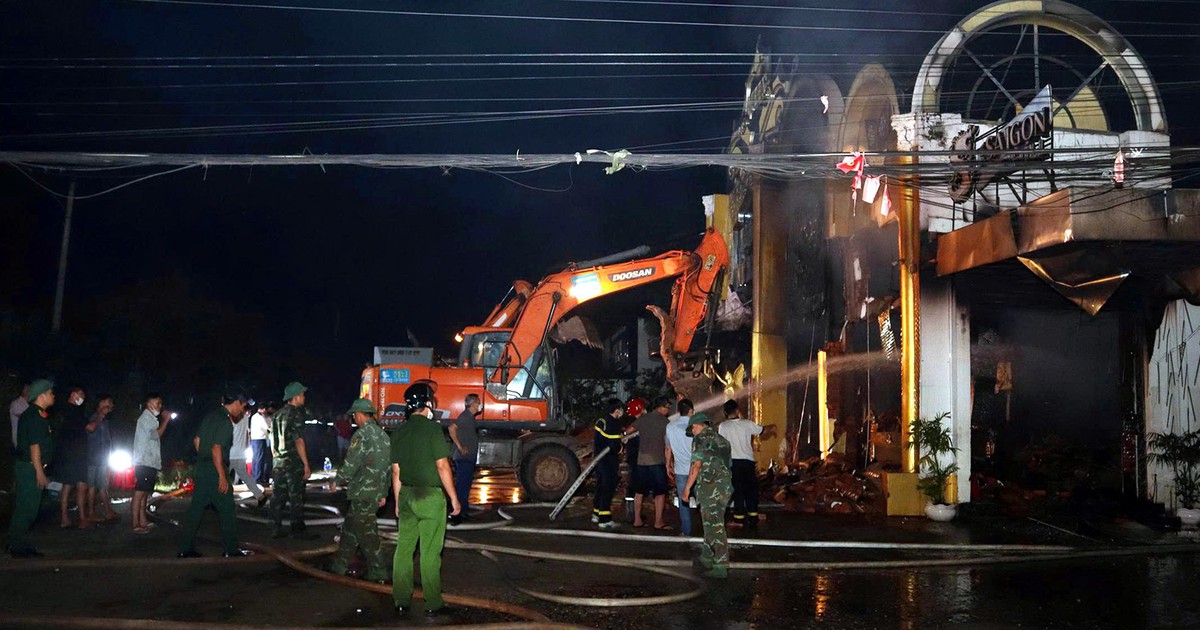
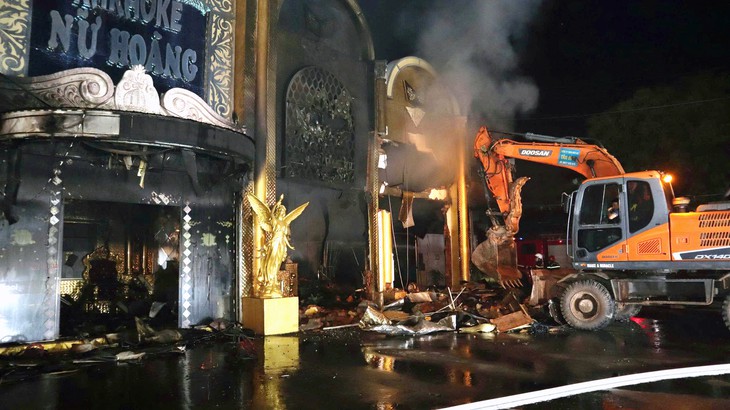
A devastating fire broke out at the Nữ Hoàng (Queen) karaoke parlor, located on Hai Bà Trưng Street in Phú Thanh Residential Group, Bình Phước Ward, Đồng Nai Province, on the afternoon of November 8. The ferocious blaze, which started deep within the establishment’s interior, triggered a massive emergency response that lasted nearly three hours. Due to the complex layout of the building, dense, toxic smoke, and the presence of highly flammable materials, local firefighting authorities were forced to take the unprecedented step of mobilizing three heavy-duty excavators to structurally breach the building’s facade and side walls to reach the seat of the fire.
The incident has since reignited urgent conversations surrounding fire safety protocols, building material compliance, and the structural challenges emergency responders face when battling fires in modern commercial entertainment venues. While the rapid evacuation of patrons and staff prevented any loss of life, the material damage to the property is extensive, leaving local authorities to investigate the precise cause of the disaster.
Chronology of Events: From Initial Alarm to Final Extinguishment
The sequence of events began at approximately 4:35 PM on November 8, when the Area 14 Fire Prevention, Rescue, and Relief Team received a distress call reporting a fire at the Nữ Hoàng karaoke parlor, a business registered under the ownership of Trần Xuân Đông. The venue, situated in a bustling commercial district, is known for its sprawling layout and high foot traffic.
Recognizing the potential severity of a fire in a multi-room entertainment venue, emergency dispatchers immediately mobilized resources. The initial response involved eight fire engines and specialized vehicles accompanied by 26 officers and soldiers dispatched directly to the scene. Simultaneously, the Area 15 Fire Prevention, Rescue, and Relief Team reinforced the response by deploying an additional three fire trucks and 12 personnel.
As the scale of the fire became apparent—fueled by interior furnishings, soundproofing materials, and decorative plastics—further assistance was requested. Local industrial and municipal assets, including units from the K882 Warehouse and the Bình Phước Water Supply Company, deployed two specialized water-tanker trucks to ensure a continuous water supply in an area where local hydrant pressure quickly became strained.
Despite the overwhelming deployment of personnel and equipment, firefighters encountered severe tactical obstacles upon arrival. The Nữ Hoàng karaoke establishment spans approximately 250 square meters and is designed in a horseshoe-shaped configuration (U-shape). It features two primary access corridors on either side of the building and a single emergency exit at the rear.
The fire originated in a private karaoke room deep within the interior of the venue. Investigators believe an electrical short circuit or equipment malfunction in this room served as the ignition point. Within minutes, the flames consumed the room’s synthetic furnishings, releasing thick, billowing clouds of black smoke that rapidly choked both access corridors and the rear exit.
When the fire first broke out, the venue was operating with a small number of customers and staff. Upon noticing the smoke, the owner and on-duty employees grabbed portable fire extinguishers and attempted to suppress the flames. However, their initial efforts were quickly thwarted. The dense concentration of combustible materials—such as acoustic foam, synthetic wood paneling, and plush carpeting—generated intense heat and toxic fumes that overwhelmed the small extinguishers and forced everyone inside to flee for their lives.
When professional firefighters arrived, they faced a near-impenetrable wall of smoke. Because the fire was concentrated near the exact center of the building, and the ingress paths were blocked by toxic fumes and collapsing interior structures, conventional hose lines deployed from the front entrance could not penetrate deep enough to reach the seat of the blaze.
Strategic Intervention: Deploying Heavy Machinery
Faced with a deteriorating tactical situation and the risk of structural collapse, incident commanders made the critical decision to alter their strategy. Rather than risking firefighters entering a smoke-logged, labyrinthine structure with potential backdraft risks, authorities mobilized heavy machinery to break through the building’s exterior.
Three heavy-duty excavators were brought to the scene. Operating under the direction of fire commanders, the heavy equipment systematically battered down sections of the building’s front facade and side walls. This calculated destruction served a dual purpose: it created immediate ventilation points to release trapped heat and toxic gases, and it cleared direct pathways for high-pressure water monitors to target the heart of the fire.
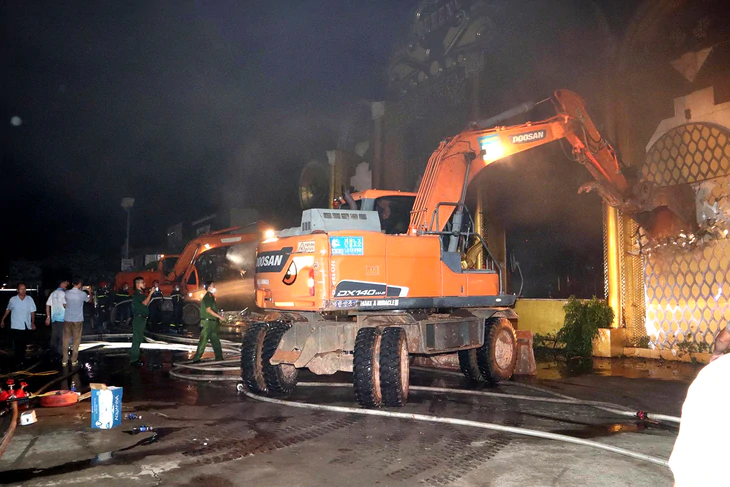
The use of excavators in structural firefighting, while uncommon in residential fires, is increasingly utilized in commercial and industrial settings where buildings lack adequate exterior windows, possess reinforced walls, or store hazardous materials that prevent safe interior entry.
By strategically breaking open the structure, firefighters were able to deluge the interior rooms with foam and water. After nearly three hours of intense, coordinated efforts, the fire was officially brought under control and completely extinguished by early evening.
Post-Fire Inspection and Structural Assessment
Inspections conducted after the flames were extinguished revealed the true scale of the devastation. The entire front facade of the Nữ Hoàng karaoke parlor was charred black, with large swaths of brick walls completely collapsed. Piles of rubble, twisted metal frames, shattered glass, and burnt construction materials lay strewn across the entrance and surrounding pavement.
Inside the building, the damage is catastrophic. Approximately 250 square meters of interior space suffered heavy structural and thermal damage. Virtually all equipment, including high-end sound systems, televisions, lighting rigs, custom interior decoration, and furniture, was reduced to ash or rendered entirely unusable.
Despite the profound material losses, local authorities confirmed a miraculous outcome regarding human safety: no injuries or fatalities were reported among customers, staff, or the responding emergency personnel. The prompt realization by employees that the fire was uncontainable, combined with the swift execution of spontaneous evacuations, prevented a tragedy similar to other high-profile karaoke parlor fires recorded in Vietnam’s recent history.
The Đồng Nai Police Department, in coordination with forensic investigators and local municipal authorities, has launched a formal investigation to determine the exact cause of the fire. Concurrently, insurance adjusters and property owners are working to compile a comprehensive inventory of the financial losses incurred.
Broader Implications and Safety Concerns in Commercial Entertainment Venues
The incident at the Nữ Hoàng karaoke parlor has once again placed the spotlight on fire safety compliance within the hospitality and entertainment sectors. Karaoke bars, lounges, and clubs frequently present unique and heightened fire risks due to several structural and operational factors:
- Acoustic and Decorative Materials: To achieve soundproofing, establishments often utilize dense layers of foam, rubber, synthetic fabrics, and wood paneling. Many of these materials are highly flammable and, when ignited, produce thick, suffocating smoke containing toxic chemicals such as hydrogen cyanide and carbon monoxide.
- Limited Natural Ventilation: Designed to contain sound and maintain a private ambiance, karaoke rooms typically lack exterior windows. In the event of a fire, this lack of openings traps heat and smoke, severely reducing visibility and making interior navigation perilous for both occupants and firefighters.
- Complex Layouts: Venues often feature narrow corridors, compartmentalized private rooms, and maze-like floor plans. If emergency lighting fails or exits become blocked by smoke, patrons unfamiliar with the building layout can easily become disoriented.
In recent years, regulatory bodies across Vietnam have intensified inspections of karaoke parlors, bars, and massage parlors, enforcing stricter adherence to national fire safety standards (QCVN). Facilities failing to meet requirements—such as maintaining unobstructed exit routes, installing automated sprinkler systems, and utilizing certified flame-retardant interior materials—face heavy fines or mandatory suspension of operations.
The quick containment of the Đồng Nai fire prevented a catastrophic loss of life, but the incident serves as a stark reminder of the volatility inherent in such commercial spaces. As urban centers continue to expand and entertainment venues multiply, municipal authorities emphasize that proactive risk management, rigorous staff training in emergency response, and uncompromising adherence to structural fire codes remain the absolute best defense against disaster.
The investigation into the Nữ Hoàng karaoke parlor fire remains ongoing, with final conclusions expected to yield further recommendations for local business owners regarding operational safety and electrical system maintenance.