Segway Redefines Two-Wheeler Safety and Performance with the X Cruiser Debut at EICMA 2024

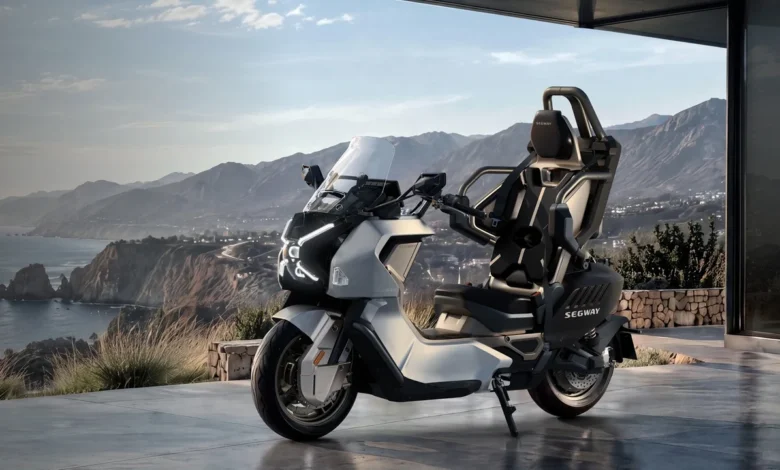
The global landscape of urban mobility is undergoing a profound transformation, driven by the rapid electrification of two-wheeled transport and an increasing consumer demand for automotive-grade safety in lightweight vehicles. At the prestigious EICMA 2024 exhibition in Milan, Segway captured the attention of the international automotive press by unveiling a radically unconventional electric two-wheeler: the Segway X Cruiser. Diverging sharply from traditional scooter and motorcycle design philosophies, this innovative vehicle bridges the gap between the compact agility of a scooter and the robust occupant protection systems typically reserved for modern automobiles. By integrating automotive crash structures, roll cages, safety belts, and active driver-assistance technologies directly into a two-wheeled architecture, Segway is challenging legacy standards of rider safety and charting a bold new course for personal transportation.
A Radical Shift in Two-Wheeler Safety Philosophy
For decades, the fundamental paradigm of motorcycle and scooter safety has relied entirely on external protective gear worn by the operator—ranging from helmets and leather racing suits to armored jackets, gloves, and wearable airbag systems. While effective to a degree, this approach leaves the rider vulnerable to severe injuries in high-impact collisions. Segway’s X Cruiser upends this traditional model by internalizing the protective structure directly into the chassis and body of the vehicle itself.
The development of the X Cruiser is rooted heavily in rigorous automotive crash test simulations. Rather than treating the rider as an external entity exposed to environmental hazards, Segway has engineered a protective exoskeleton that encompasses either the full body or the lower half of the occupant. The vehicle features a specialized four-way anti-collision structural framework, progressive crumple zones designed to absorb kinetic energy during an impact, and integrated safety belts that secure the rider firmly in place. Furthermore, the X Cruiser incorporates advanced active safety systems that are standard in modern passenger cars, including blind-spot monitoring and lane-change warning technologies, significantly mitigating the risk of accidents before they occur.
Diverse Configurations and Motorsport-Inspired Ergonomics
To cater to varying consumer preferences and regulatory environments across global markets, Segway has developed multiple configuration options for the X Cruiser platform. The lineup ranges from traditional semi-enclosed scooter formats to deeper, more secure seating positions that encircle the operator.
The crown jewel of the lineup is a variant equipped with a snug, motorsport-inspired racing seat, complete with a multi-point safety belt and reinforced perimeter framing. For riders seeking enhanced protection against adverse weather conditions, Segway offers an optional canopy attachment that increases overhead coverage without compromising the vehicle’s nimble handling dynamics. This modular approach allows the manufacturer to scale the X Cruiser from an urban commuter vehicle into a highly specialized personal mobility pod.
Despite these advanced safety features, company representatives have clarified that the current iterations displayed at EICMA remain in the late prototyping and testing phases. The X Cruiser has not yet achieved official automotive-grade crash test certifications, as formal testing and regulatory compliance will depend heavily on the specific requirements of each target regional market. Nevertheless, the integration of a racing-inspired bucket seat and an integrated roll cage represents a monumental leap forward in minimizing rider trauma during severe collisions.
Cell-to-Body (CTB) Technology and Powertrain Engineering
Beneath the protective exterior armor lies a highly sophisticated and completely modern electric vehicle architecture. Segway has implemented advanced Cell-to-Body (CTB) manufacturing technology, a construction method where battery cells are integrated directly into the structural frame of the vehicle. This engineering approach not only optimizes interior space and lowers the center of gravity but also dramatically increases the overall torsional rigidity of the chassis.
Technical specifications released by Segway indicate that the X Cruiser achieves an impressive operating range of nearly 200 kilometers (approximately 124 miles) on a single charge, making it exceptionally well-suited for both daily urban commuting and extended weekend journeys. Charging infrastructure is tailored to regional standards: the European specification is slated to feature a standard 4.5 kW AC Type 2 charging port, while the Chinese domestic market variant will offer advanced DC fast-charging capabilities as an available option.
Rolling on a staggered wheel setup—comprising a 15-inch front wheel and a 14-inch rear wheel wrapped in high-grip Michelin City Grip tires—the X Cruiser delivers exceptional road-holding stability. The cockpit is dominated by a sweeping 10.25-inch TFT digital display that provides comprehensive telemetry, navigation, and system diagnostics. Additionally, the vehicle offers an optional 55-liter rear storage compartment equipped with an electric release mechanism, ensuring that practicality is not sacrificed for safety.
Strategic Partnerships and Technological Synergy
The development of the X Cruiser and Segway’s broader electric motorcycle portfolio has not occurred in a vacuum. Industry insiders have noted that Segway benefits from specific intellectual property licenses and technical know-how derived from automotive giant BMW, though Segway maintains full operational independence in the design, engineering, system integration, rigorous testing, manufacturing, and certification phases of the project.
Furthermore, Segway’s collaboration with tire titan Michelin extends beyond simple component supply. The two companies have established the Dakar Rally Factory racing team, utilizing the notoriously grueling conditions of the Dakar Rally as a real-world testing laboratory for Segway’s high-performance electric off-road powertrains and tire compounds.
Expanding the Ecosystem: The Orca Concept and X Series
The X Cruiser was not the only vehicle turning heads at Segway’s EICMA 2024 showcase. The manufacturer also pulled the wraps off the Orca Concept, a large-displacement electric maxi-scooter that pushes the boundaries of two-wheeled performance. Built upon an advanced 800V electrical architecture, the Orca Concept houses a massive battery pack with a capacity approaching 20 kWh.
According to preliminary technical targets, the Orca Concept boasts an operational range of up to 300 kilometers (186 miles) on a single charge, a blistering 0-to-100 km/h acceleration time of just 4.5 seconds, and ultra-fast charging capabilities that can replenish 200 kilometers of range in a mere 20 minutes. The vehicle features multi-link front and rear suspension systems, multi-stage electronic damping, and the same robust CTB chassis architecture seen on the X Cruiser. While currently classified as a technological showcase, the Orca Concept signals Segway’s intent to compete directly with traditional high-performance maxi-scooter manufacturers.
In the off-road sector, Segway is significantly expanding its X Series lineup with the introduction of the Xaber X1000, the Xaber 350, and specialized variants of the Xaber 300 tailored specifically for the North American and European markets.
Commercial Timeline and Market Rollout
Following its successful public debut at EICMA 2024, Segway has confirmed definitive plans for the commercial mass production of the X Cruiser. The vehicle is currently scheduled to hit the market in China and Europe during the 2027–2028 production window. However, an official commercialization timeline and launch strategy for the United States market have not yet been publicly disclosed by corporate executives.
The Evolution of an Iconic Brand
Founded at the turn of the millennium and globally recognized for pioneering self-balancing personal transporters like the Segway PT, the company has undergone a dramatic corporate evolution over the past decade. By successfully expanding into consumer electric scooters, e-bikes, go-karts, and high-performance all-terrain sports vehicles, Segway laid the foundational expertise necessary to transition into the professional electric motorcycle manufacturing sector.
With the introduction of the X Cruiser and the Orca Concept, Segway is no longer merely a manufacturer of novel urban mobility gadgets; it has firmly established itself as an ambitious, forward-thinking automotive engineering powerhouse poised to redefine the future of two-wheeled safety and electrification on a global scale.