Passenger motorcycle umbrella usage in Vietnam is a prohibited traffic offense that can lead to fines for both the passenger and the operator.

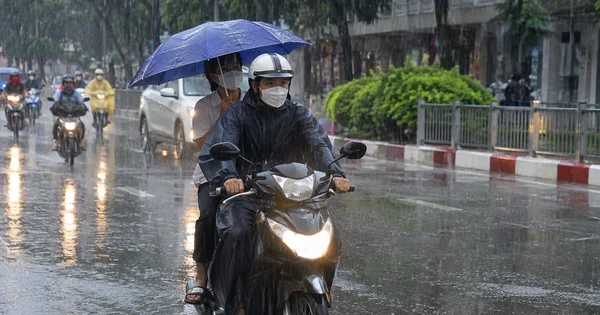
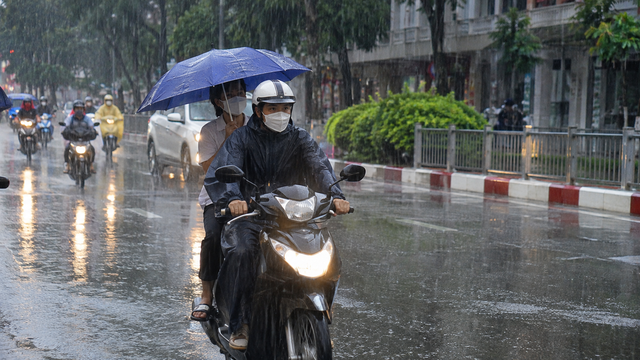
During the monsoon season or sudden tropical downpours, it is a common sight on the streets of Vietnam to see a passenger riding pillion on a motorcycle holding an open umbrella. Often, the passenger attempts to shield both themselves and the driver from the rain. While this may appear to be a practical, albeit temporary, solution to avoid getting soaked, it is a direct violation of traffic safety laws and carries significant risks for everyone involved. Despite the widespread nature of this behavior, many citizens remain misinformed, believing that because the passenger is not the one operating the vehicle, the act is permissible.
Legal Framework and Regulatory Enforcement
According to Point b, Clause 4, Article 33 of the 2024 Law on Road Traffic Order and Safety, passengers traveling on two-wheeled or three-wheeled motor vehicles are strictly prohibited from using umbrellas. Furthermore, the law explicitly dictates that the operators of these vehicles are also forbidden from using umbrellas while driving.
The regulatory environment was further clarified under Decree 168/2024/ND-CP. This legislative update provides specific financial penalties for such violations. Under Article 12, Clause 2, Point d, a passenger found using an umbrella while on a motorcycle is subject to a fine ranging from 200,000 to 250,000 VND. Crucially, the driver is not exempt from this responsibility. Article 7, Clause 1, Point d of the same decree mandates that the operator of a motorcycle who allows a passenger to use an umbrella is subject to a fine of 200,000 to 400,000 VND.
Consequently, in a scenario where a passenger opens an umbrella to shield themselves from the rain, both individuals on the vehicle face punitive measures. The combined financial impact for a single incident can range between 400,000 and 650,000 VND. If the operator themselves were to use the umbrella while driving, the penalties escalate significantly, with fines ranging from 800,000 to 1,000,000 VND under Article 7, Clause 4, Point d.
The Physics of Danger
The prohibition of umbrella use on motorcycles is not merely a bureaucratic measure; it is rooted in fundamental principles of physics and road safety. When an umbrella is opened on a moving motorcycle, it creates a massive surface area that acts as a sail. Even a moderate gust of wind or the aerodynamic pressure generated by the vehicle’s speed can exert enough force to pull the umbrella—and the person holding it—off balance.
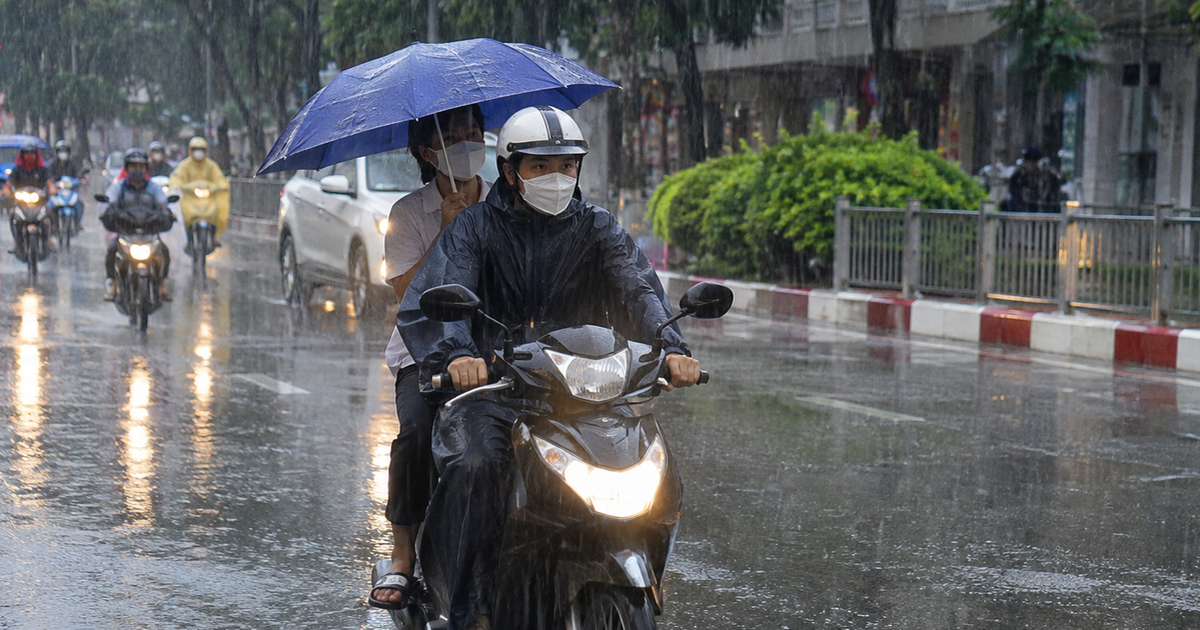
When the passenger loses balance, the stability of the entire motorcycle is compromised. Because the passenger is physically connected to the driver, any sudden jerk or loss of control by the passenger forces the driver to instinctively react, often resulting in erratic steering or sudden braking. In high-traffic environments, this unpredictability is a recipe for accidents. Furthermore, the umbrella often creates a blind spot. If it is held too high or at an improper angle, it can obstruct the rear-view mirrors or limit the peripheral vision of the driver, preventing them from noticing other vehicles, obstacles, or traffic signals.
Chronology of Public Awareness and Regulatory Shifts
For decades, the use of umbrellas on motorcycles was viewed as a nuisance rather than a high-risk criminal offense. However, as the number of motorcycles in urban centers like Hanoi and Ho Chi Minh City surged past the millions, traffic authorities began tracking accident data related to "miscellaneous objects carried on vehicles."
In the late 2010s, traffic safety committees began noting an increase in "non-collision" falls, where riders lost control due to external factors like wind-blown objects. Following the formalization of the 2024 Road Traffic Order and Safety Law, the Ministry of Public Security initiated a series of awareness campaigns aimed at replacing this dangerous habit with the use of standard-issue rain ponchos. The shift in legal language—from broad "obstruction" clauses to specific prohibitions against "umbrellas"—was intended to remove any ambiguity that might have previously allowed offenders to argue their case in court or during traffic stops.
Societal Implications and Expert Analysis
Traffic safety experts argue that the persistence of this behavior is linked to the "convenience culture" of the region. Many commuters view the purchase of high-quality, fitted rain gear as an unnecessary expense, opting instead for the easily accessible umbrella they already own. However, analysts point out that the cost of a traffic fine, combined with the potential medical costs of a fall, far outweighs the price of a proper, safety-compliant rain poncho.
The psychological aspect of this behavior is equally telling. Many commuters assume that as long as they are moving slowly in congested traffic, the risk is minimal. Data from traffic monitoring centers, however, suggests the opposite: low-speed congestion is where most "tipping" accidents occur. When a vehicle is moving slowly, its gyroscopic stability is lower, making it significantly more susceptible to the destabilizing force of a gust of wind caught by an umbrella.
Official Responses and Mitigation Strategies
Local authorities and traffic police departments have emphasized that the regulation does not forbid the transport of an umbrella. Commuters are permitted to carry umbrellas on their bikes, provided they are securely folded, stowed in a bag, or attached to the vehicle in a way that does not interfere with the operation of the motorcycle. The offense occurs specifically when the umbrella is deployed while the vehicle is in motion.
To promote compliance, the Traffic Police Department has issued several recommendations:
- Investment in Appropriate Gear: Drivers and passengers are encouraged to use raincoats that fit the body properly. Oversized, loose-fitting raincoats can also be dangerous if they flap into the wheels or the engine chain.
- Maintenance of Visibility: Any protective gear must not obstruct the driver’s ability to see lights, signals, or surrounding traffic.
- Strategic Stopping: During periods of extreme weather, such as tropical storms or heavy wind, the safest action is to pull over at a designated shelter until conditions improve. Attempting to navigate through a storm with an umbrella is a statistically high-risk activity that rarely yields the desired result of staying dry.
The Broader Impact on Traffic Flow
Beyond individual safety, the practice of using umbrellas on motorcycles contributes to wider traffic congestion. A motorcycle rider struggling to hold an umbrella often occupies more lane width than necessary, forcing surrounding vehicles to maintain a wider, more cautious berth. This creates a "ripple effect" of reduced speed and increased lane merging, which slows down the entire traffic flow.
In the eyes of the law, the priority remains the collective safety of the road. By strictly enforcing the ban on umbrellas, authorities aim to reduce the frequency of preventable falls and side-swipes that plague urban roads during the rainy season. As Vietnam continues to modernize its traffic infrastructure and safety standards, the transition from makeshift solutions to standard safety equipment—like helmets and proper rain gear—remains a critical component of the national effort to reduce road fatalities.
The legal reality is clear: the law does not distinguish between using an umbrella for sun or rain, nor does it distinguish based on whether the passenger is shielding themselves or the driver. The act of opening an umbrella while in transit is a prohibited action that triggers immediate legal liability. As the 2024 regulations are applied more rigorously, both domestic commuters and visitors are advised to prioritize safety over the convenience of a handheld umbrella, ensuring that they remain both compliant with the law and protected from the unpredictable hazards of the road.