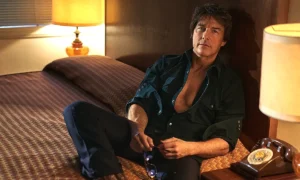
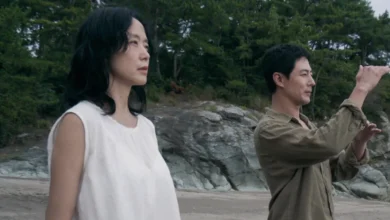
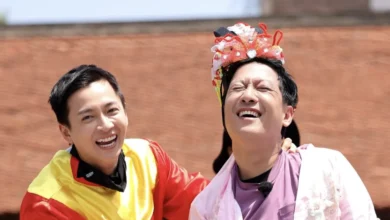
Anh Tú Atus Challenges Typecasting and Embraces Creative Range at the Showcase of The Perfect Crime


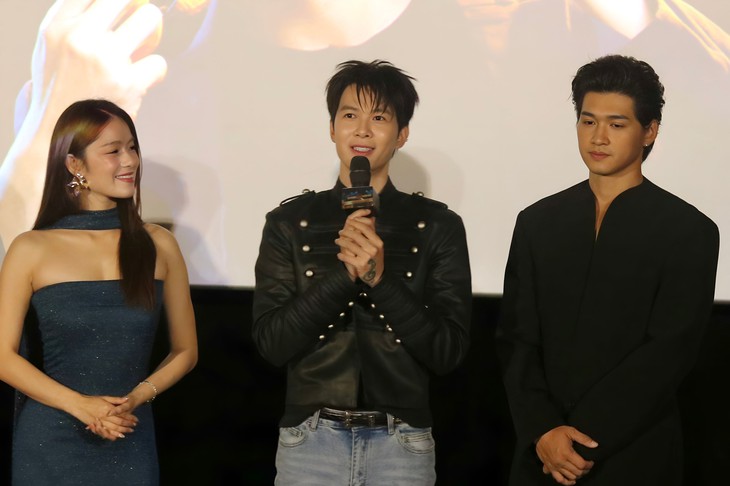
Ho Chi Minh City — In the bustling and rapidly evolving landscape of Vietnamese cinema, few actors navigate the delicate balance between commercial appeal and artistic reinvention quite like Anh Tú Atus. On the afternoon of September 17, industry insiders, media personnel, and enthusiastic fans gathered in Ho Chi Minh City for the official promotional showcase of The Perfect Crime (Án mạng xem hoàn hảo), a highly anticipated feature film that marks the directorial debut of Duc Nguyen.
Surrounded by a glittering ensemble cast that includes DJ Mie, Ma Ran Đô, and Võ Ngọc Anh, Anh Tú Atus commanded the spotlight not merely as the film’s leading man, but as a central figure in an ongoing conversation about creative versatility, the limitations of typecasting, and the maturity of contemporary Vietnamese storytelling. While the actor is widely celebrated for his sharp comedic timing and charismatic screen presence, his appearance at the showcase served as a definitive platform to articulate a broader artistic vision—one that transcends genre boundaries and seeks out raw, unchartered theatrical territory.
The event, which offered attendees a comprehensive look into the production through exclusive footage, panel discussions, and character reveals, underscored the meticulous effort poured into what is being positioned as a refreshing entry into Vietnam’s cinematic landscape. As The Perfect Crime prepares to bridge the gap between intelligent mystery and accessible entertainment, the discourse surrounding its principal cast—particularly Anh Tú Atus—reflects a maturing industry where performers are increasingly empowered to challenge public perceptions.

Untangling the Enigma of The Perfect Crime
At its core, The Perfect Crime is a clever amalgam of genres, deftly weaving the intellectual rigor of a whodunnit investigative thriller with the lighthearted levity of character-driven comedy. The narrative pivots around a complex, high-stakes web of suspicions, false leads, and intertwined relationships.
The story is anchored by two contrasting protagonists: Đại, played by Anh Tú Atus, a pragmatic and analytical private investigator whose worldview is grounded in hard facts, and Trinh, portrayed by popular DJ and digital content creator Mie, a romantic novelist turned TikToker whose intuition and optimism often border on the whimsical. The narrative catalyst is set in motion when Trinh, harboring mounting suspicions that her soon-to-be husband, Khang (played by Ma Ran Đô), is entangled in an illicit affair with a glamorous actress named Yến (Võ Ngọc Anh), decides to retain the services of Đại.
What begins as a standard surveillance assignment quickly spirals into a labyrinthine nightmare. The plot thickens drastically when Trinh wakes up one morning to find herself lying comatose beside Yến’s lifeless body. Suddenly thrust from the role of a client seeking answers into the prime suspect of a murder investigation, Trinh finds her fate inextricably linked to Đại. As layer upon layer of deceit is peeled back, the mutual mistrust between the detective and his client turns palpable, forcing them to navigate a minefield of shifting alliances and concealed motives until the true threads of the mystery slowly begin to unravel.
Breaking Free from the Comedic Mold
For years, mainstream Vietnamese cinema has embraced Anh Tú Atus for his effortless charm and comedic agility. Whether delivering witty punchlines or navigating the absurdities of romantic comedies, he has carved out a comfortable and lucrative niche as a bankable comedic lead. However, the actor is acutely aware of the double-edged sword that commercial success represents. During the showcase, he addressed head-on the persistent categorization of his career, making it abundantly clear that being typecast as a comedy specialist is a limitation he has no intention of accepting.
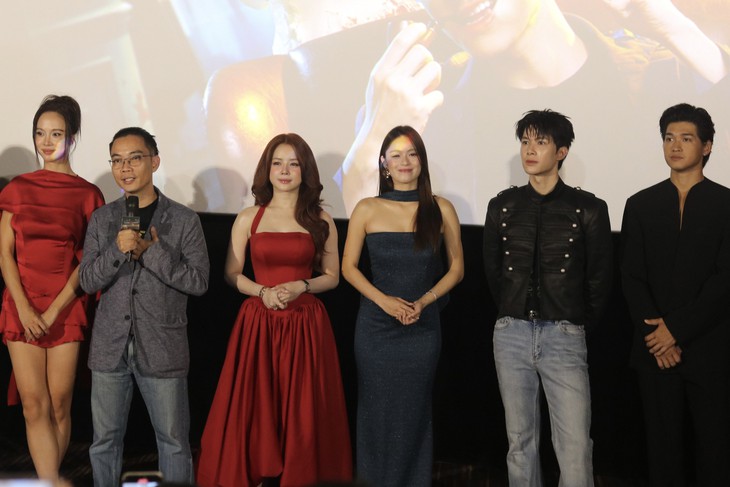
Reflecting on his journey in the entertainment industry, Anh Tú Atus revealed that during his formative years on stage and in front of the camera, external markers of success—such as conventional good looks or physical appeal—were the furthest things from his mind. Instead, his primary preoccupation was mastering the elusive craft of performance.
He recalled the humbling early days of pursuing physical and situational comedy, a period marked by moments of self-doubt where his timing fell flat and senior colleagues frequently offered corrective critiques. Rather than retreating from the genre, these early failures ignited a resilient dedication to self-improvement. To Anh Tú Atus, humor is not an innate, immutable trait, but rather a technical skill set that can be rigorously studied, practiced, and refined.
"When you choose the path of a professional actor, there is no room for artistic complacency; you must be willing to learn everything and try anything," Anh Tú Atus shared passionately with the press. "If my character analysis is weak, I study psychology. If my comedic timing lacks precision, I study comedy. If it takes five years to master a skill, so be it; if it takes ten years, I will put in the time. As an actor, my ultimate goal is longevity, and that requires stepping out of the comfort zone whenever the opportunity arises."
In The Perfect Crime, Đại represents a deliberate departure from the eccentric, flamboyant characters that audiences have grown accustomed to seeing. Stripped of overt comedic eccentricities, Đại demands a grounded, restrained performance that relies on subtle micro-expressions, observational silence, and psychological depth. It is a calculated step toward proving that his range extends far beyond laughter, opening the door for future dramatic, action-oriented, or psychological roles.
A Director’s Vision and Behind-the-Scenes Dedication
The decision to cast Anh Tú Atus in a role that defies his traditional image was championed by first-time feature director Duc Nguyen. Making his directorial debut after years of honing his craft as a screenwriter specializing in high-tension thrillers and intricate mystery projects, Nguyen brought a distinct narrative philosophy to the production. He sought to create a film that maintains the structural integrity of a classic investigative drama—complete with clues, red herrings, and complex interpersonal dynamics—while deliberately subverting the brooding grimness often associated with the genre through a lighter, more engaging storytelling rhythm.
Explaining his integration of humor into a murder mystery, Nguyen noted that the stylistic choice was the result of extensive script doctoring and conceptual refinement. He wanted to steer clear of cinematic tropes that actively seek to outsmart or exhaust the audience emotionally, choosing instead to prioritize the viewer’s immersive journey through the puzzle-solving process.
Nguyen’s confidence in his leading man was further solidified by the grueling physical and mental demands of the production. Behind the polished aesthetics of the showcase lay a testament to Anh Tú Atus’s unwavering professional commitment. The director recounted a particularly challenging period during filming when the actor suffered a severe knee injury that caused significant swelling and rendered basic mobility painful.
Anticipating production delays, the director and crew frantically brainstormed contingency plans, considering the use of a stunt double for action sequences or rewriting specific narrative beats to accommodate the actor’s restricted movement. True to his dedication, Anh Tú Atus flatly refused the safety net. Despite the excruciating physical toll, he insisted on performing his own stunts and maneuvering through dynamic blocking, pushing through the pain to maintain the continuity and authenticity of his character’s physical journey. This tireless work ethic earned him profound respect from the entire cast and crew, transforming on-screen chemistry into a tangible camaraderie off-screen.

The Creative Ecosystem: Mentorship and Collaboration
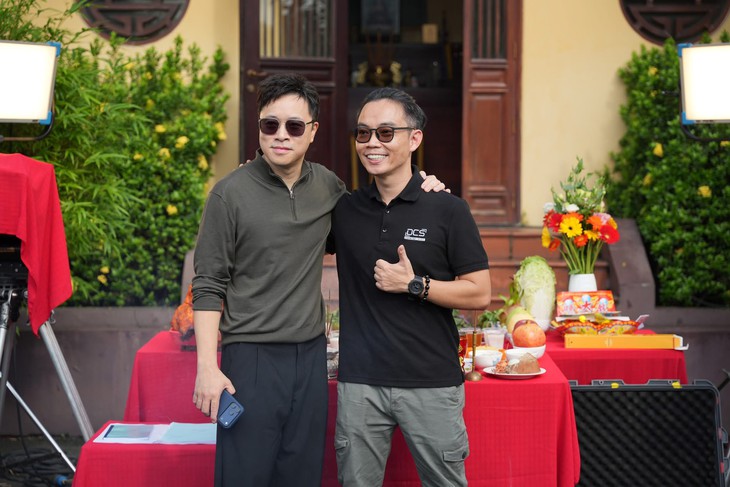
The making of The Perfect Crime was also defined by a unique collaborative ecosystem that bridges generations of Vietnamese filmmakers. During the early developmental phases of the project, Duc Nguyen enjoyed the invaluable mentorship of veteran filmmaker Victor Vũ, who stepped in as the project’s creative director.
For Nguyen, having the guiding hand of a master of Vietnamese mystery cinema—known for intricate thrillers like Mắt Biếc, Người Bất Tử, and Scandal—provided an essential psychological anchor. Navigating the transition from screenwriter to feature film director is notoriously perilous, but the creative partnership with Vũ helped solidify the film’s visual grammar, pacing, and suspenseful tone.
"Victor Vũ and I have collaborated across numerous projects, and his understanding of my creative sensibilities is profound," Nguyen reflected. "There were moments during pre-production where I felt hesitant, staring at conceptual roadblocks that seemed insurmountable. Then Victor would offer a single structural critique, and I would instantly realize how much further I needed to push myself. His support gave me the structural foundation and, more importantly, the psychological confidence to take my first steps as a feature film director."
This environment of mutual trust and high artistic standards directly influenced the performances delivered by the cast. For Anh Tú Atus, working within a meticulously constructed narrative framework allowed him to explore the psychological nuances of Đại without the safety net of improvised comedy. The chemistry between him and co-star DJ Mie—whose transition from the music festival circuit to acting has been closely monitored by pop-culture enthusiasts—added an unpredictable dynamic to the set. Mie’s portrayal of Trinh balances vulnerability with sharp, modern wit, ensuring that the romantic and comedic undercurrents of the film complement, rather than undermine, the central murder investigation.
Anticipation and Industry Implications
As The Perfect Crime races toward its official theatrical release, industry analysts are viewing the project as an important bellwether for the domestic box office. In recent years, Vietnamese cinema has experienced a distinct polarization: while broad comedies and high-octane action films frequently dominate box office receipts, intellectually stimulating genre films often struggle to find a commercial foothold.
By strategically fusing the investigative depth of a neo-noir thriller with the crowd-pleasing accessibility of a lighthearted comedy, Duc Nguyen’s directorial debut attempts to carve out a lucrative middle ground. The film’s commercial prospects are significantly bolstered by its star-studded ensemble, with Anh Tú Atus acting as a magnetic draw for youth demographics, while the atmospheric direction appeals to mature genre enthusiasts.
Furthermore, Anh Tú Atus’s deliberate pivot toward multifaceted roles signals a broader generational shift among contemporary Vietnamese actors. No longer satisfied with remaining stationary within lucrative commercial archetypes, actors of his caliber are leveraging their platform to demand narrative complexity and character evolution. If his performance as the pragmatic detective Đại in The Perfect Crime resonates with audiences the way producers hope, it will not only validate his artistic ambitions but also redefine how casting directors approach bankable stars in the industry.
As the house lights dimmed at the conclusion of the Ho Chi Minh City showcase and the lingering applause faded, the prevailing sentiment among the attendees was one of heightened curiosity. The Perfect Crime promises a cinematic ride where nothing is quite as it seems—a fitting metaphor for an actor who continues to surprise his audience by refusing to stay inside the neatly drawn boxes assigned to him.