Vietnam A-Segment Car Market Faces Sharp Decline as Consumer Preferences Shift Toward Electric Vehicles and Larger Segments

The landscape of the Vietnamese automotive industry is undergoing a profound transformation, marked by the precipitous decline of what was once its most resilient sector: the A-segment mini-car category. According to the latest market reports for the first half of 2026, sales of entry-level hatchbacks have plummeted by 50% compared to the same period in the previous year. Once hailed as the gateway to vehicle ownership for millions of Vietnamese families and the backbone of urban transport fleets, the A-segment is now struggling for relevance in a market increasingly dominated by electric mobility and a preference for larger, more versatile vehicles.
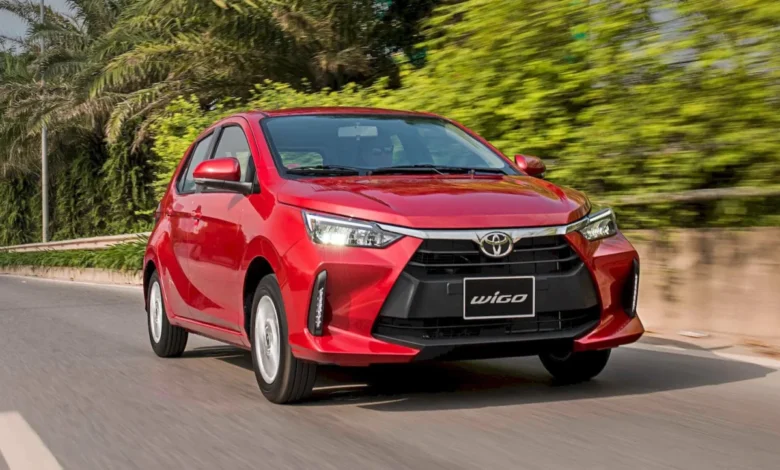
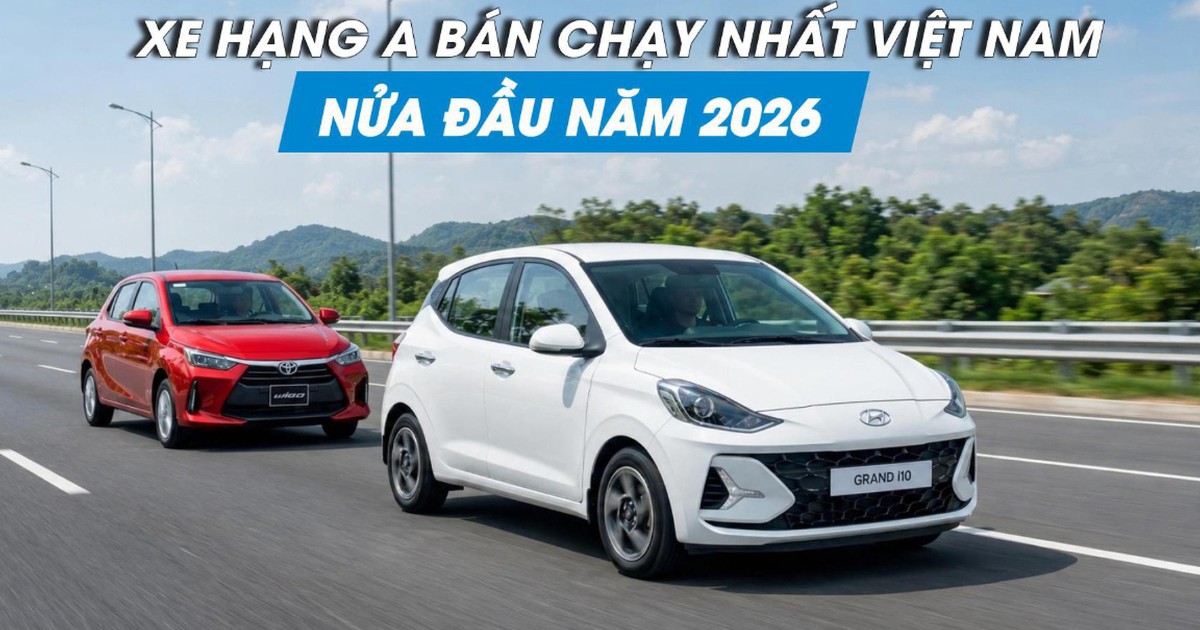
Data released by the Vietnam Automobile Manufacturers’ Association (VAMA) and Hyundai Thanh Cong Vietnam (HTV) paints a somber picture for the segment. During the first six months of 2026, the two primary remaining internal combustion engine (ICE) models in this category—the Hyundai Grand i10 and the Toyota Wigo—recorded a combined sales volume of only 1,467 units. This represents a staggering halving of the volume seen just twelve months prior, signaling that the era of the "small city car" as a market driver may be coming to an end.
A Statistical Deep Dive into the H1 2026 Slump
The decline is not limited to a single brand but reflects a systemic shift across the board. The Hyundai Grand i10, which has long been the gold standard for the segment in Vietnam, maintained its position as the market leader but could not escape the downward trend. In the first half of 2026, the Grand i10 moved 1,264 units. While this figure keeps it at the top of the A-segment charts, it represents a decrease of 330 units compared to the first half of 2025. For a model that once regularly saw monthly sales exceeding 1,000 units, these figures highlight a significant cooling of consumer interest.
The situation is even more dire for the Toyota Wigo. Despite Toyota’s brand prestige and a comprehensive update to the model in recent years, the Wigo managed to deliver only 203 units to customers in the first six months of 2026. This is a dramatic collapse from the 1,158 units sold during the same period in 2025, representing a loss of nearly 82% of its volume. Furthermore, the Kia Morning—once a fierce rival to the Grand i10—has seen its presence diminish to the point where its sales figures are no longer prominently featured in individual monthly reports, often being bundled into broader categories or overshadowed by Kia’s more popular SUV lineup.
The Evolution of the A-Segment: From Dominance to Survival
To understand the current crisis, one must look back at the trajectory of the A-segment over the last decade. Between 2015 and 2020, the A-segment was the most vibrant part of the Vietnamese car market. It was a time when the Kia Morning and Hyundai Grand i10 fought a bitter war for supremacy, often appearing in the "Top 10 Best-Selling Cars" list every month.
The segment reached its peak with the entry of VinFast and its Fadil model. The VinFast Fadil, based on European engineering, quickly became a phenomenon, consistently outselling its rivals and even becoming the overall best-selling car in Vietnam for an entire year. During this "Golden Era," the A-segment was the primary choice for first-time buyers due to its low entry price (typically between 300 and 450 million VND), compact dimensions suited for narrow Vietnamese streets, and low maintenance costs.
However, the turning point occurred in mid-2022 when VinFast announced it would stop producing ICE vehicles to focus entirely on electric vehicles (EVs). The discontinuation of the Fadil left a massive vacuum that the remaining players—Hyundai, Toyota, and Kia—failed to fill. Instead of moving to other ICE A-segment cars, consumers began looking elsewhere.
The "EV Wave" and the VinFast VF 3 Factor
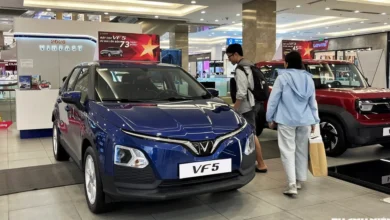
The most significant disruptor in 2026 is undoubtedly the rise of micro-EVs and budget-friendly electric SUVs. The introduction of the VinFast VF 3 has fundamentally altered the calculus for budget-conscious buyers. Priced competitively against traditional A-segment hatchbacks, the VF 3 offers the novelty of electric propulsion, modern technology, and a rugged "mini-SUV" aesthetic that appeals to younger demographics.
Furthermore, the VinFast VF 5 Plus has effectively cannibalized the upper end of the A-segment. With government incentives such as the exemption of registration fees for EVs, the "on-road" price of a VF 5 Plus often becomes comparable to or even cheaper than a high-spec Hyundai Grand i10. When combined with significantly lower operating costs and the growing network of charging stations across Vietnam, the traditional ICE hatchback loses its primary advantage: economy.
Price Overlap and the B-Segment Squeeze
Beyond the threat of electric vehicles, the A-segment is being squeezed from above by the B-segment. In 2025 and early 2026, the Vietnamese automotive market saw a fierce price war among B-segment sedans and crossovers. Major players like the Toyota Vios, Hyundai Accent, and Honda City have seen frequent and aggressive discounting.
In many instances, the price gap between a top-tier A-segment hatchback and an entry-level B-segment sedan has narrowed to less than 50 million VND (approximately $2,000 USD). Given the choice, Vietnamese consumers—who often view a car as a major life achievement and a status symbol—prefer to spend slightly more for the larger cabin, more powerful engine, and perceived safety of a B-segment vehicle. This "upsizing" trend has rendered the A-segment a niche choice rather than a mainstream one.
Shifting Roles in the Commercial Sector
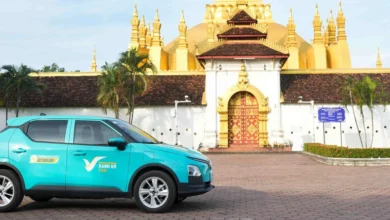
Historically, the A-segment was the preferred choice for taxi companies and individual ride-hailing drivers (Grab, Be, etc.). However, this reliability is also fading. Major transport corporations are increasingly pivoting toward "Green Transport" initiatives. The emergence of GSM (Green-Smart-Mobility), which uses a fleet of VinFast electric cars, has forced traditional taxi firms to reconsider their fleets to remain competitive.
Individual drivers are also making the switch. In a 2026 survey of ride-hailing partners in Hanoi and Ho Chi Minh City, over 60% of respondents stated they would consider an electric vehicle for their next purchase due to the savings on fuel and the preference of passengers for quieter, more modern rides. As the commercial backbone of the A-segment erodes, the sales volume continues to crater.

Industry Reactions and Market Analysis
Industry analysts suggest that the decline of the A-segment is an inevitable stage of market maturation. "Vietnam is following a path seen in other developing markets where, as the middle class grows, the demand for very small cars diminishes in favor of B-SUVs and C-SUVs," says Nguyen Minh Tien, an automotive market consultant. "The added factor in Vietnam is the rapid adoption of EVs, which has accelerated the obsolescence of small ICE cars faster than anyone predicted."
Manufacturers are reacting with caution. While Hyundai Thanh Cong recently updated the Grand i10 to maintain its appeal, the investment in this segment is clearly slowing. Toyota Vietnam has kept the Wigo in its lineup primarily as a "brand entry" point, but the company’s focus has shifted heavily toward hybrid models and SUVs like the Yaris Cross and Corolla Cross.
Future Outlook: Can the A-Segment Survive?
The outlook for the remainder of 2026 remains bleak for the A-segment. If current trends persist, the segment’s market share will continue to shrink, potentially leading to the withdrawal of more models. There is speculation that unless manufacturers introduce hybrid powertrains or significantly slash prices, the ICE A-segment may eventually disappear, replaced entirely by a new generation of "A-EVs."
However, a small window of opportunity remains. For buyers in rural areas where charging infrastructure is still being developed, or for those who require the absolute lowest upfront cost without the complexities of battery leasing or charging schedules, the Grand i10 and Wigo still offer value. But these are shrinking demographics.
In conclusion, the first half of 2026 has served as a wake-up call for the Vietnamese auto industry. The 50% drop in A-segment sales is not merely a temporary slump but a clear indicator of a permanent shift in consumer behavior. As Vietnam moves toward a greener and more sophisticated automotive future, the humble mini-car, once the king of the streets, is being left in the rearview mirror. The next six months will be critical in determining whether the segment can stabilize or if it will face further contraction as the "electric revolution" gains even more momentum.