ĐT nữ Iran 0-2 Philippines: Nhà vô địch SEA Games vượt trội trước đại diện Tây Á, sáng cửa đi tiếp tại Asian Cup

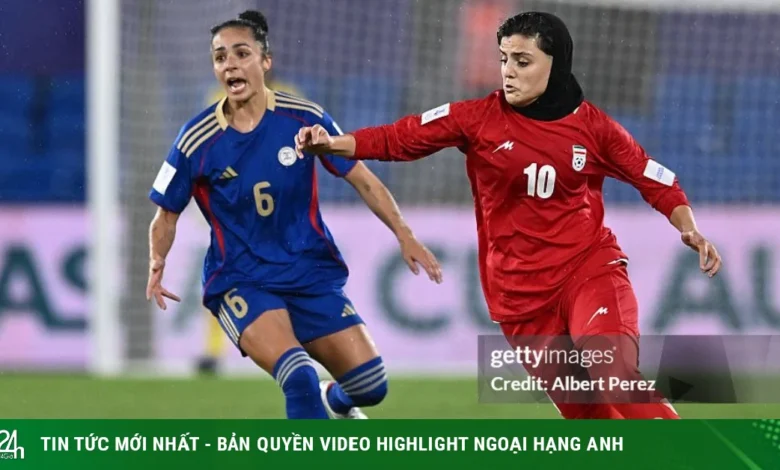
The group stage of the 2026 AFC Women’s Asian Cup reached a dramatic conclusion for Group A on March 8, 2026, as the reigning SEA Games champions, the Philippines, secured a resounding 2-0 victory over West Asian opponents Iran. Played under high stakes after both teams suffered defeats in their opening two fixtures, the match at the continental tournament served as a last-ditch battle to keep their quarterfinal hopes alive through the ranking mechanism reserved for the best third-placed teams.
With both sides desperate for three points to salvage their campaign, the clash began with intense tactical sparring. Ultimately, superior composure, tactical execution, and individual brilliance propelled the Southeast Asian side past a resilient Iranian defense, keeping their tournament dreams alive and setting up a favorable comparison table against other group-stage contenders.
A Cautious Start and the Breakthrough Moment
As the referee signaled the commencement of the match, the pressure was palpable on both benches. Iran and the Philippines entered the fixture with zero points from their first two outings, knowing that a loss would spell a definitive end to their continental aspirations. Consequently, the opening exchanges were characterized by a cautious, highly disciplined approach from both sides.

The Philippines struggled initially to break down a well-organized Iranian defensive block. Head coach Alen Stajcic’s former squad, now under new stewardship, found it difficult to translate possession into clear-cut scoring opportunities during the first half-hour. Iran’s backline, marshaled effectively by veteran defenders, successfully neutralized early aerial threats and cut off passing lanes into the final third.
However, the deadlock was shattered in the 29th minute. Sara Eggesvik, the talented U23 Norway-vetted midfielder now representing the Philippines, showcased her exceptional vision and technical prowess. Capitalizing on a momentary lapse in concentration within the Iranian defense, Eggesvik unleashed a clinical strike that found the back of the net, giving the Southeast Asian side a crucial 1-0 advantage heading into halftime. The goal not only shifted the momentum of the game but also injected immense confidence into the Filipino squad.
Second-Half Dominance and the Insurance Goal
Returning from the interval, the tactical dynamics of the match shifted dramatically. Holding a slender one-goal lead, the Philippines refused to sit back and defend passively. Instead, they increased the tempo, pressing higher up the pitch and dictating the pace of the game. The relentless pressure began to overwhelm the Iranian defense, which found itself forced into frantic clearances and tactical fouls.
Iran struggled to mount meaningful counterattacks as the physical toll of the tournament began to show. Despite making tactical substitutions to inject fresh energy into their midfield and attacking lines, the West Asian representatives failed to test the Filipino goalkeeper with any sustained offensive threats.

The pressure finally yielded a second goal in the 82nd minute. Forward Chandler McDaniel, capitalizing on a rapid transition play, outpaced her marker and slotted the ball past the Iranian custodian with remarkable composure. The strike effectively sealed the match at 2-0, extinguishing any hopes of a late Iranian comeback and securing a historic clean sheet for the Philippines to close out their Group A journey.
Group A Standings and the Quest for a Quarterfinal Berth
With this victory, the Philippines concluded their Group A campaign in third place with 3 points from three matches and a goal difference of -2. Within the complex framework of the AFC Women’s Asian Cup, where the top two teams from each of the three groups advance directly alongside the two best third-placed finishers from across the entire tournament, the equation for qualification became a matter of mathematical comparison.
The Filipinas currently occupy a strong position among the third-placed contenders. They sit behind Vietnam, who hold 3 points from two matches with a goal difference of 0, and ahead of Uzbekistan, who sit at the bottom of their respective metrics. With the Vietnamese national team scheduled to face powerhouse Japan in their final Group C fixture, the statistical probability of the reigning SEA Games champions securing one of the coveted "lucky loser" berths into the quarterfinals remains remarkably high.
Post-Match Lineups and Tactical Configurations
The physical and tactical demands of the match were reflected in the starting configurations deployed by both coaching staffs:
- Iran Starting XI: Yazdani, Motevalli, Imani, Amineh, Sarbali, Shaban, Makhdoomi, Zolfi, Sadeghi, Didar, Pasandideh.
- Philippines Starting XI: McDaniel, Frilles, Cowart, Long, Beard, Guy, Guillou, Sawicki, Pino, Ramirez, Eggesvik.
The fixture highlighted the ongoing evolution of women’s football in Southeast Asia, where teams like the Philippines continue to narrow the gap against traditional continental heavyweights through strategic naturalization, international friendlies, and exposure to high-level competitions.
Broader Context and Tournament Implications
The 2026 AFC Women’s Asian Cup, running from March 1 to March 21, has continually demonstrated the widening competitive landscape of the women’s game across the continent. While traditional powerhouses such as Japan—who recently showcased their immense firepower with an 11-0 victory over India in Group C—continue to dominate the upper echelons of the tournament, the battle for the knockout stages has become increasingly fierce for mid-tier and emerging football nations.
For the Philippines, reaching the knockout stages would mark another milestone in a golden era for the nation’s women’s football program, following their historic qualification and competitive performances at the FIFA Women’s World Cup. For Iran, the tournament serves as a valuable learning curve, exposing the squad to the tactical rigor and physical intensity required to compete at the highest level of Asian football. As the group stage draws to a close, all eyes now turn to the final fixtures of Groups B and C to determine the complete quarterfinal lineup.
Related posts: