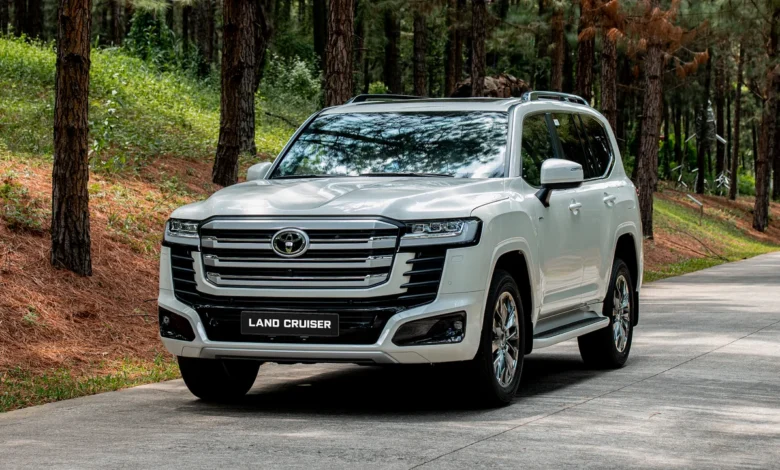
Toyota Vietnam has officially expanded its flagship SUV lineup with the domestic introduction of the Toyota Land Cruiser Hybrid, imported directly from Japan. Positioned as a technological tour de force above its conventional gasoline-powered sibling, the new electrified variant arrives with a starting price tag of VND 4.71 billion (approximately $188,400), with the exclusive pearl white exterior option carrying a minor surcharge of VND 20 million. This pricing strategy places the hybrid model exactly VND 130 million higher than the standard pure-gasoline version currently available in the showroom, signaling Toyota’s intent to capture eco-conscious luxury buyers willing to pay a premium for advanced powertrain technology and enhanced performance metrics.
The debut of the Land Cruiser Hybrid on September 9 marks a significant milestone for the Japanese automotive giant in the Southeast Asian market, underscoring its broader strategy to introduce electrified solutions across various vehicle segments. As governments and consumers alike grow increasingly sensitive to environmental footprints, this release tests the appetite for high-end hybrid propulsion systems in Vietnam’s ultra-luxury full-size SUV category, a space historically dominated by raw displacement and traditional internal combustion engines.
Design and Interior Craftsmanship: Familiar Luxury Meets Modern Refinement
At first glance, the overall exterior silhouette of the Toyota Land Cruiser Hybrid remains remarkably faithful to its pure-gasoline counterpart, preserving the commanding road presence, boxy proportions, and rugged architectural integrity that have defined the nameplate for decades. However, a closer inspection reveals subtle yet purposeful design tweaks. Minor refinements to the front bumper assembly, rear fascia, and subtle hybrid-specific badging distinguish the electrified model from standard trims, ensuring that observant enthusiasts can spot the technological upgrade.
Stepping inside, the cabin preserves the spatial layout and ergonomic excellence of the standard production model while retaining its practical three-row seating configuration. Standard cabin amenities cater to executive comfort, highlighted by a sprawling 12.3-inch central infotainment display, a sophisticated four-zone independent automatic climate control system, and a convenient wireless smartphone charging pad. The driver’s seat features 10-way power adjustability complemented by integrated heating, ventilation, and memory functions, while the front passenger seat offers 8-way power adjustments with matching ventilation and heating capabilities. The material quality across the dashboard, door panels, and upholstery reinforces the vehicle’s flagship status, marrying utilitarian durability with refined luxury.
Under the Hood: Engineering the Electrified Powertrain
The primary point of divergence between the hybrid variant and the pure-gasoline model lies beneath the sheet metal within the propulsion and chassis architecture. While the standard vehicle relies on a traditional hydraulic power steering system, the Land Cruiser Hybrid introduces an advanced electronic power steering setup that enhances maneuverability and tactile feedback across diverse driving conditions.
The heart of the hybrid system is a formidable pairing: a 3.5-liter twin-turbocharged V6 gasoline engine working in tandem with a high-output electric motor. This synergistic combination generates a combined maximum output of 457 horsepower and a colossal peak torque of 790 Nm. Power is channeled through a smooth-shifting 10-speed automatic transmission to a permanent four-wheel-drive system. When compared directly to the pure-gasoline variant, the hybrid model delivers an additional 48 horsepower and an impressive 140 Nm more torque, translating to instantaneous throttle response and superior tractive capability when towing or navigating challenging terrain.
Naturally, the integration of the hybrid battery pack and electric motor impacts the vehicle’s physical footprint. The curb weight of the hybrid variant climbs to 2,685 kilograms, making it approximately 165 kilograms heavier than the standard model. Despite the added mass, the efficiency gains are substantial. The combined fuel consumption of the hybrid model is rated at approximately 10 liters per 100 kilometers, marking a reduction of nearly 23% compared to the pure-gasoline version. In optimal driving conditions, the hybrid system achieves up to a 76% improvement in fuel economy metrics over its non-hybrid equivalent during urban stop-and-go cycles.
Regulatory Hurdles and Market Positioning
Despite its impressive efficiency gains on paper, the Toyota Land Cruiser Hybrid faces unique hurdles within Vietnam’s regulatory framework. According to specific criteria established by the Ministry of Construction regarding the ratio of fuel consumption between parallel hybrid models and standard internal combustion engines—factoring in cylinder displacement—the vehicle’s specific metrics do not currently qualify it for special preferential consumption tax reductions. Because the engine displacement and overall efficiency ratio exceed certain threshold parameters outlined in local guidelines, buyers will not benefit from the reduced excise tax rates sometimes afforded to smaller, mass-market hybrid vehicles.
Nevertheless, the Land Cruiser Hybrid represents the seventh electrified model in Toyota’s Vietnamese product portfolio. With the recent discontinuation of the Camry-adjacent Altis hybrid earlier in 2026, the brand’s current hybrid lineup stands at six distinct models, cementing Toyota’s position as the undisputed market leader in vehicle electrification within the country. As of July, the Japanese manufacturer has retailed 9,231 hybrid vehicles in Vietnam, capturing over 50% of the total market share for electrified passenger cars.
Competitive Landscape and Future Industry Implications
In the broader luxury automotive landscape, the Toyota Land Cruiser occupies a unique niche. It competes within the full-size SUV segment alongside high-end contenders such as the Lynk & Co 900 and the Mazda CX-90. However, due to its traditional body-on-frame chassis construction, uncompromising off-road architecture, and a price tag comfortably exceeding VND 4.5 billion, the Toyota flagship currently enjoys a virtually uncontested position without any direct, head-to-head rivals offering the same blend of utilitarian ruggedness and electrified luxury.
Industry analysts note that the introduction of the Land Cruiser Hybrid serves as a strategic litmus test for high-end alternative energy vehicles in emerging Southeast Asian markets. While pure electric vehicles (EVs) face infrastructure bottlenecks outside major metropolitan areas, hybrid powertrains offer a pragmatic stepping stone, combining extended driving ranges with significantly reduced emissions. Toyota’s sustained dominance in this category suggests that consumer demand for reliable, low-maintenance electrification remains exceptionally strong, even at the highest tiers of the luxury market.
As dealerships across Vietnam begin deliveries of the new hybrid flagship following its September launch, market observers will closely monitor whether the VND 130 million premium over the standard gasoline model proves persuasive to elite buyers prioritizing torque, efficiency, and environmental consciousness in an uncompromising luxury package.