Government Issues Strict Directive to Overhaul School Boarding and Day-Boarding Meals Nationwide

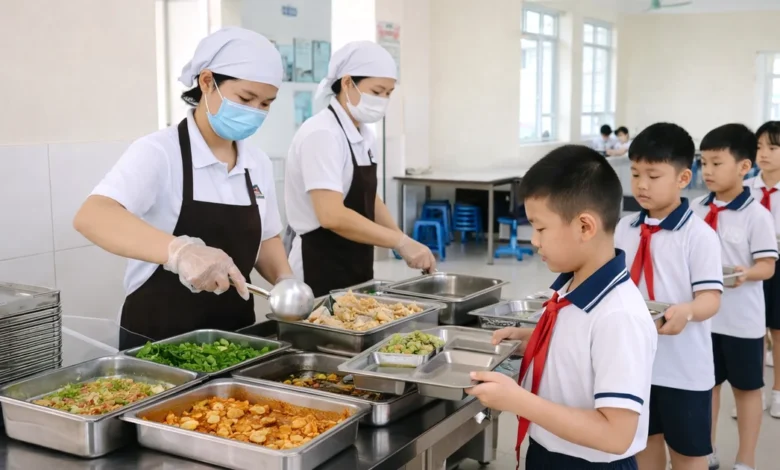
The Vietnamese government has intensified its oversight of student nutrition and food safety across all educational institutions, responding to mounting public anxiety over substandard meals provided to children at school. Deputy Prime Minister Le Tien Chau recently signed Official Dispatch No. 64/CD-TTg on behalf of the Prime Minister, mandating comprehensive measures to guarantee the quality, safety, and nutritional value of meals served in both boarding and day-boarding school programs.
While the directive acknowledges that numerous local authorities and educational facilities have successfully implemented safe and balanced meal programs, it explicitly highlights persistent vulnerabilities. Across various regions, shortcomings remain prevalent in the selection of food suppliers, caterers, and cooking service providers. Furthermore, authorities have identified systemic gaps in tracing the origin and quality of raw ingredients, maintaining strict conditions for food processing, transportation, and storage, and formulating scientifically sound menus that adequately address growing children’s nutritional requirements.
Ultimate Accountability and Strict Local Governance
To decisively alter the current landscape, the directive establishes a strict chain of accountability, placing the ultimate responsibility for boarding and day-boarding meal operations squarely on the shoulders of the chairpersons of provincial and municipal People’s Committees. Local leaders are instructed to immediately rectify existing deficiencies, eliminating any tolerance for administrative negligence, lax supervision, or ambiguity regarding responsibilities when safety incidents occur.
Local administrations are now required to drastically intensify inspections and supervisory measures targeting food suppliers, catering operations, and kitchen services. This heightened scrutiny extends from verifying ingredient origins and food quality to monitoring processing environments, preservation methods, logistics, and mandatory food sample retention protocols. The government has made it clear that any organizations or individuals found violating food safety standards will face rigorous disciplinary actions. This includes the decisive termination and immediate replacement of catering contractors who fail to meet the rigorous standards demanded by the educational sector.
In alignment with existing legal frameworks and decentralized management principles, commune-level People’s Committees are assigned direct responsibility for selecting and executing contracts with meal providers and cooking services for public educational facilities within their jurisdictions. These local administrative bodies must oversee and monitor contractual compliance closely.
Crucially, the directive stipulates that the procurement process must be transparent, objective, and strictly executed in accordance with legal regulations. The Prime Minister’s directive emphasizes that student health, food safety, nutritional value, supply capacity, traceability, and student welfare must serve as the fundamental benchmarks for evaluation. Educational institutions and local authorities are explicitly prohibited from selecting suppliers based solely on low-cost criteria—a practice historically linked to compromised food quality and inadequate nutrition. For schools lacking full-scale kitchens, commune authorities are tasked with appointing and contracting certified raw material and ingredient suppliers that guarantee clear origins, food safety, and nutritional appropriateness.
Legislative Overhaul and Standardized Nutritional Guidelines
Beyond immediate enforcement actions at the local level, the central government has outlined a comprehensive administrative timeline for institutional reform. The Ministry of Education and Training (MOET) has been instructed to collaborate closely with line ministries, sectors, and local authorities to urgently finalize legal regulations governing boarding and day-boarding meal operations. This regulatory framework aims to establish transparent conditions, standardized procedures, and well-defined responsibilities for every agency, organization, and individual involved in the supply chain.
As part of these institutional adjustments, the Ministry of Education and Training will take the lead, in coordination with the Ministry of Health, to develop standardized menu guidelines. These frameworks will focus on optimizing energy intake and ensuring balanced nutrition tailored to students’ ages, specific nutritional statuses, daily school hours, regional characteristics, and meal budgets.
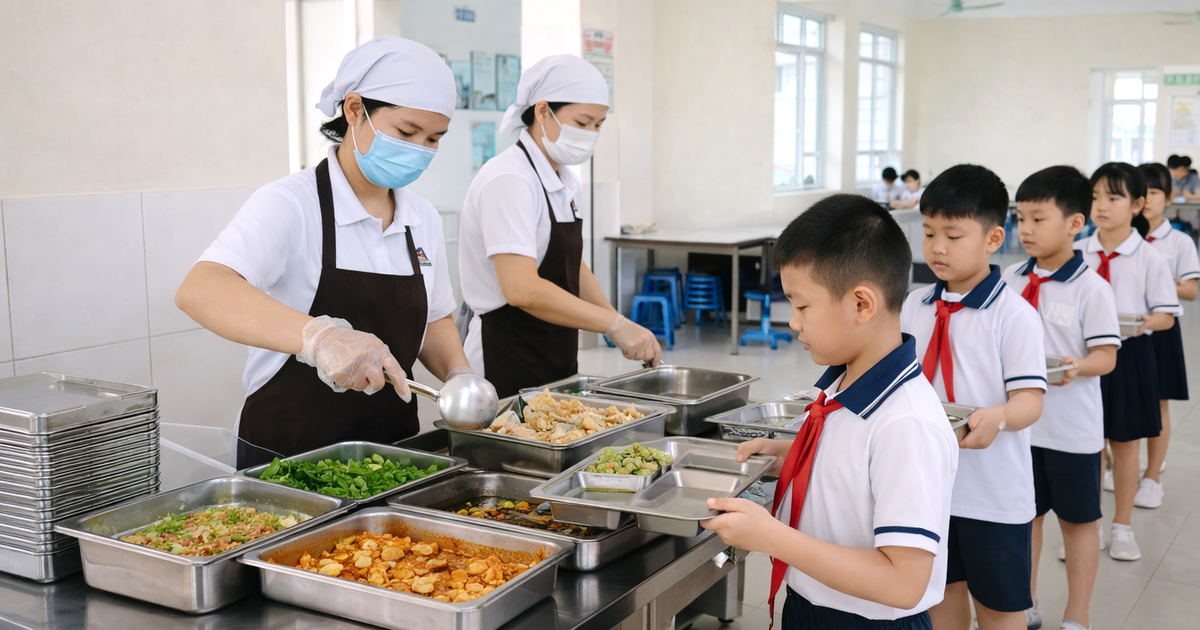
Additionally, the Ministry of Education and Training has been tasked with developing a unified, interconnected national database dedicated to managing boarding and day-boarding operations. By leveraging modern digital technology and traceability applications, the platform will oversee food suppliers, track ingredient origins, and monitor meal quality without imposing unnecessary administrative burdens or financial costs on schools.
Complementing these educational initiatives, the Ministry of Health is charged with issuing clear, enforceable guidelines regarding food safety and nutritional standards. The health sector will direct local health authorities to step up inspections of food production, processing, and supply facilities that cater to schools, with a particular focus on large-scale suppliers servicing multiple educational institutions simultaneously.
Background Context and Public Sensitivity Surrounding School Meals
The issuance of Official Dispatch No. 64/CD-TTg arrives at a critical juncture for Vietnam’s public education system. Over recent academic terms, public scrutiny regarding the quality of school meals has intensified significantly. A series of widely publicized incidents—ranging from visibly sparse and unnutritious portions to verified breaches of food safety standards in major urban centers such as Hanoi and Ho Chi Minh City—have triggered widespread public indignation among parents and educational advocates alike.
In September, several high-profile investigations into school catering contracts exposed systemic oversight failures, prompting local departments of education to deploy high-level inspection teams to review thousands of school kitchens. These incidents underscored a recurring vulnerability in decentralized school meal management: when schools independently outsource catering services to private vendors without rigorous, continuous oversight, profit margins can be prioritized over child nutrition and safety.
Nutritionists and pediatric health experts have long warned that chronic exposure to inadequate nutrition during formative school years can lead to developmental deficits, impaired cognitive function, and long-term health complications. Conversely, robust, well-regulated school meal programs have been proven to enhance academic performance, improve physical development, and reduce health disparities among children from diverse socio-economic backgrounds.
Implications of the New Centralized Mandate
The government’s decisive intervention signals a major policy shift from passive administrative oversight to active, interventionist governance in student welfare. By transferring contractual selection responsibilities to commune-level authorities and removing low-cost bidding as the primary determinant for catering contracts, the state aims to eliminate the race-to-the-bottom pricing models that have historically compromised meal standards.
Furthermore, the integration of digital technology for supply chain traceability introduces a transparent layer of accountability that makes it considerably more difficult for substandard providers to operate within the educational ecosystem. The requirement for mandatory food sample retention, coupled with the threat of immediate contract termination and legal prosecution for violators, establishes a formidable deterrent against negligence.
As local authorities and relevant ministries move to implement the directives outlined in Official Dispatch No. 64/CD-TTg, the primary measure of success will be the tangible improvement of daily meals served to millions of students nationwide. The ongoing enforcement efforts represent a vital step toward safeguarding child health, restoring public confidence in the educational administration, and establishing a sustainable, high-standard framework for school nutrition in Vietnam.