Viettel Post Launches Vietnam’s First Smart Automated Sorting Hub to Revolutionize National Logistics Infrastructure

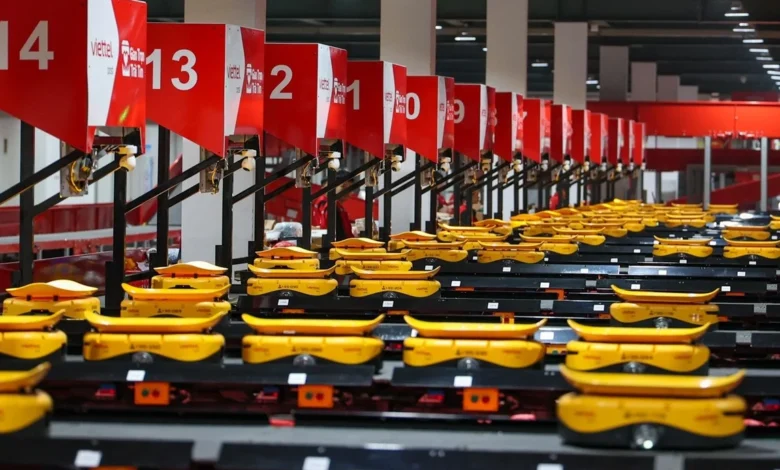
On January 17, 2024, Viettel Post, a subsidiary of the military-run telecommunications giant Viettel Group, officially inaugurated its first smart automated sorting hub in the Quang Minh Industrial Zone, Hanoi. This facility marks a significant milestone in Vietnam’s logistics sector, representing the most advanced technological deployment of its kind in the country. The launch underscores Viettel’s strategic pivot toward becoming a dominant force in the domestic and regional logistics landscape, aligning with national efforts to modernize the supply chain.
The Strategic Vision for a Digital Economy
The inauguration of this hub is not merely an isolated infrastructure investment; it is the cornerstone of a broader, multi-year strategy to build a "National Logistics Infrastructure." For decades, Viettel has been synonymous with telecommunications and digital infrastructure. By leveraging its existing technological prowess, the group is now applying its expertise to the physical movement of goods, which it describes as the "arteries of the material economy."
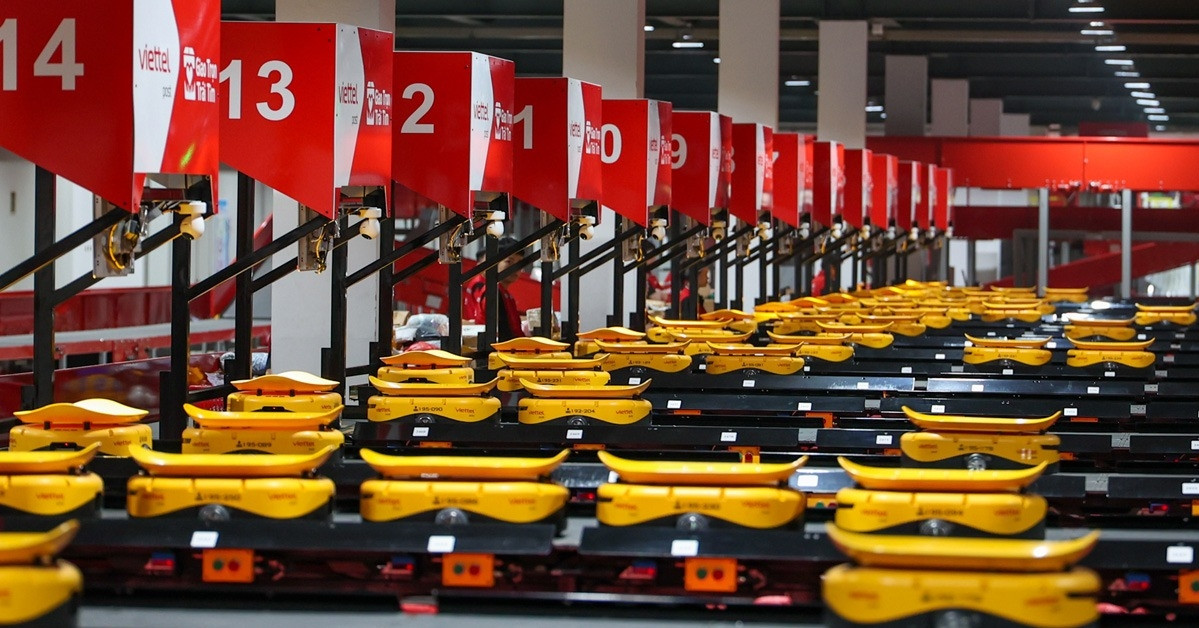
Tao Duc Thang, Chairman and General Director of Viettel Group, emphasized that this facility serves as the foundational step in a massive transition. In the modern economic hierarchy, Viettel categorizes infrastructure into three distinct layers: telecommunications as the flow of information, digital platforms as the infrastructure for the digital economy, and logistics as the vital pipeline for the physical flow of goods. By integrating these three, Viettel aims to provide a seamless, digitized ecosystem that supports Vietnam’s ambition to become a global logistics hub by 2025.
Chronology and Development Timeline
The project represents a rapid turnaround in industrial implementation. While international logistics firms typically require approximately 24 months to design, construct, and calibrate a sorting hub of this scale and complexity, the team at Viettel Post successfully completed the development and operational integration within a six-month window.
This accelerated timeline was made possible by a 100% Vietnamese team of engineers and technical specialists. Their ability to deliver a state-of-the-art facility in one-fourth of the industry-standard time highlights the group’s commitment to self-reliance in high-tech manufacturing and software development. The ecosystem behind the hub includes proprietary warehouse management software, custom mobile applications, and a suite of IoT-integrated hardware such as smart locks and weight-monitoring sensors.
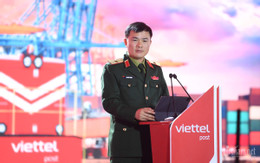
Technical Capabilities and Operational Efficiency
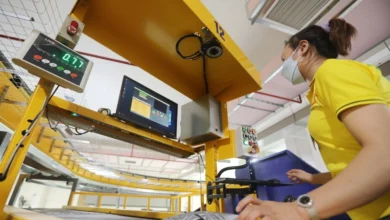
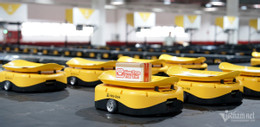
The Quang Minh facility is defined by its high level of automation, utilizing Autonomous Guided Vehicles (AGVs) and complex sorting algorithms to minimize human error and maximize throughput.
Key operational metrics include:
- Throughput Capacity: The hub is equipped with over 1,200 sorting chutes and 40 entry/exit ports, allowing for the processing of up to 1.4 million packages per day. This represents a 40% increase in capacity for the company, pushing Viettel Post’s total daily system capacity to 4 million items.
- Market Coverage: This output corresponds to roughly 50% of the total daily e-commerce volume in Vietnam, positioning Viettel Post as a critical player in the country’s burgeoning digital retail sector.
- Efficiency Gains: The automation has effectively reduced the error rate to near zero. Furthermore, the average turnaround time for parcel processing—from arrival to dispatch—has been slashed from 8–10 hours to mere minutes.
- Cost Reduction: By integrating AI-driven systems and robotics, the hub has achieved a 60% reduction in personnel costs, allowing for a leaner, more scalable operational model.
Smart Monitoring and Network Operations Center (NOC)
Central to the hub’s success is the implementation of a sophisticated Network Operations Center (NOC). This system utilizes Digital Twin technology and AI-powered cameras to provide a real-time, 360-degree view of the facility’s operations.
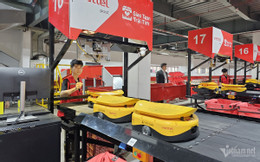
The system acts as the "brain" of the logistics chain, monitoring the physical journey of every package. By utilizing Digital Twin simulations, managers can predict bottlenecks before they occur and optimize flow based on real-time data. The AI cameras are programmed to detect anomalies or behavioral irregularities, providing instant alerts to staff. This proactive approach to maintenance and security ensures that the facility operates with maximum uptime, a critical requirement in the fast-paced e-commerce environment.
Official Statements and Future Roadmap
Hoang Trung Thanh, General Director of Viettel Post, addressed the event by clarifying the company’s long-term objectives. He noted that Viettel Post has moved beyond its traditional role as a simple delivery provider to become a comprehensive supply chain architect.
"We are building more than just a sorting center; we are constructing a holistic logistics network," said Thanh. The roadmap includes the integration of cold-chain logistics, smart border crossing systems, and cross-border logistics corridors. These initiatives are designed to connect industrial zones and agricultural regions directly with major transport hubs, including seaports, airports, and railway networks.
The long-term goal is to harmonize the movement of goods across both domestic and international borders. By standardizing the interface between the "first mile" (collection from farmers or manufacturers) and the "last mile" (delivery to the consumer), Viettel aims to reduce the logistics costs that have historically hampered the competitiveness of Vietnamese exports.
Broader Economic Implications
The contribution of the logistics sector to Vietnam’s GDP is currently targeted to reach 5–6% by 2025. With the government pushing for digital transformation across all sectors, Viettel’s investment provides the necessary backbone for this growth.
- Supply Chain Resiliency: By digitizing the supply chain, Vietnam reduces its dependence on fragmented, manual processes, making the national economy more resilient to external shocks, such as those experienced during the global supply chain disruptions of the early 2020s.
- Export Competitiveness: A modernized, smart logistics infrastructure reduces the "hidden" costs of doing business in Vietnam. Efficient, low-cost logistics allow local manufacturers to compete more effectively in global markets.
- Digital Inclusion: As these technologies are scaled to provinces beyond Hanoi and Ho Chi Minh City, rural areas will gain better access to national and international trade routes, effectively narrowing the economic gap between urban and rural populations.
Conclusion
The inauguration of the smart sorting hub at Quang Minh is a landmark event that signifies a new chapter for Vietnam’s logistics industry. By merging high-level engineering with a clear, strategic vision for national digital infrastructure, Viettel Post has signaled to both domestic and international competitors that it is prepared to lead the country’s industrial modernization.

As the facility reaches full operational capacity, its impact will likely ripple through the broader economy, setting a new benchmark for speed, accuracy, and technological integration. With the continued support of the Viettel Group and a commitment to indigenous innovation, the company is well-positioned to serve as the primary engine for Vietnam’s transition into a modern, logistics-driven economy. The success of this hub will serve as the litmus test for whether Vietnam can successfully digitize its physical economy at a scale required to meet the demands of the 21st-century global marketplace.