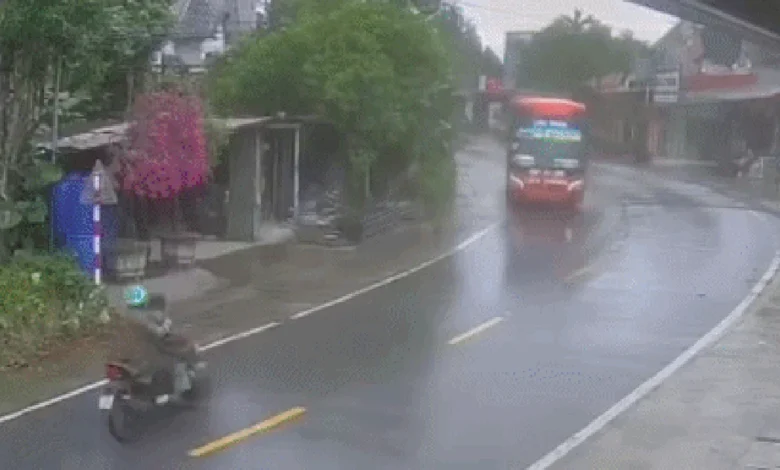
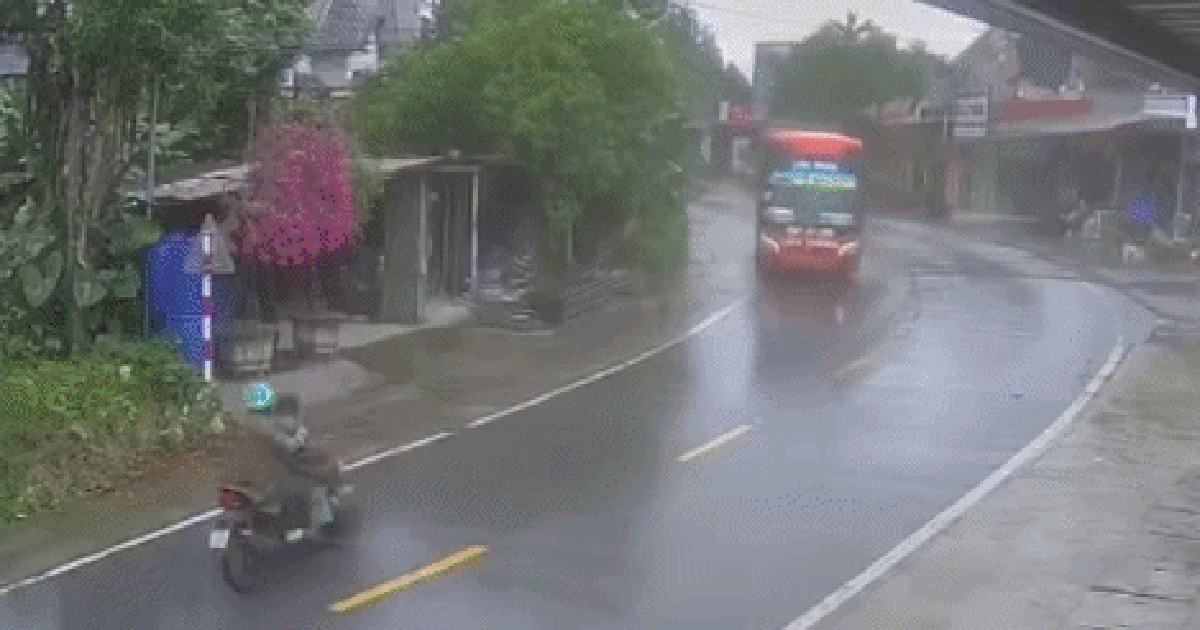
The event involved a motorcyclist who, while navigating a bend in the road, drifted out of their designated lane and into the path of oncoming traffic. The motorcyclist’s failure to maintain proper lane discipline, exacerbated by the slick road surface, forced an approaching bus driver to take immediate, evasive action. To avoid a direct collision, the bus driver swerved sharply to the right, resulting in the vehicle sliding off the road. Fortunately, the incident did not result in major casualties or significant structural damage, but the near-miss has triggered a renewed discourse on motorcycle safety protocols during inclement weather.
Analyzing the Mechanics of the Incident
The primary factors contributing to this incident are representative of a broader systemic issue in road safety management. Rain not only reduces the coefficient of friction between tires and the asphalt, increasing braking distances by as much as 40 percent, but it also severely limits visibility for all road users. When a motorcyclist enters a blind curve, the ability to observe oncoming vehicles is significantly compromised by the rain-streaked visor or helmet shield.
In this particular case, the motorcyclist’s failure to adhere to the correct side of the road suggests a lack of defensive driving awareness, particularly in conditions where the room for error is virtually non-existent. The sudden, jerky steering input—a common reaction when a rider realizes they are off-course—is highly dangerous on wet pavement. It often leads to a loss of traction, known as "low-siding," where the tires lose their grip and the bike slides out from under the rider. The bus driver’s subsequent maneuver, while necessary to avoid a fatal head-on collision, demonstrates the extreme stress placed on heavy vehicles when confronted with the unpredictable movements of smaller, more vulnerable road users.
The Hidden Danger of the Butterfly Raincoat
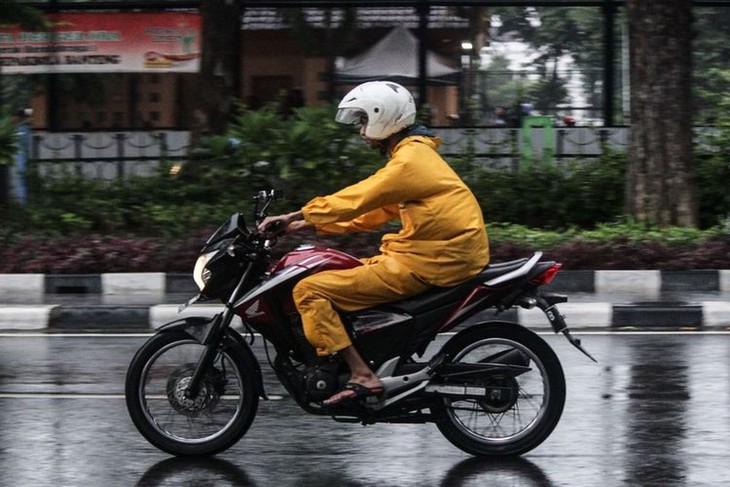
While the immediate cause of the accident was the lane deviation, the conversation surrounding the event has shifted toward an often-overlooked factor: the design of the raincoat worn by the operator. Both the Vietnamese traffic authorities and the Indonesian National Police (Korlantas Polri) have long issued warnings regarding the "butterfly" or poncho-style raincoat, which remains a staple for motorcyclists across Southeast Asia.
These garments are favored for their affordability, ease of use, and ability to provide broad coverage against heavy downpours. However, their structural design is inherently risky. The loose, flowing material can easily flap in the wind, catching on external objects or, more dangerously, becoming entangled in the rear wheel or drive chain of the motorcycle.
When a piece of fabric becomes snagged in a moving part, it can exert a sudden, violent pull on the rider. In the best-case scenario, this results in the destruction of the garment; in the worst-case scenario, it locks the rear wheel or pulls the rider off-balance, leading to an immediate, high-velocity crash. Law enforcement officials have cited numerous instances where such entanglement was the definitive cause of fatal accidents, as the rider is rendered completely unable to correct the motorcycle’s trajectory once the snag occurs.
Comparative Safety and Best Practices
In light of these findings, traffic safety experts advocate for the adoption of two-piece rain suits. Unlike the loose, poncho-style designs, two-piece suits are form-fitting and securely fastened, minimizing the amount of excess fabric that can catch the wind or mechanical components. By reducing the surface area prone to fluttering, riders not only mitigate the risk of mechanical entanglement but also improve their aerodynamic stability, which is crucial when navigating high-speed or wind-prone environments.
Furthermore, the Indonesian National Police, through public safety campaigns led by figures such as Indra Jafar, have emphasized the necessity of transitioning away from the butterfly design entirely. These campaigns, which include rider training and public awareness seminars, underscore that the convenience of a poncho is vastly outweighed by the catastrophic risk it introduces during transit.
Broader Implications for Road Safety
This incident serves as a microcosm for the challenges faced by metropolitan and regional transport departments globally. As urbanization increases and motorcycle dependency remains high, the margin for error on roads becomes increasingly thin. Infrastructure improvements, such as better drainage systems and the installation of high-friction road surfacing on curves, are essential, but they cannot replace the responsibility of the individual rider.
Traffic data consistently demonstrates that the majority of motorcycle-related accidents occur not due to a single failure, but a chain of events. A lack of vehicle maintenance—specifically worn-out tires that struggle to displace water—combined with improper protective gear and poor situational awareness, creates a "perfect storm."
Recommended Safety Checklist for Rainy Conditions:
- Vehicle Inspection: Before starting any journey in the rain, ensure that tire tread depth is sufficient for water evacuation and that all lights (headlights, turn signals, and brake lights) are fully operational.
- Proper Attire: Avoid loose-fitting garments. Opt for high-visibility, two-piece rain gear that is properly secured.
- Defensive Distance: Increase the following distance between yourself and the vehicle ahead. Wet roads require significantly more time and distance to come to a complete, controlled stop.
- Smooth Inputs: Avoid sudden braking or rapid changes in direction. When cornering, maintain a consistent speed and avoid leaning as deeply as one would on a dry road.
- Strategic Halting: If visibility becomes dangerously low or the road is flooded to a degree that makes navigation uncertain, it is always safer to pull over to a designated, secure location and wait for the weather to clear.
The Role of Infrastructure and Enforcement
While the individual rider’s behavior is the primary focus of this analysis, the role of the state in mitigating these risks cannot be ignored. Governments must continue to invest in public education programs that address the specific cultural habits of riders. In many regions, the use of inappropriate rain gear is a matter of tradition and economic necessity. Addressing this requires more than just warnings; it may involve the implementation of safety standards for motorcycle accessories and the promotion of affordable, high-quality alternatives to dangerous rain gear.
Furthermore, traffic law enforcement must remain vigilant in identifying and penalizing dangerous maneuvers, such as lane drifting and high-speed cornering in poor weather. By creating a culture of accountability and providing the necessary knowledge, authorities can hope to reduce the frequency of such preventable incidents.
Conclusion
The incident of September 16, 2026, was a near-calamity that could have easily ended in tragedy. It highlights a critical intersection of human error and equipment failure. As road users, the onus remains on us to recognize the limitations imposed by the environment and to adapt our behavior and equipment accordingly. Whether it is the simple choice of a more secure raincoat or the decision to slow down and increase following distance, every proactive measure taken is a step toward ensuring that the road remains a safe space for everyone. As the cautionary tale of the butterfly raincoat proves, the most dangerous risks are often the ones we fail to perceive until it is far too late to correct them.