The Evolution of Vietnam’s Electric Vehicle Charging Infrastructure: From Walled Gardens to Open Ecosystems and Unified Regulations

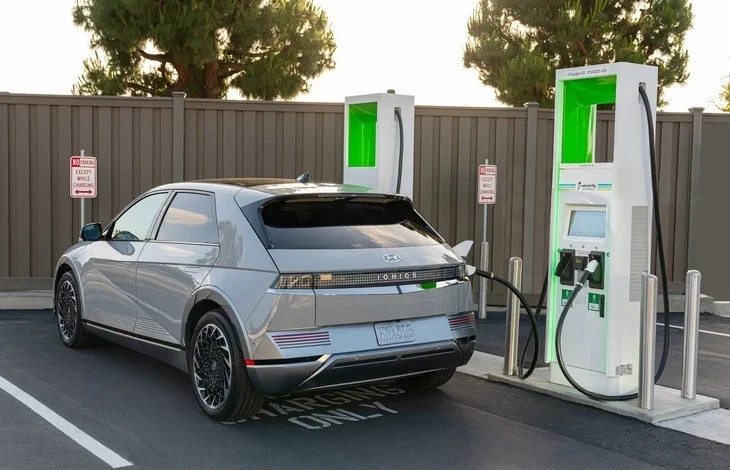
The electric vehicle (EV) charging infrastructure landscape in Vietnam is undergoing a monumental shift, transforming from a fragmented web of proprietary ecosystems into an increasingly interconnected, open-access market. As the country’s adoption of electrified transport accelerates, traditional business models—where a single automotive manufacturer or infrastructure provider establishes a closed network exclusively for its own vehicles—are rapidly giving way to collaborative models. Today, multiple domestic and international enterprises are pooling resources to invest in open charging networks, enabling motorists to utilize a single account across various charging stations regardless of the vehicle brand they drive.
This transition marks a pivotal turning point for Vietnam’s automotive sector. For years, the lack of unified charging standards and cross-brand accessibility posed significant hurdles for consumers, limiting long-distance travel and constraining the multi-brand growth of the EV market. Now, with major conglomerates joining forces, regulatory bodies formulating national technical standards, and cross-industry partnerships proliferating, the stage is set for a more mature, consumer-friendly EV ecosystem.
The Rise of Open Ecosystems and Multi-Brand Networks
Historically, the development of EV charging infrastructure in Vietnam mirrored global early-stage patterns: individual automakers or localized energy firms built isolated charging stations designed strictly for proprietary compatibility. While this secured an initial charging avenue for early adopters of specific brands, it created severe inefficiencies. Infrastructure assets such as prime real estate, electrical grid capacity, and high-cost hardware were underutilized, while consumers faced a bewildering array of distinct mobile applications, membership tiers, and payment methods for different networks.
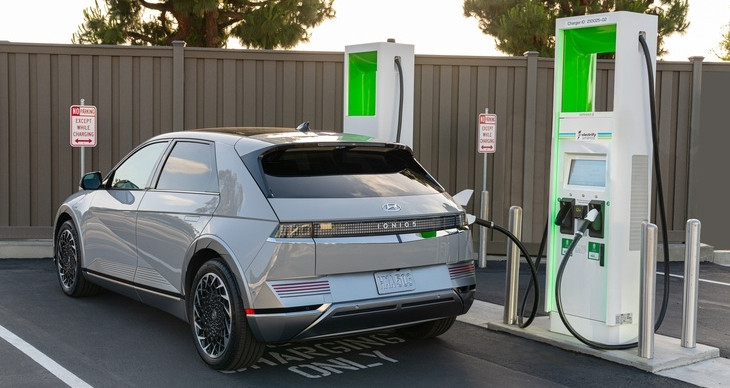
The turning point toward consolidation and openness became clearly visible with key milestones achieved throughout 2026. A prime example is the launch of the VETC Tram sac roaming ecosystem in June 2026, which fundamentally reshaped how disparate charging networks interact. By integrating independent charging grids onto a single digital platform, VETC enabled shared account billing and centralized station discovery.
By August 2026, this pioneering platform had successfully interconnected seven major industry partners—including ChargeLink, EBOOST, ESKY, Ford Vietnam, Rabbit EVC, SmartCharge, and EV Charge. This collaboration spanned 235 charging stations and more than 350 charging points across over 30 provinces and cities nationwide. Through the VETC platform, motorists gained the ability to seamlessly locate stations, check real-time availability, navigate routes, initiate charging sessions, and process payments across multiple operators without needing separate applications. Industry data indicates that these interconnected networks currently account for over 50% of Vietnam’s multi-brand charging infrastructure.
Parallel to aggregator platforms, specialized infrastructure developers are scaling up operations aggressively. EV One, for instance, expanded its footprint to 73 stations nationwide by May 2026, serving more than 10,000 long-distance EV customers and setting an ambitious target of operating over 600 charging points by 2028. Similarly, Singapore-headquartered Charge+ has charted an aggressive expansion strategy in Vietnam, targeting 5,000 charging points by 2030. Other specialized market entrants—such as EverEV, EverCharge, EVG, DatCharge, and SolaEV—are actively participating across various segments, ranging from hardware manufacturing and equipment supply to station management and software solutions.
Automotive Giants Pivot Toward Shared Infrastructure
Recognizing that closed charging ecosystems limit broader market penetration, traditional automakers are increasingly abandoning solitary infrastructure strategies in favor of cross-brand partnerships and joint investments.
In 2025, TMT Motors laid the groundwork for TMT-EGREEN, integrating charging solutions into its broader ecosystem with an explicit design philosophy to serve multiple vehicle brands. Setting a target of 30,000 charging points by the end of 2030, the company imported 570 charging points in May and June 2026 alone to accelerate deployment.
Collaboration has become the industry norm. Tasco Auto and Ford Vietnam joined forces to share infrastructure, targeting a combined network of nearly 89 charging points by the end of the year. Porsche previously partnered with Charge+ to establish 17 high-speed DC charging stations along cross-country routes, while THACO Auto invested in dedicated charging stations for BMW electric vehicles while simultaneously collaborating with Charge+ to expand the broader network. In June 2026, BYD Vietnam signed a strategic partnership with FUTA EV POWER to broaden consumer access to fast-charging infrastructure.
The trend deepened significantly on September 16, 2026, when TC Group officially entered the arena by signing a memorandum of understanding (MoU) with Vietnam Green Energy Infrastructure JSC (VGX) to develop EV charging infrastructure. Under the agreement, both parties committed to exploring charging station installations across TC Group’s retail, service, and distribution ecosystem. Crucially, the initiative focuses on building open infrastructure capable of servicing diverse electric vehicle brands—such as Hyundai and Skoda, which fall under the TC Motor umbrella—rather than restricting access to proprietary models.
Industry analysts note that this wave of collaborative investment holds profound significance for Vietnamese consumers. Under a closed-ecosystem model, drivers face severe restrictions when traveling long distances or switching vehicle brands. Open infrastructure maximizes the efficiency of capital expenditure, land use, and electrical grid resources while eliminating the friction points that traditionally deter prospective EV buyers.
Establishing National Technical Standards: The Regulatory Framework
While market-driven consolidation addresses commercial accessibility, the public sector is simultaneously erecting a unified technical and legal framework to govern charging equipment, safety, and operations. To bring order and consumer protection to a rapidly expanding market, regulatory authorities have advanced comprehensive national technical regulations (QCVN) governing EV charging posts and stations. Draft circulars outlining these national standards have undergone extensive public consultation overseen by the Ministry of Industry and Trade.
Unlike narrow standards that regulate only individual charging plugs, the proposed regulatory framework encompasses an entire operating system, including hardware, electrical sources, digital connectivity, software integration, billing mechanisms, and operational safety.
Under the proposed timeline, charging posts manufactured, imported, or operated prior to the enactment of the technical regulations—provisionally slated for July 1, 2027—will be granted a 12-month transition period to align with compliance standards. Existing operational stations are given a 6-month window to complete comprehensive technical reviews, followed by a 24-month period to remediate any non-compliant elements.
The regulatory scope covers Alternating Current (AC) chargers, Direct Current (DC) chargers, and hybrid AC/DC units. Key safety mandates include comprehensive protection against electrical shock, overloads, short circuits, electromagnetic compatibility, and specific safety protocols for DC fast-charging systems. Furthermore, the draft regulations mandate that technical information and user interfaces must be provided in Vietnamese.
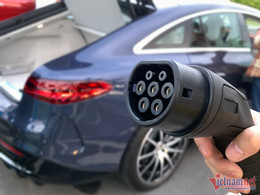
Importantly, these technical requirements are built upon established national standards corresponding to international benchmarks:
- TCVN 13078-1:2020 (equivalent to IEC 61851-1:2017)
- TCVN 13078-21-2:2020 (equivalent to IEC 61851-21-2:2018)
- TCVN 13078-23:2020 (equivalent to IEC 61851-23:2014)
While these standards establish a baseline for hardware safety and interoperability, industry experts emphasize that true cross-brand usability will still depend on specific communication protocols, physical connectors, power configurations, and payment integration methods adopted by individual operators.
Direct Consumer Impact: Measurement, Billing, and Transparency
A critical element of the new regulatory framework with immediate consumer impact involves metrology and billing accuracy. Under the draft guidelines, metering devices installed at charging stations must comply with national legal regulations on measurement.
Furthermore, charging stations are required to clearly display essential transactional data in real-time, including consumed electrical energy, electricity pricing, service fees, session duration, and total cost. Systems must also possess robust data storage and traceability features to ensure transaction transparency and resolve billing disputes.
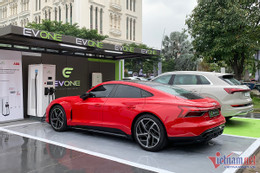
By combining an open-access market model with standardized technical and financial regulations, Vietnam’s EV charging sector is successfully mitigating the risks of fragmented infrastructure. The transition away from isolated manufacturer monopolies toward cooperative, standards-compliant networks addresses the core anxieties of modern motorists.
As investment accelerates and regulatory structures solidify, a safe, reliable, and universally accessible charging infrastructure is rapidly emerging. This foundational transformation is poised to serve as one of the primary catalysts driving the robust, sustainable expansion of Vietnam’s electric vehicle market in the years ahead.