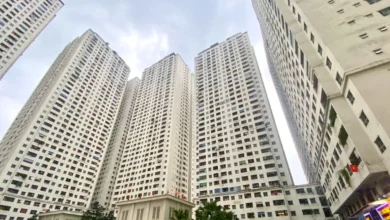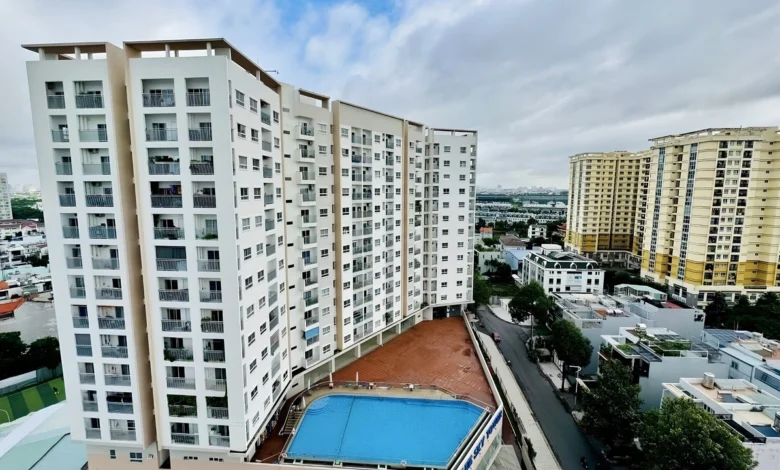
As of August 31, 2026, the disbursement of social housing loans for individuals under the age of 35 has reached approximately 577 billion VND, reflecting a complex landscape of credit accessibility, interest rate fluctuations, and stringent borrowing requirements. This figure, while representing a step forward in the government’s mission to provide housing stability for the younger generation, highlights the persistent challenges facing aspiring homeowners in an increasingly competitive property market.
The Financial Landscape and the 120 Trillion VND Package
The credit initiative for social housing is part of a broader, ambitious 120 trillion VND financing package designed to catalyze the development and acquisition of affordable housing units. In recent months, the scope of this credit facility has expanded significantly. Due to the voluntary participation of 11 commercial banks, the total scale of the credit package has surged to over 153 trillion VND.
This financial mechanism, rooted in the government’s Resolution 33, aims to provide a safety net for young citizens, specifically those under 35, who are often disproportionately affected by rising urban living costs and limited access to traditional mortgage products. The program is strategically structured to offer stability during the initial years of homeownership, with a fixed interest rate of 6.5% per annum for the first five years, followed by a slight adjustment to 7.5% for the subsequent decade.
Chronology of Implementation and Policy Evolution
The journey of the 120 trillion VND package has been one of gradual scaling and iterative refinement. Following the initial implementation phase, the government and the State Bank of Vietnam (SBV) observed that the pace of disbursement remained slower than projected.
- Mid-2026: The expansion of the program was finalized as commercial banks pledged further support, bringing the total commitment to 153 trillion VND.
- July 1, 2026: New, more favorable interest rate structures were implemented to encourage uptake, specifically targeting the under-35 demographic.
- August 31, 2026: Reporting cutoff for the latest data, showing a disbursement of 577 billion VND for the specific youth demographic, indicating a growing but cautious market response.
- End of 2026: The current mandate for the preferential interest rate regime is set to conclude, after which the regulatory authorities will reassess market conditions to determine subsequent rates.
Eligibility Criteria and Structural Barriers
Accessing these funds is not without rigorous requirements. The government has established clear parameters to ensure the support reaches those most in need. Borrowers must be under 35 years old and demonstrate that they do not currently own a home or possess living space of less than 15 square meters per person in the area where they intend to purchase.
Furthermore, income caps are strictly enforced to maintain the "social" nature of the housing units. Individual applicants must earn no more than 20 to 25 million VND per month, while married couples must have a combined household income not exceeding 40 to 50 million VND. These thresholds, while designed to prevent abuse of the system, have been identified by experts as potential barriers for middle-income earners who may earn slightly above the limit but still cannot afford market-rate commercial housing.

Statistical Overview of the Social Housing Sector
While the disbursement of individual loans remains in its nascent stages, the broader supply-side of the social housing market is showing signs of robust activity. As of late August 2026, the national statistics reveal the following:
- Ongoing Projects: There are currently 947 social housing projects under development nationwide, accounting for 910,933 units. This represents a 91% achievement rate toward the government’s milestone target of one million units.
- Construction Milestones: In the first nine months of 2026 alone, 170 projects comprising 46,962 units were completed, while construction commenced on 128 new projects intended to provide 183,293 units.
- Regional Focus (Ho Chi Minh City): In the country’s largest economic hub, three projects with 2,283 units were completed in the first nine months of the year. Projections for the full year 2026 include the completion of 13 projects totaling 9,402 units, with an additional 17 projects expected to enter the market, adding 18,000 units to the supply chain.
Institutional Responses and Market Analysis
The Ministry of Construction has acknowledged the difficulties in the current credit landscape. Officials have noted that despite the influx of capital, the actual disbursement of the 153 trillion VND package—which stood at approximately 17.5 trillion VND or roughly 11% of the total capacity by late 2026—suggests that supply and demand are not perfectly aligned.
Of that 17.5 trillion VND, approximately 15 trillion VND was allocated to project developers, while only 2.5 trillion VND reached individual home buyers. This disparity underscores a common challenge: developers are utilizing the funds to build, but the end-users face obstacles in securing mortgage approval. The Ministry has cited high interest rates relative to income growth, low credit limits, and the administrative burden of proving income as primary factors suppressing consumer demand.
Financial analysts suggest that while the interest rates of 6.5% to 7.5% are attractive compared to commercial market rates, the "proof of income" requirement remains a significant hurdle in a labor market where many young professionals operate in the gig economy or have fluctuating income streams.
Broader Impact and Future Implications
The long-term success of this initiative will depend on the government’s ability to balance fiscal responsibility with the urgent need for housing. The shift toward a more transparent, market-responsive interest rate system after December 31, 2026, will be a critical turning point. If market volatility remains high, the government may be required to extend the current preferential rates or introduce secondary subsidies to ensure that the "under 35" demographic is not priced out of the market.
Moreover, the focus on increasing supply is a positive signal for the real estate sector. By reaching 91% of the one-million-unit target, the administration has demonstrated a commitment to long-term urban planning. However, the conversion of this physical supply into stable, owned homes for young citizens will require continued collaboration between the State Bank of Vietnam, private lenders, and local administrative bodies to streamline the verification process for loan applicants.
As the economy moves toward the close of 2026, the spotlight remains on whether the 577 billion VND disbursed to date is a precursor to a wider wave of homeownership for the youth or if further policy adjustments will be necessary to unlock the remaining capital in the 153 trillion VND package. The current data serves as a clear indicator that while the infrastructure for support is in place, the path to homeownership for the younger generation remains a multi-faceted challenge requiring careful navigation of economic policy and financial inclusion strategies.
Related posts: