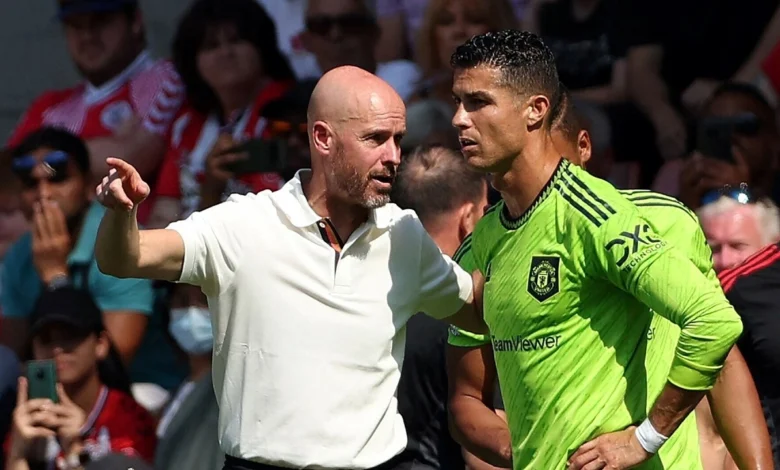
Erik ten Hag has reignited the debate surrounding Cristiano Ronaldo’s later career, asserting that the Portuguese icon’s ability to compete at the absolute pinnacle of European football effectively concluded shortly after his departure from Real Madrid in 2018. The former Manchester United manager, speaking on the Dutch program Goedemorgen Eredivisie on November 1, offered a critical assessment of the five-time Ballon d’Or winner, suggesting that the physical and tactical demands of modern, high-intensity football have outpaced the legendary forward’s current capabilities.
The comments serve as a continuation of a strained narrative that characterized Ten Hag’s tenure at Old Trafford. According to the Dutch tactician, while Ronaldo remains a figure of unparalleled historical significance, his capacity to function within a high-pressing, modern tactical framework had been in decline for nearly a decade. "Ronaldo is obviously a phenomenal player, one of the greatest to ever play the game," Ten Hag stated. "But for the last seven or eight years, he has no longer been able to meet the specific requirements for playing at the very highest level. From the time he was at Juventus, things changed."
A Chronology of Friction at Old Trafford
The relationship between Ten Hag and Ronaldo was marked by public and private discord from the moment the manager arrived in Manchester in the summer of 2022. The timeline of their professional breakdown is well-documented:
- July 2022: Ten Hag assumes control of Manchester United and immediately begins implementing a rigorous fitness and tactical regime. Reports emerge of friction as Ronaldo, accustomed to a specific role, struggles to adapt to the new manager’s high-pressing demands.
- October 2022: The tension reaches a boiling point during a Premier League match against Tottenham Hotspur. Ronaldo refuses to enter the pitch as a substitute and departs the stadium before the final whistle, leading to his exclusion from the squad for the subsequent match against Chelsea.
- November 2022: Ronaldo gives a explosive, unsanctioned interview to Piers Morgan, in which he publicly criticizes the club’s infrastructure, the Glazer ownership, and Ten Hag himself, stating he felt "betrayed."
- January 2023: Following the mutual termination of his contract, Ronaldo completes a move to Saudi Pro League side Al Nassr, effectively ending his European career.
Tactical Shifts and the Demands of Modern Football
Ten Hag’s critique centers on the evolution of the game. In the modern era, particularly in the Premier League and the UEFA Champions League, the ability to press from the front is no longer an optional luxury but a fundamental requirement. Ten Hag argues that regardless of a player’s pedigree, if they cannot contribute to the team’s defensive structure—specifically in tracking back and maintaining the intensity required to disrupt opponents—they become a liability.
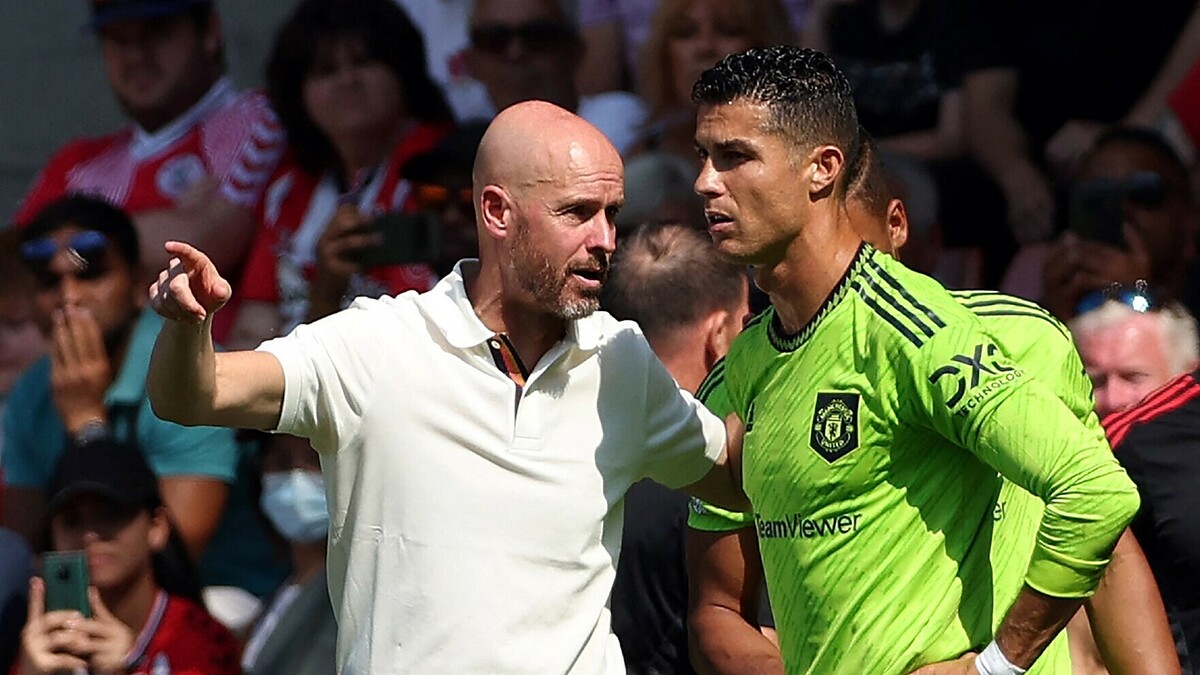
"If you are not able to perform the high-intensity running required in the Premier League, you do not have a chance to play," Ten Hag explained. "You have to be able to sacrifice yourself for the team, to train with the intensity that is needed to achieve the best results every single day. If you cannot do that, you are not helping the collective."
This sentiment echoes the broader philosophy Ten Hag attempted to instill at Manchester United: that no individual, not even a player of Ronaldo’s stature, is above the team’s tactical system. While Ronaldo maintained a legendary status for his individual work ethic and personal fitness, Ten Hag differentiates between "personal fitness" and "tactical adaptability." The manager posits that while Ronaldo’s discipline in the gym remained elite, it did not necessarily translate into the functional mobility required to spearhead a press against elite defensive lines.
The Real Madrid Model: Knowing When to Transition
In his analysis, Ten Hag points to Real Madrid as the benchmark for how a club should manage the decline of its aging superstars. The Spanish giants have historically shown a ruthless, calculated ability to offload world-class players while they still hold significant market value, rather than waiting for their performance levels to drop off a cliff.
Real Madrid sold Ronaldo to Juventus in the summer of 2018 for approximately $112 million. At the time, the forward was 33 years old. He had just concluded a tenure at the Bernabéu that saw him score 450 goals in 438 matches, securing four Champions League titles and two La Liga crowns. While Ronaldo remained prolific in Italy—scoring 101 goals in 134 appearances for Juventus—Ten Hag argues that the decision by Real Madrid to move him on was a strategic masterstroke, recognizing the subtle shift in his contribution to the team’s overall fluidity.
The Broader Impact on Manchester United
Ten Hag, who is currently serving as the technical director at FC Twente, maintains a reflective view of his time at Manchester United. He acknowledges the complexity of the club’s environment and the immense pressure of managing a global institution. Despite the acrimonious exit of Ronaldo, Ten Hag maintains that he holds no personal animosity toward the player. He argues that his decisions were dictated by the necessity of rebuilding a squad that had become overly reliant on individual brilliance rather than collective cohesion.

Regarding his own legacy, Ten Hag defended his record, pointing to the FA Cup win in 2024 and the League Cup in 2023 as evidence that his methods could yield silverware. He explicitly dismissed claims that he was responsible for the controversial, high-cost transfer of players like Antony, stating that his role was to identify talent, while financial negotiations and the final approval of transfer fees remained under the purview of the club’s executive leadership.
Fact-Based Implications for the Future
The discourse surrounding Ronaldo’s later years at Manchester United serves as a case study in the clash between traditional "star-power" management and the modern, system-oriented approach. Data from the 2022-2023 season suggested that Manchester United’s defensive pressing metrics improved significantly when Ronaldo was not on the pitch. This statistical reality is often what managers like Ten Hag rely on when making personnel decisions that alienate fan favorites.
Furthermore, the longevity of players like Ronaldo and Lionel Messi has created a unique paradigm in football. Both have transitioned into roles that require less defensive output but retain high goal-scoring efficiency. However, in the high-octane environment of the Premier League, where transition speed is paramount, the "luxury" of a non-pressing striker often forces a team to alter its entire structure to compensate, which can lead to structural instability.
Ten Hag’s candid assessment reflects a growing consensus among modern coaches: that the game is moving toward a more egalitarian model of effort. As players age, their ability to adapt to these roles is as critical as their technical skills. While Ronaldo continues to break records in the Saudi Pro League, his experience in Manchester serves as a permanent reminder that the demands of the elite European game are increasingly unforgiving, often forcing legends to make a difficult choice between their personal identity as a star and the functional needs of the collective.
Ultimately, the debate remains a testament to Ronaldo’s career. It is only because he sustained an "otherworldly" level for so long that the decline, however subtle, became a subject of such intense global scrutiny. For Ten Hag, the objective was always the team; for the fans, the loss of a legend was a painful reality of the sport’s inevitable evolution.