Global agricultural markets are facing renewed turbulence as the formidable El Nino climate pattern exerts intense pressure on grain production across Asia. Vietnamese rice export prices have surged significantly, driven by a combination of tightening domestic supplies, a surge in international demand, and mounting concerns over long-term food security. Industry stakeholders and international commodity analysts are increasingly questioning whether the severe price spikes experienced three years ago could reemerge as weather anomalies disrupt traditional harvest cycles across the globe.
Market Dynamics and Rapid Price Escalation in the Mekong Delta
Throughout October, international and domestic rice prices broke a prolonged nine-month period of relative stability, embarking on a sharp upward trajectory. According to data compiled by the Vietnam Food Association (VFA), the benchmark price for Vietnamese 5% broken rice climbed by approximately $30 to $40 per ton over the course of the month. In the final ten days of October alone, prices jumped by an additional $15, reaching $515 to $520 per ton—the highest level recorded since the beginning of the year. Concurrently, premium varieties such as Jasmine rice experienced a similar upward push, rising $8 to reach $539 per ton.
This aggressive momentum stands in stark contrast to competing exporting nations. While Vietnam saw steep double-digit increments, prices in Thailand, India, Pakistan, and Myanmar inched upward by a much more modest margin of $1 to $4 per ton.
The domestic atmosphere within the Mekong Delta, Vietnam’s primary rice-producing basket, has transformed markedly. Business activity has quickened as foreign buyers scramble to secure forward contracts. Notably, traders from the Philippines have arrived directly in the region to finalize agreements following the Philippine government’s decision to reopen its import channels and issue early sanitary and phytosanitary (SPS) import clearances.
Nguyen Van Thanh, Director of Phuoc Thanh IV Trading and Production Co. Ltd. in Vinh Long Province, expressed optimism regarding external demand but highlighted a critical domestic paradox: export prices are rising rapidly, yet local farmers have virtually no paddy rice left to sell.
"The recently concluded harvest yielded lower volumes and compromised quality due to weather extremes, specifically linked to El Nino," Thanh explained. "Many farmers suffered financial losses during previous cycles when low rice prices coincided with high fertilizer costs, prompting a reduction in planted acreage. Consequently, overall production volumes are constrained."
The Philippine Factor and Regional Import Demands
The urgency driving international buyers, particularly from the Philippines, stems from domestic production shortfalls. Phan Mai Huong, founder of the rice market intelligence platform SS Rice News, analyzed the broader macroeconomic factors governing the trade flow.
"The harvest that just concluded in the Philippines did not meet projected volumes or quality standards due to adverse weather conditions driven by El Nino," Huong noted. "Consequently, they opened rice import channels much earlier than previously planned, aiming to secure supplies before the peak of the 2026-2027 Vietnamese Winter-Spring harvest."
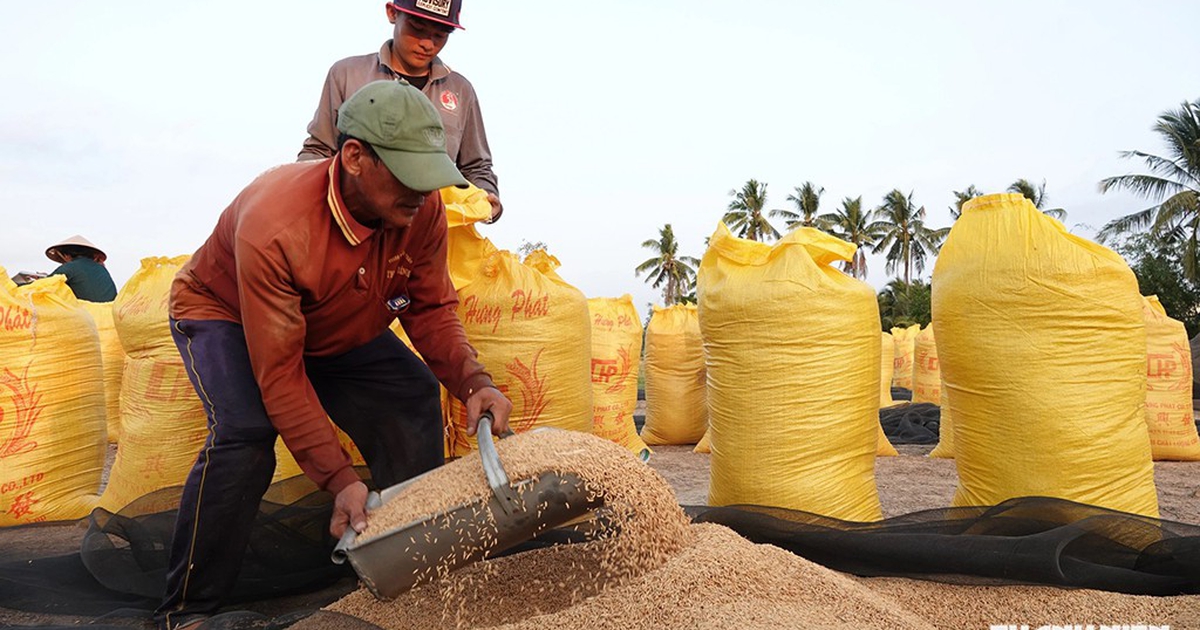
The Philippines remains heavily reliant on external markets, with roughly one-third of its domestic food security dependent on imported rice. Government statistics indicate that the nation has already imported over 4 million tons of rice, marking a 20.06% increase compared to the same period in the previous year. Concurrently, national reserves have tightened. Data from the Philippine Statistics Authority (PSA) shows that total rice inventories as of September 1 fell by 8% year-on-year to 1.91 million tons, down from 2.07 million tons during the corresponding period in 2023. Inventories held by the National Food Authority (NFA) experienced a sharp 36.1% decline, highlighting the acute vulnerability of regional supply chains.
The Shadow of Super El Nino and Global Supply Constraints
Agricultural economists warn that the climatological impacts of El Nino typically lag behind actual weather developments by at least six months. Consequently, the most severe repercussions of the current weather pattern are expected to concentrate heavily throughout 2027.
Alongside commodities such as cocoa, sugar, and coffee, rice occupies a vulnerable position among globally traded foodstuffs. Southeast Asian economies remain acutely exposed to meteorological volatility. India, the world’s largest rice exporter, continues to trade at elevated price levels, with 5% broken rice hovering between $389 and $394 per ton—a one-year high driven by a strengthening rupee and domestic export restrictions. Similarly, agricultural zones in Thailand, particularly within the Chao Phraya River basin, face severe irrigation constraints stemming from prolonged dry spells.
Nguyen Vinh Truong, Director of Viet Hung Co. Ltd. in Dong Thap Province, noted that the structural shortage of fresh paddy in the Mekong Delta will persist until the Winter-Spring crop is harvested between late November and early December.
"From now until mid-2027, export rice prices are heavily skewed toward an upward trajectory because buying demand from importing nations remains immense," Truong stated. "To prepare for potential price shocks, domestic enterprises must act proactively. However, doing so requires substantial financial liquidity, working capital, and adequate warehouse infrastructure."
Truong added that the operational burden on local millers and exporters has been partially alleviated by recent governmental policies prioritizing low-interest credit lines. Commercial lending rates for agricultural producers have eased by 1.5% to 2%, dropping from the previous 9%–10% range down to 7%–8%, thereby facilitating better access to capital for seasonal inventory accumulation.
Macroeconomic Implications and Future Outlook
As the global agricultural community navigates the intersection of climate change and commodity trade, the trajectory of rice prices remains tied to macroeconomic policy decisions in key exporting hubs like India and Vietnam’s domestic adaptation strategies.
According to the Ministry of Industry and Trade, Vietnam’s cumulative rice exports through the end of October reached 6.8 million tons, valued at approximately $3.3 billion. Although aggregate volume and turnover reflect marginal year-on-year adjustments of 4.7% and 9.8% respectively, the October performance signaled a robust monthly rebound, with shipments reaching 475,000 tons valued at $253 million—a 37% surge in volume and a 39% increase in value compared to October of the previous year.
Looking forward, policymakers and industry leaders emphasize the necessity of climate-resilient agricultural planning. With long-range meteorological forecasts pointing toward intensified saline intrusion and prolonged dry conditions across the Mekong Delta, Vietnam’s export surplus may face structural limitations. Ensuring sustainable food security amidst intensifying climatic pressures will require continued public-private cooperation, optimized water resource management, and strategic financial reserves across the entire agricultural value chain.