Bach Hoa Xanh Surpasses 1,000 New Store Expansion Target While Striving for USD 10 Billion Revenue Milestone by 2030

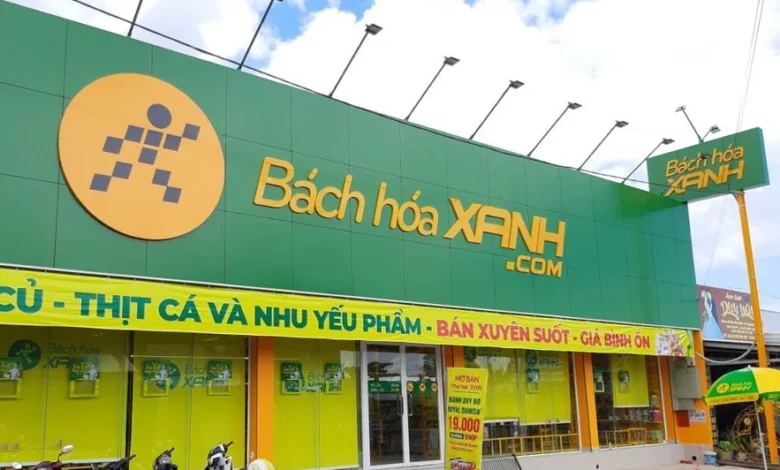
The retail landscape in Vietnam continues to undergo a profound transformation, driven largely by modern grocery chains aggressively expanding their footprints beyond traditional strongholds. Mobile World Investment Corporation (MWG), one of Vietnam’s leading retail giants, has officially announced that its grocery subsidiary, Bach Hoa Xanh, has successfully surpassed its annual target of opening 1,000 new stores within the first nine months of the year. Building on this momentum, the company is accelerating its penetration into the northern and central regions of the country, setting its sights on an ambitious long-term objective of achieving USD 10 billion in revenue by 2030.
This strategic leap forward highlights not only the resilience of modern grocery retail in Southeast Asia’s booming consumer market but also the calculated steps MWG is taking to position Bach Hoa Xanh as a dominant, nationwide household brand. Following a rigorous period of restructuring, operational optimization, and cost containment, the retail chain is now charting a course toward an eventual Initial Public Offering (IPO), underpinned by robust store-level profitability and refined supply chain management.
Navigating Seasonal Fluctuations and October Revenue Trends
During the recent third-quarter investor meeting, the leadership team of CTCP Đầu Tư Thế Giới Di Động (MWG) provided a comprehensive update on Bach Hoa Xanh’s financial and operational trajectory. Notably, management disclosed that October revenue experienced a slight contraction compared to the performance recorded in September.
To contextualize this movement, the company explained that September revenues had already dipped from the exceptionally high baseline set in August. This cyclical softening was exacerbated by prolonged and erratic weather patterns—including heavy rainfall and localized storms—that persisted well into the first week of October. These climatic disruptions directly compromised the procurement, transportation, and daily supply chains of fresh food products, which serve as a critical foot-traffic driver for the supermarket chain. Furthermore, the adverse weather severely impacted sales during the late afternoon, historically recognized as peak shopping hours for urban and suburban consumers.
According to historical observations and management insights, the period spanning from September through November routinely represents a seasonal lull for Bach Hoa Xanh, characterized by moderated consumer spending and temporary retail headwinds, before historically rebounding strongly in December due to the year-end holiday shopping surge.
Financial Performance and Margin Dynamics in Q3
Despite the seasonal revenue softening, Bach Hoa Xanh’s underlying financial health displays several encouraging structural improvements. While the profit margin rate for the third quarter contracted slightly compared to the second quarter—primarily driven by a compression in gross profit margins—absolute gross profit continued its upward trajectory. Concurrently, operational expenditure growth was maintained at a pace slower than revenue expansion, reflecting disciplined cost control.
Company representatives explained that the share of fresh foods within total third-quarter revenue expanded by approximately two percentage points compared to the previous quarter. Because fresh food categories inherently carry lower profit margins than fast-moving consumer goods (FMCG) and non-perishables, this product mix shift exerted downward pressure on overall gross margins. This was compounded by adverse weather conditions inflating input costs and the deployment of aggressive promotional campaigns across newly launched outlets to attract initial consumer foot traffic.
For store cohorts opened in 2024 and earlier, same-store sales growth over the nine-month period achieved a stable single-digit figure, reflecting consistent performance across historical expansion waves. Management noted that the vast majority of these established locations retain substantial headroom to boost revenue further through portfolio optimization and refined operational execution, even though certain high-traffic outlets have reached optimal capacity constraints.
Rapid Ramp-Up and Profitability of New Store Cohorts
A standout metric in Bach Hoa Xanh’s recent performance report is the rapid maturation of its newly opened retail locations. Over the nine-month reporting period, the aggregate direct profits generated by new stores in newly entered regions successfully covered the entire operating expenses of those respective geographic zones.
Although newly launched store cohorts typically exhibit lower profit margins due to their abbreviated operating history, management confirmed that these locations are maturing at an accelerated pace. The vast majority of newly established outlets begin contributing positive net income after just three to six months of operation.
"As revenue scales upward, the ratio of operating expenses to revenue will naturally improve. There remains significant headroom to drive down logistics costs as well as operational overhead at older store formats," an official MWG representative noted, emphasizing that corporate overhead costs also retain considerable room for optimization.

A cornerstone of this operational efficiency lies in inventory management. The spoilage rate for fresh food categories has dropped significantly, now remaining below 3%, a dramatic improvement compared to historical rates of 6% to 9%. Bach Hoa Xanh leverages a proprietary, in-house developed information technology system that generates accurate demand forecasts for each individual store location. This technological infrastructure supports precise ordering, replenishment, and inventory dispatching, closely aligning supply with real-time consumer demand.
Strategic Expansion into Northern and Central Vietnam
Bach Hoa Xanh’s aggressive network expansion has shattered initial projections, successfully eclipsing the milestone of 1,000 new store openings within the first nine months of 2026. The chain is now firmly on track to hit 1,500 locations, with the real possibility of exceeding this figure by the close of the financial year.
Company leadership emphasized that this rapid expansion does not compromise the overarching financial targets set for the year, namely achieving 60,000 billion VND in revenue and 1,800 billion VND in net profit. Based on nine-month results, management maintains strong conviction that both targets will be achieved ahead of schedule.
Traditional retail channels continue to command approximately 80% to 85% of the total grocery market share in Vietnam. However, evolving consumer shopping habits, coupled with an escalating focus on food safety, transparency, and product provenance, provide a fertile runway for modern supermarket chains to capture increasing market share.
In the northern market, sales performance across new store cohorts has surpassed initial corporate expectations. Simultaneously, stores in the central region have registered double-digit revenue growth. MWG remains highly optimistic regarding its northern operations, bolstered by favorable consumer reception, favorable demographic density, and robust infrastructural readiness in major northern hubs.
Market observers note that while WinMart currently commands the largest organized retail scale in northern Vietnam, many competing retail networks remain significantly smaller, leaving the traditional trade channel as the primary source of addressable market share.
"When expanding into a brand-new geographic market, companies inevitably encounter localized challenges related to fresh food supply chains or regional consumer preferences. However, these are standard transitional hurdles typical of initial market entry phases. With time and operational refinement, every parameter is systematically adjusted," an MWG representative shared.
Refining Store Formats and Addressing Cannibalization
To maximize capital efficiency, Bach Hoa Xanh tailors its store formats to match the specific characteristics of each regional market. While earlier southern outlets required larger footprints and higher average investments, newer locations in the northern and central regions are deployed with optimized layouts. Because northern and central populations are often more dispersed and residential clusters vary in density, smaller store formats have been deployed alongside streamlined investment budgets, resulting in lower capital expenditure requirements and significantly reduced break-even thresholds.
Addressing the phenomenon of localized cannibalization—where the opening of a new store marginally dilutes revenue at adjacent existing points of sale—management acknowledged this as a deliberate short-term strategy. By densifying the network, the company relieves operational pressure on high-traffic stores while simultaneously elevating the overall consumer shopping experience and capturing broader aggregate market share.
Furthermore, Bach Hoa Xanh has initiated trials for an ultra-compact "mini" store format. Initial reception has been highly favorable, prompting management to evaluate the model thoroughly before scaling it nationwide. This experimental format is envisioned to integrate seamlessly with existing retail channels, supporting the overarching roadmap toward the USD 10 billion revenue target by 2030.
Path to an Eventual Initial Public Offering (IPO)
To realize its grand vision of reaching a USD 10 billion valuation and market footprint, management recognizes that Bach Hoa Xanh must execute rapid yet disciplined network scaling. The retail chain will continue its aggressive store rollout through the remainder of 2026 while simultaneously drafting comprehensive strategic blueprints for 2027.
Regarding the much-anticipated Initial Public Offering (IPO), MWG leadership clarified that the public listing process will formally commence only after Bach Hoa Xanh successfully clears its accumulated historical financial losses. The current aggressive expansion of the store network is viewed as an essential foundational phase, meticulously designed to build the operational scale, revenue depth, and profitability required to ensure a highly successful market debut.