A nine-year-old boy from Khánh Hòa, Vietnam, has finally regained the ability to walk after enduring more than two years of severe physical impairment caused by post-burn scar contractures. The child, whose mobility had been reduced to crawling on his hands or hopping on one leg due to a frozen knee joint, underwent a complex reconstructive surgery that has restored functionality to his left leg. This medical milestone, facilitated by a collaborative effort between specialists from Ho Chi Minh City and local healthcare providers, marks the end of a long journey of physical hardship and social isolation for the young patient.
The Chronology of an Ordeal
The ordeal began in March 2024, when the child suffered severe burns to his chest and both legs in an accident. Following the initial injury, he was admitted to a local hospital in Khánh Hòa for emergency treatment and stabilization. While the wounds eventually healed, the process left behind dense, inelastic scar tissue—a condition known as post-burn contracture.
As the skin matured, the scar tissue at the back of the left knee (the popliteal fossa) began to shrink and tighten. This physiological reaction effectively "locked" the knee joint in a bent position. Over the subsequent two years, the lack of mobility in the joint resulted in muscle atrophy and significant anatomical changes. For a growing child, this was catastrophic. His daily life was defined by an inability to stand or walk normally, forcing him to rely on his hands for support while crawling or moving by hopping on his sound limb. Beyond the physical pain, the boy faced the emotional toll of restricted interaction with his peers, as his mobility issues made typical childhood activities and social engagement nearly impossible.
A Complex Surgical Intervention
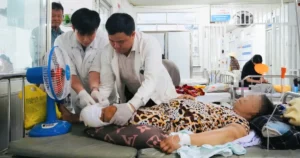
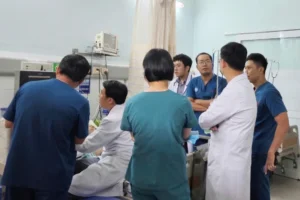
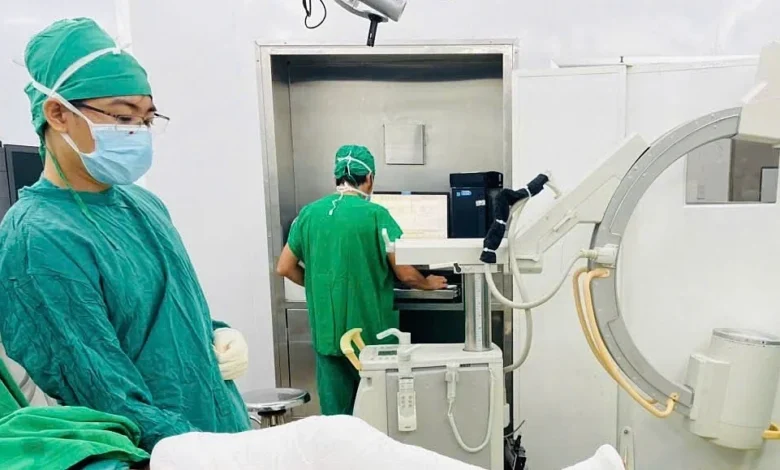
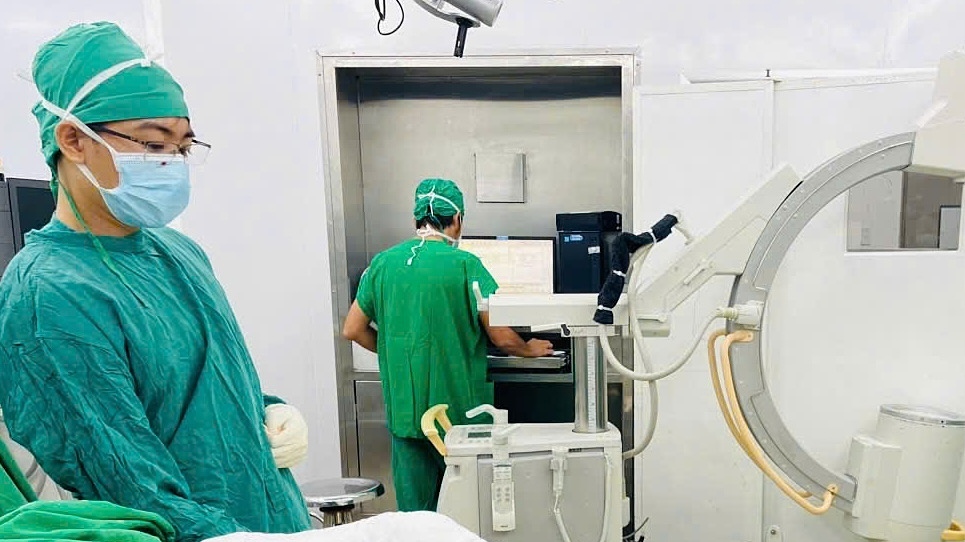
The medical breakthrough occurred on October 27, when a team of experts led by Associate Professor Dr. Nguyễn Ngọc Thạch—a renowned specialist in microsurgery at the Hospital for Traumatology and Orthopaedics in Ho Chi Minh City—arrived at the Khánh Hòa General Hospital. The surgical team, working in coordination with local doctors, conducted an extensive evaluation of the boy’s condition.
The surgery was classified as highly complex. The popliteal fossa is a critical anatomical space, housing major blood vessels and nerves. The presence of dense, restrictive scar tissue in such close proximity to these vital structures meant that any intervention required extreme precision. Dr. Vũ Hòa Khánh, Deputy Director of the Hospital for Traumatology and Orthopaedics, noted that the primary objective was to excise the fibrous scar tissue, release the joint contracture, and perform a flap rotation to cover the defect, followed by a skin graft.
Following the successful removal of the contracture, the surgeons placed the boy’s leg in a splint to maintain the correct, extended position during the initial healing phase. This was a critical step in ensuring that the newly grafted skin could integrate without re-triggering the shrinking process.
Post-Operative Recovery and Rehabilitation
One month after the procedure, the medical prognosis is highly encouraging. The skin graft has integrated well, and the donor site is healthy. Most importantly, the boy has achieved a passive range of motion of approximately 150 degrees in his left knee, a significant improvement that allows for a near-normal walking gait.
However, the medical team emphasizes that surgery is only the first phase of the recovery process. The transition from a static, locked joint to a functional one requires rigorous follow-up. The patient’s family has been advised to enroll him in a dedicated physical therapy program. Additionally, the boy must wear a corrective splint during the night to maintain the extension of the joint and prevent the scar tissue from tightening again—a common risk in pediatric burn recovery.
Physical therapy will focus on strengthening the quadriceps and hamstring muscles, which have weakened significantly over the two years of inactivity. By maintaining a consistent regimen of exercise and bracing, the likelihood of a long-term, permanent recovery is high.
Broader Implications for Regional Healthcare
This case is a prime example of the success of the ongoing professional support program between major urban medical centers and provincial hospitals in Vietnam. During this specific mission, the Ho Chi Minh City surgical team examined approximately 100 patients and performed 10 high-complexity surgeries. These procedures ranged from the correction of complex bone fractures and microsurgical flap reconstructions to nerve repair and pediatric orthopedic conditions.
The strategy of bringing specialized expertise to provincial hospitals serves several vital purposes:
- Accessibility: It reduces the financial and logistical burden on families who would otherwise have to travel long distances to major cities for specialized care.
- Knowledge Transfer: It allows local medical staff to observe and assist in advanced procedures, thereby elevating the general standard of care within the region.
- Resource Optimization: By utilizing local facilities for the primary care of patients, the health system can manage surgical caseloads more effectively.
The Science of Post-Burn Contractures
Post-burn scar contracture occurs when the body produces excess collagen during the wound healing process. Unlike normal skin, which is elastic, scar tissue is rigid. When this tissue forms over a joint, it acts like a tether, preventing the joint from moving through its full range of motion. In children, this is particularly problematic because as the child grows, the scar tissue does not expand, leading to progressive deformity.
The standard of care for these contractures involves a combination of surgery and prolonged rehabilitation. Surgical options include Z-plasties, skin grafts, and tissue expansion. However, the success of these operations is rarely instantaneous. It requires a multidisciplinary approach involving plastic surgeons, orthopedic surgeons, physiotherapists, and, in some cases, psychological support to help the child regain confidence in their physical capabilities.
Looking Ahead
For the young patient in Khánh Hòa, the surgery represents a new chapter. No longer tethered to the ground by the limitations of his own anatomy, he is expected to return to school and engage in the normal physical activities of a nine-year-old. His story highlights both the life-changing potential of modern reconstructive surgery and the necessity of sustained, long-term rehabilitation in the treatment of pediatric injuries.
The collaboration between the Hospital for Traumatology and Orthopaedics and provincial healthcare facilities continues to prove that even in cases of severe trauma, specialized intervention can restore quality of life. As the boy continues his physical therapy, his progress will remain a testament to the importance of specialized surgical missions and the resilience of pediatric patients in the face of significant physical adversity. The medical community remains optimistic that with continued adherence to the post-operative plan, the boy will lead a full, active, and uninhibited life.
Related posts: