Timely Aid from High-Level Official Fund Saves Impoverished Patient in An Giang Province

Medical emergencies can often spell financial ruin for vulnerable populations, particularly when critical healthcare coverage is absent. In a heartwarming display of swift intervention and compassionate leadership, a critically ill and impoverished resident in the Special Administrative Zone of Phu Quoc, An Giang Province, has received a new lease on life. Thanks to a dedicated relief fund established by Mr. Dinh Van Nai, Deputy Secretary of the An Giang Provincial Party Committee and Secretary of the Phu Quoc Party Committee, a financially destitute patient without health insurance had one hundred percent of her complex surgical and medical expenses covered. This timely financial rescue not only averted a potential medical tragedy for a struggling family but also highlighted the life-saving impact of discretionary local welfare funds tailored for marginalized communities.
The Life-Saving Intervention at Phu Quoc Medical Center
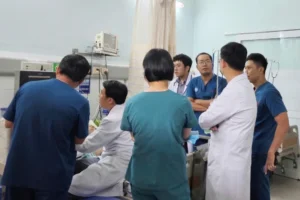
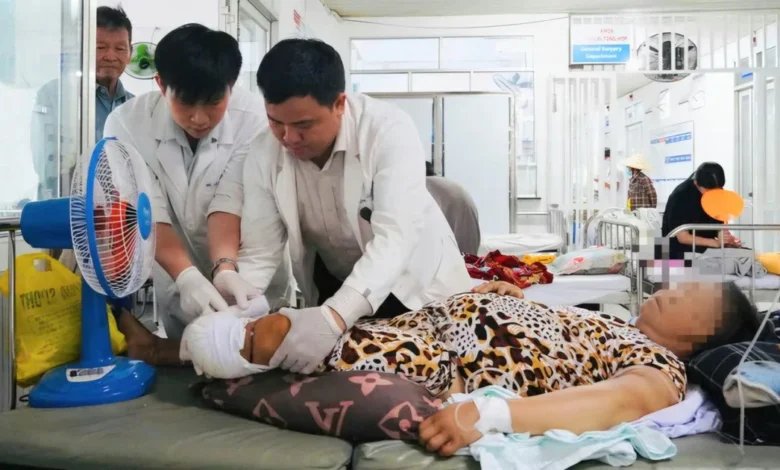
The crisis unfolded at the Phu Quoc Medical Center, where Mrs. S., a resident temporarily residing in the island special administrative zone, was rushed in critical condition. According to Dr. Le Quang Thuoc, a senior physician at the medical facility, Mrs. S. presented with a complex constellation of severe, life-threatening comorbidities. She was battling advanced diabetes, severe dyslipidemia (abnormal lipid metabolism), and critical myocardial ischemia, a dangerous restriction of blood flow to the heart muscle.
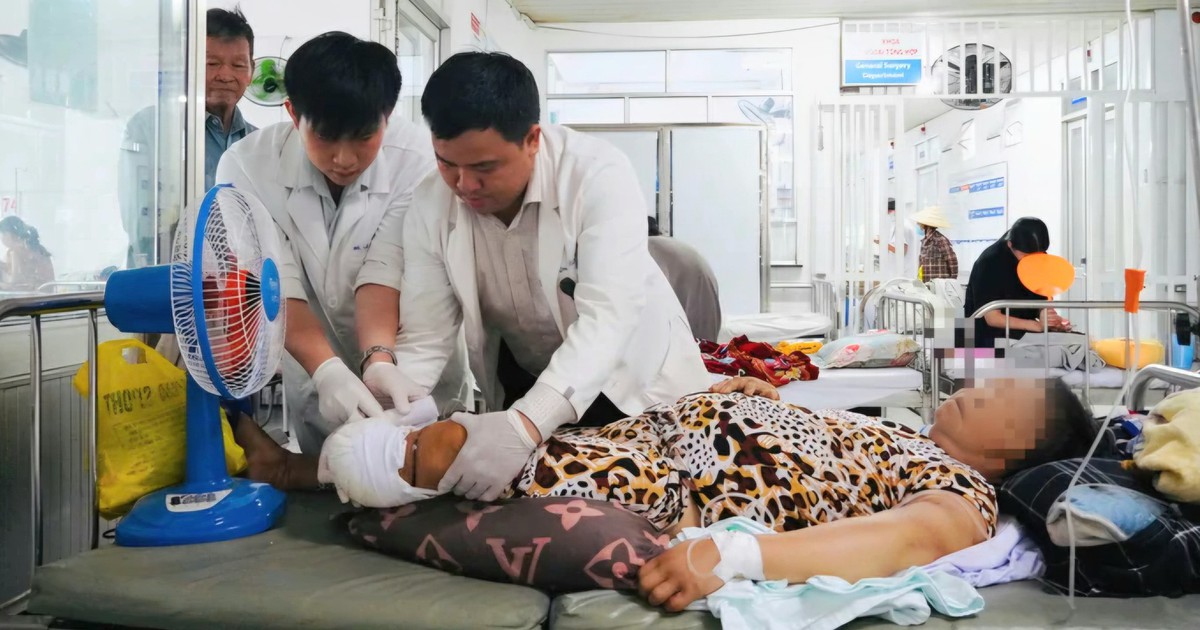
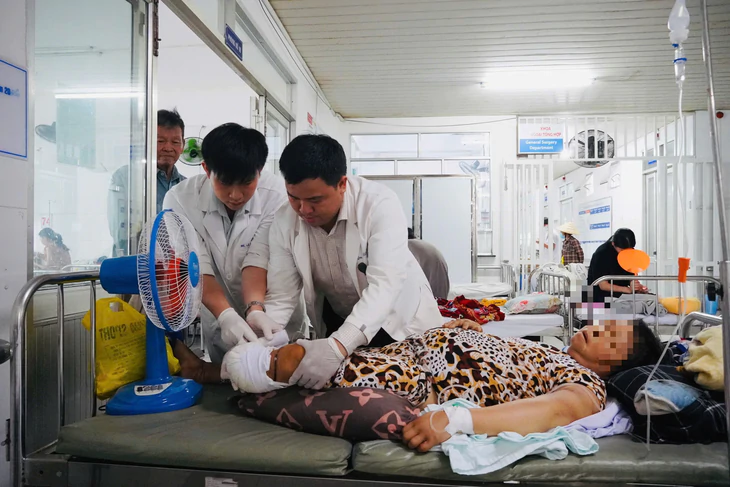
Upon thorough clinical evaluation, the medical team determined that immediate, aggressive surgical intervention was imperative. Doctors scheduled a toe amputation to halt the aggressive spread of localized tissue necrosis and systemic infection. However, while the medical procedure was clinically straightforward, the financial and logistical aftermath posed an insurmountable barrier. Complex surgeries involving diabetic patients require prolonged postoperative care, specialized wound management, expensive pharmacological agents, and extended hospitalization. For Mrs. S. and her family, these mounting costs were entirely out of reach.
A Hand-to-Mouth Existence and the Burden of No Insurance
To fully understand the gravity of the financial barrier, one must examine the socioeconomic reality of Mrs. S. and her husband, Mr. Tran Huu Hanh. Long ago, the couple migrated to Phu Quoc in search of a sustainable livelihood, hoping to escape chronic poverty. Instead, they found themselves trapped in a hand-to-mouth existence, eking out a living as itinerant lottery ticket vendors.
Their daily earnings barely covered basic subsistence, leaving no room for savings, let alone preventative healthcare investments. Crucially, Mrs. S. lacked health insurance—the vital safety net that shields citizens from catastrophic medical debt. Compounding her vulnerability, she was also a stroke survivor, bearing the permanent physical and cognitive tolls of a prior cerebrovascular accident alongside her rampant diabetes and chronic swelling.
When hospitalization struck, the family faced an agonizing choice between abandoning treatment due to insolvency or sinking deeper into unpayable debt. Had it not been for external philanthropic intervention, Mrs. S.’s condition would likely have deteriorated into fatal sepsis.
Mobilizing the Provincial Relief Fund for the Destitute
The turning point came when hospital administration, acutely aware of Mrs. S.’s destitute circumstances, explored alternative funding mechanisms. Just prior to the emergency admission, Mr. Dinh Van Nai had visited the Phu Quoc Medical Center as part of his official duties. During that working session, the provincial leader formally presented a 50 million VND relief fund directly to the medical center. This discretionary fund was specifically earmarked to provide immediate financial assistance to impoverished patients and destitute children undergoing urgent medical treatment who lacked the means to pay.
Recognizing the acute emergency, Dr. Thuoc and the hospital leadership immediately consulted with municipal authorities to request authorization to draw from Mr. Nai’s special fund. Approval was granted swiftly, ensuring that 100 percent of the surgical, pharmaceutical, and hospitalization costs—amounting to approximately 16 million VND—were fully defrayed.
"Mrs. S. migrated to Phu Quoc to make a living, and her family circumstances are exceptionally difficult. Most importantly, she did not have health insurance, making it nearly impossible for her to cover the surgical costs," Dr. Thuoc explained. "Thanks to the relief fund for impoverished patients donated by Mr. Dinh Van Nai following his visit to our center, we reported the situation to the leadership and received authorization to use the fund to cover 100 percent of her expenses, allowing her to undergo treatment with complete peace of mind."
Tears of Gratitude from a Struggling Family

For Mr. Tran Huu Hanh, the relief was nothing short of miraculous. Visibly moved, he recounted the harrowing journey his family had endured and expressed profound gratitude to the local leadership and the medical staff who stood by them in their darkest hour.
"My family’s situation is extremely difficult. Ever since we moved here, my husband and I have survived by selling lottery tickets. My wife has suffered from a stroke, diabetes, severe swelling, and numerous other illnesses," Mr. Hanh shared, his voice trembling with emotion. "Fortunately, thanks to this support fund covering 100 percent of the surgical costs, my wife survived and is recovering well. I am overjoyed and deeply moved. I sincerely hope that this charitable fund continues to grow and flourish so that it can rescue many more people facing difficult circumstances."
The Philanthropic Vision of Local Leadership
The funding mechanism that saved Mrs. S.’s life is part of a broader administrative and philanthropic initiative spearheaded by Mr. Dinh Van Nai in An Giang Province. Known for his hands-on management style and focus on grassroots welfare, Mr. Nai has consistently emphasized the dual necessity of administrative efficiency and social safety nets.
Earlier initiatives associated with his leadership have included funding programs to incentivize civil servants to work overtime to clear bureaucratic bottlenecks for citizens, directly linking administrative reform with public welfare. By establishing targeted humanitarian funds at local medical hubs, leadership in An Giang has bridged the gap between institutional healthcare and the poorest strata of society, ensuring that bureaucratic hurdles or financial destitution never become a death sentence for marginalized citizens.
Broader Implications for Public Health and Social Welfare in Vietnam
The incident in Phu Quoc sheds light on both the successes and the persistent vulnerabilities within Vietnam’s broader healthcare landscape. While the country has made monumental strides in expanding National Health Insurance (NHI) coverage—aiming for universal healthcare—gaps remain. Migrant workers, informal laborers, and transient populations who move across provinces for economic survival occasionally slip through administrative cracks, remaining uninsured and highly vulnerable to sudden health shocks.
Public health experts note that while national policies provide the structural framework for healthcare delivery, localized philanthropic initiatives and discretionary emergency funds play an indispensable bridging role. These grassroots safety nets act as shock absorbers, catching individuals who fall through the cracks of formal insurance schemes.
Furthermore, the collaboration between local government officials and municipal medical centers demonstrates how proactive leadership can directly alleviate human suffering at the community level. By cutting through red tape and authorizing immediate disbursements from specialized funds, institutions like the Phu Quoc Medical Center can transform policy-level benevolence into tangible, life-saving outcomes within hours.
Conclusion: A Blueprint for Compassionate Governance
As Mrs. S. continues her recovery under the watchful eyes of the medical staff at Phu Quoc Medical Center, her case stands as a powerful testament to the impact of empathetic governance and community solidarity. What could easily have been another tragic statistic of poverty-induced mortality was averted through a combination of timely medical expertise, responsive bureaucratic action, and targeted philanthropic support.
For the local administration in An Giang Province and the special administrative zone of Phu Quoc, this event reinforces the value of maintaining direct, flexible financial resources dedicated to human welfare. As Mr. Hanh and his wife look toward a more stable future of healing and survival, the broader community is reminded that institutional development and economic growth must always be matched by an unwavering commitment to protecting the most vulnerable among us.