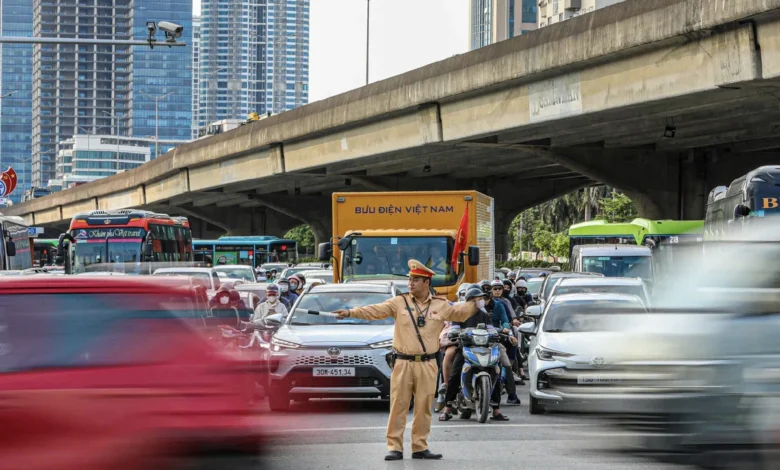
The Hanoi Traffic Police Department, operating under the wider umbrella of the Hanoi Municipal Police, has officially announced comprehensive traffic routing and restriction plans scheduled for November 27 and 28. This large-scale operational adjustment is designed to guarantee absolute security, safety, and seamless traffic flow during a series of high-profile international diplomatic events taking place in the capital of Vietnam.
The upcoming diplomatic agenda features the 12th Cambodia-Laos-Myanmar-Vietnam (CLMV) Summit and the 11th Ayeyawady-Chao Phraya-Mekong Economic Cooperation Strategy (ACMECS) Summit. Both gatherings are set to host prominent regional leaders, cabinet ministers, and international delegates at the National Convention Center, situated at No. 2 Thang Long Avenue, Me Tri Ward, Nam Tu Liem District, Hanoi. Given the diplomatic significance and the high level of foreign representation, municipal authorities have designated strict security perimeters, necessitating significant alterations to daily vehicular movement across key thoroughfares.
Comprehensive Traffic Restrictions and Schedules
According to the directive issued by the Traffic Police Department, the specialized traffic regulations will be enforced consecutively on November 27 and November 28, spanning from 6:00 AM to 10:00 PM on each day. During these active hours, severe access limitations will be imposed on specific categories of commercial and heavy-duty vehicles.
The restrictions primarily target automobiles with a total designed gross weight of 1.5 tons or more, as well as passenger transport vehicles with a seating capacity of 16 seats or greater. However, to ensure essential city services remain operational and public disruption is minimized, several critical exemptions have been established. Public buses, municipal garbage collection trucks, emergency incident response vehicles, vehicles bearing official security or protection badges, law enforcement units, military transport, and other officially designated priority vehicles will be permitted to operate within the restricted zones.
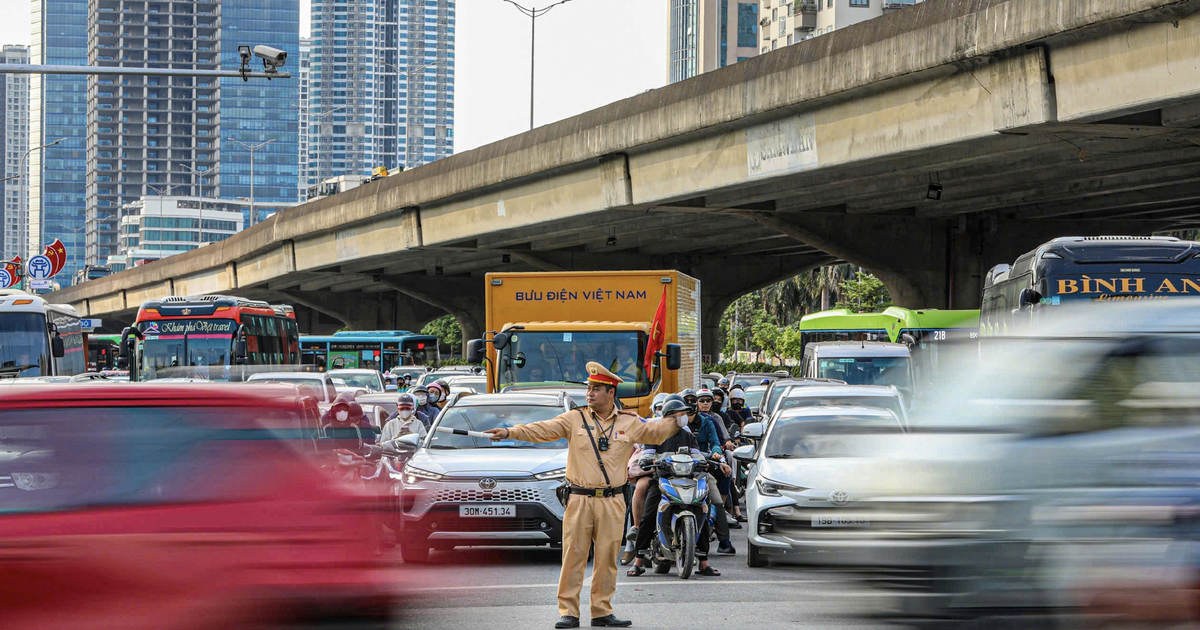
Furthermore, law enforcement officers possess the authority to dynamically restrict or divert other types of vehicles depending on real-time security assessments and the movements of protected diplomatic delegations. Motorists have been strongly advised to anticipate delays, avoid unnecessary travel through the affected corridors, and strictly adhere to the instructions of traffic control personnel stationed across the city.
Affected Arterial Roads and Corridors
The traffic diversion framework directly impacts several of Hanoi’s most critical arterial roadways, particularly those surrounding the western commercial and administrative hubs. The primary routes subject to closures, partial access limits, and rigorous monitoring include:
- Kim Ma Street
- Nguyen Chi Thanh Street
- Tran Duy Hung Street
- Pham Hung Street (stretching from Me Tri Intersection to the Thang Long Avenue overpass)
- Do Duc Doc Street
- Mieu Dam Street
- The Ring Road 3 Elevated Section (spanning from Ho Tung Mau Street to the Thanh Troi Bridge in both directions)
- The Thang Long Avenue Right-Side Service Road (stretching from Pham Hung Street to the Provincial Road 70 overpass)
These corridors serve as vital lifelines connecting downtown Hanoi with outlying residential districts, industrial zones, and the Noi Bai International Airport. Consequently, the temporary restrictions are expected to generate substantial ripple effects across the entire metropolitan transportation network.
Alternative Routing for Inter-Provincial Freight and Passenger Transport
To mitigate congestion and prevent major logistical bottlenecks, the Hanoi Traffic Police Department has mapped out detailed alternative itineraries for drivers traveling between eastern, northern, and western provinces during the restricted hours.
For vehicles originating from eastern provinces—such as Hai Phong, Hung Yen, and Bac Ninh—traveling toward northern, western, or north-western destinations like Phu Tho, Thai Nguyen, or Tuyen Quang, authorities have designated specific bypass routes. Drivers are directed to utilize the Thanh Troi Bridge, connect to the Hanoi-Bac Giang Expressway, transition onto National Highway 18, and proceed toward their northern destinations, and vice versa.
Alternatively, commercial freight and passenger transport moving from eastern provinces toward western and north-western localities (including Phu Tho, Son La, and Dien Bien) must follow a southern and western bypass loop. This prescribed itinerary requires motorists to cross the Thanh Troi Bridge, navigate through Doi Moi, Ngoc Hoi, and Phan Trong Tue streets, cross the Buou Bridge, traverse Phuc La and Le Trong Tan streets, connect to National Highway 6, and finally proceed toward Phu Tho and Son La.
For traffic originating from the Vinh Tuy Bridge or Vu Van Kiet Street heading toward Thang Long Avenue, vehicles must detour via Pham Van Dong Street, Ho Tung Mau Street, Dien Street, National Highway 32, and Provincial Road 70 before reaching Thang Long Avenue. The same directional logic applies in reverse for return trips.
Logistical Context and Diplomatic Significance
The CLMV and ACMECS summits represent core pillars of Mekong sub-regional cooperation, focusing on economic integration, sustainable development, narrowing the development gap, and enhancing trade connectivity among participating nations. Hosting two consecutive high-level summits underscores Vietnam’s proactive role in ASEAN and sub-regional frameworks, reinforcing its commitment to multilateralism, regional stability, and economic resilience.
However, staging events of this magnitude within a bustling metropolis of over eight million residents presents profound logistical challenges. Hanoi’s urban infrastructure, while expanding rapidly with the development of elevated ring roads and metro lines, remains vulnerable to peak-hour congestion. Temporary closures of high-capacity arteries such as Ring Road 3 and Pham Hung Street necessitate meticulous planning by municipal agencies to balance diplomatic security protocols with the socio-economic needs of the local population.
Previous high-level international conferences hosted in Hanoi—such as former bilateral summits, regional economic forums, and the historic 2019 DPRK-USA Hanoi Summit—similarly relied on comprehensive traffic orchestration. Law enforcement agencies have refined their operational frameworks over the years, deploying advanced traffic monitoring systems, intelligent signal control, and early public notification campaigns to ensure seamless execution.
Public Advisory and Compliance Measures
In light of the extensive containment measures, the Hanoi Police Department has issued a stern reminder regarding public compliance. All road users are urged to exercise maximum patience, strictly obey the Road Traffic Law, and proactively monitor real-time traffic updates through official media channels and electronic navigation platforms.

A critical rule emphasized by traffic authorities involves the behavior required when encountering priority convoys. When drivers encounter official motorcades displaying specialized audio and visual warning signals while executing official duties, they are legally and morally obligated to act with utmost caution. Motorists must immediately signal, decelerate, and maneuver their vehicles into adjacent side streets, horizontal lanes, or the nearest available intersection. This proactive compliance allows the priority delegation to pass safely without unnecessary obstruction, ensuring that the host nation maintains the highest standards of safety and protocol for visiting dignitaries.
Economic Implications and Urban Resilience
Transportation analysts and urban planners note that while temporary traffic diversions inevitably create short-term inconveniences for commuters and logistics providers, they also highlight the growing maturity of Hanoi’s urban mobility management. The establishment of clearly defined multi-modal bypass routes demonstrates an effort to shift heavy freight away from core diplomatic and commercial zones, preventing gridlock and reducing vehicular emissions in densely populated areas.
Logistics companies operating within northern Vietnam have largely adapted to such announcements by rescheduling delivery windows, optimizing fleet management, and utilizing peripheral ring roads outside the restricted timeframes (6:00 AM to 10:00 PM). Municipal authorities remain confident that public cooperation, combined with the rigorous deployment of traffic police personnel at hundreds of critical intersections, will successfully maintain public order and transportation efficiency throughout the duration of the summits.
As Hanoi prepares to welcome regional leaders for the CLMV and ACMECS discussions, the city stands as a focal point of diplomatic engagement. The success of these high-level meetings relies not only on formal diplomatic dialogue within the conference halls of the National Convention Center but also on the disciplined, collective effort of millions of citizens and commuters navigating the capital’s streets during a demanding two-day operational window.