Jensen Huang No Longer Holds Executive Control of Nvidia Following Resignation as CEO and Departure from Board of Directors

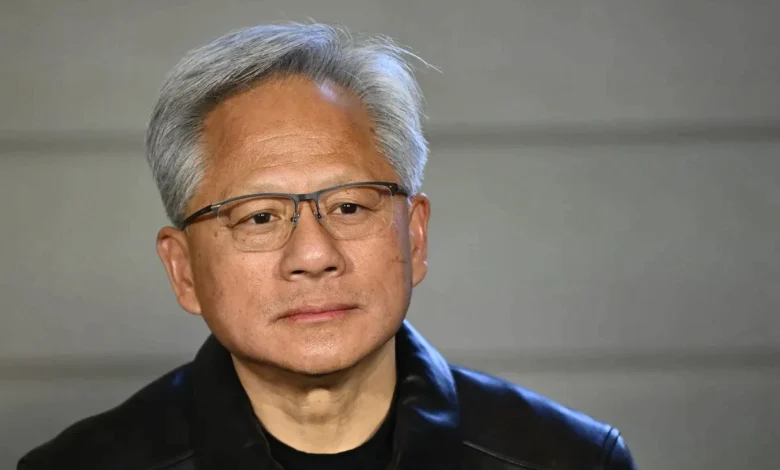
In a historic and seismic shift for the global semiconductor industry, Nvidia announced on November 12 that co-founder Jensen Huang has resigned from his roles as President, Chief Executive Officer (CEO), and member of the Board of Directors, effective immediately. This decision marks the end of a remarkable 33-year tenure, during which Huang transformed a boutique graphics chip startup, founded in 1993, into one of the most valuable and influential technology conglomerates in human history. The departure leaves a profound power vacuum at the center of the AI revolution, as the company now navigates the process of identifying a permanent successor to lead the firm into its next chapter.
The transition of power was swift. Following the announcement, Nvidia appointed Chief Financial Officer Colette Kress as interim CEO, while Harvey C. Jones has assumed the role of Chairman of the Board. The company has publicly confirmed the initiation of a global executive search to identify a long-term replacement, a process that is expected to be closely scrutinized by investors, regulators, and industry peers alike.
The Anatomy of a Departure: Ownership vs. Control
The immediate question facing market observers is how the departure of such a foundational figure impacts the operational trajectory of Nvidia. To understand the implications, one must distinguish between the concepts of equity ownership and corporate control. According to the company’s 2026 Proxy Statement filed with the U.S. Securities and Exchange Commission (SEC), as of March 23, 2026, Jensen Huang maintained beneficial ownership of approximately 870.6 million shares of Nvidia common stock, representing roughly 3.58% of the company’s total equity.
While this holding makes Huang one of the largest individual shareholders, the structure of Nvidia’s governance dictates that share ownership does not equate to direct control over corporate strategy. Nvidia operates under a "one share, one vote" principle. While Huang holds significant voting power, he lacks a special class of super-voting shares that would allow him to dictate policy or override the will of the majority of shareholders. Furthermore, much of his reported ownership includes shares held in trust, legal entities, and the Jen-Hsun & Lori Huang Foundation. While these assets reflect his significant financial stake, they do not grant him unilateral authority to steer the firm now that he has vacated his board seat and executive office.
Corporate Governance and the Delaware Law Framework
Nvidia is incorporated in Delaware, and its governance is bound by the Delaware General Corporation Law (DGCL). Under Section 141(a) of the DGCL, the business and affairs of a corporation are managed by or under the direction of the Board of Directors, except as otherwise provided by law or the certificate of incorporation.
The company’s internal bylaws, which were amended as recently as March 12, 2024, are explicit regarding executive authority. Section 29(a) stipulates that executive officers are maintained at the pleasure of the Board of Directors. Furthermore, Section 32 provides the Board with the power to remove any executive officer at any time, with or without cause, via a majority vote of the sitting board members. By resigning, Huang effectively severed the legal tether that granted him the power to execute the company’s daily operations. With his departure from the Board, he also lost his ability to vote on matters of governance, thereby formally concluding his direct role in the stewardship of the company he helped build.
A Week of Turbulence: The Context of the Resignation
The resignation occurred in the shadow of intense public and internal scrutiny. On November 8, just four days prior to the official announcement, reports surfaced regarding allegations of personal misconduct involving the 63-year-old executive. These reports suggested that Huang had engaged in a personal relationship with Alice Huang, a Chinese business figure who had been subject to speculation regarding potential foreign intelligence ties.
While Nvidia’s official statements did not explicitly link the departure to these specific allegations, the timing was notable. In the days preceding the resignation, Nvidia reportedly initiated an independent investigation into potential security vulnerabilities, specifically looking at whether the executive’s personal associations could have inadvertently compromised trade secrets or national security interests. Investor groups had also begun to express concerns, alleging that critical information regarding these risks had been withheld from the public. The cumulative pressure—ranging from potential intelligence exposure to the erosion of corporate governance standards—created an untenable environment for the long-time leader.
Chronology of a Tech Giant’s Transition
- 1993: Jensen Huang, Chris Malachowsky, and Curtis Priem co-found Nvidia with a vision to revolutionize the computer graphics market.
- March 2024: Nvidia updates its corporate bylaws, reinforcing the Board of Directors’ power to remove executive leadership, a move that would prove pivotal later that year.
- November 8, 2024: Media reports emerge alleging personal misconduct and potential security risks linked to the CEO’s private life.
- November 8-11, 2024: Nvidia Board of Directors convenes emergency sessions to evaluate the risks and the future of the company’s leadership.
- November 12, 2024: Nvidia officially announces the resignation of Jensen Huang as CEO, President, and Board Member, effective immediately. Colette Kress is appointed interim CEO.
Market Implications and Future Outlook
The departure of a "founder-CEO" is rarely a seamless event, particularly for a company as central to the global economy as Nvidia. Wall Street analysts have noted that Huang was not merely a figurehead; he was deeply embedded in the company’s strategic engine, directly managing over 60 senior leaders and serving as the primary architect of the company’s AI product roadmap and client relationships.
The "founder effect"—the intangible influence and institutional knowledge possessed by an original builder—is difficult to replace. Even without a formal role, Huang’s influence persists through his continued shareholding and his historical ties to Nvidia’s partner and investor ecosystem. However, the Board of Directors must now move quickly to restore market confidence.
The appointment of Colette Kress as interim CEO provides a bridge. As the company’s long-time CFO, Kress is intimately familiar with the firm’s financial health and capital allocation strategies. Yet, the search for a permanent successor will likely require an external candidate capable of managing the company’s massive geopolitical exposure, particularly regarding trade tensions between the U.S. and China, and the rapidly shifting competitive landscape in generative AI.
Broader Impact on the Tech Industry
Nvidia’s situation serves as a cautionary tale for the technology sector regarding the dangers of extreme key-person dependency. For decades, the industry has praised the "founder-led" model as a driver of innovation and agility. However, the events of November 2024 highlight the risks inherent when the identity of a corporation is too closely fused with that of a single individual.
Institutional investors are already signaling that they expect greater transparency regarding board oversight and risk management. The departure of Huang is expected to lead to a tightening of governance protocols, with more rigorous vetting of executive conduct and a more decentralized power structure to ensure that no single person, regardless of their past contributions, can operate outside the reach of the Board’s fiduciary responsibility.
As Nvidia enters this transition period, the company remains the primary supplier of the hardware powering the AI era. While the loss of its iconic leader is a massive psychological and operational hurdle, the company’s underlying technology, market dominance, and robust balance sheet remain intact. The challenge for the new leadership will be to prove that Nvidia is a sustainable, institutionalized entity that can thrive long after the era of its founder has drawn to a close. For now, the global markets remain in a state of watchful waiting, as the company prepares to announce its next steps in a journey that has permanently altered the landscape of modern computing.
Related posts: