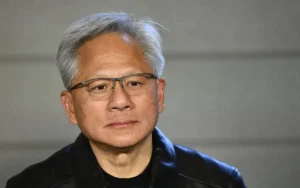
Toàn văn thông báo chính thức của Nvidia về việc Jensen Huang từ chức CEO, công bố người tạm quyền thay thế

In a move that has sent shockwaves through the global technology and financial markets, Nvidia Corporation (NASDAQ: NVDA) announced on November 12, 2026, that co-founder and long-time CEO Jensen Huang has stepped down from his leadership roles, effectively immediately. The sudden departure ends a historic 33-year tenure during which Huang transformed a niche graphics card manufacturer into the world’s most valuable company and the primary engine of the global artificial intelligence revolution.
Alongside the resignation, the company’s Board of Directors announced that Colette Kress, who has served as the Executive Vice President and Chief Financial Officer (CFO) since 2013, has been appointed as the interim Chief Executive Officer. In a further structural overhaul, the board named Harvey C. Jones, a seasoned technology executive and venture capitalist, as the first independent Chairman of the Board in the company’s history.
A Period of Heightened Scrutiny
The leadership transition follows weeks of mounting pressure on both the company and Mr. Huang. Sources close to the matter indicate that the board’s decision was accelerated by a series of complications, including internal governance questions and heightened geopolitical friction surrounding Nvidia’s semiconductor operations in China.
For months, Nvidia has navigated a complex regulatory landscape regarding the export of high-end AI processors. As international tensions rose, the company’s compliance and business strategies faced intense scrutiny from global regulators. Analysts suggest that the board sought a transition that would provide a "steady hand" during a period of transition, moving toward a more conventional corporate governance structure as the firm enters a new phase of its maturity.
Financial Market Reaction
The announcement triggered an immediate and volatile reaction in the financial markets. On the morning of November 12, 2026, Nvidia shares plummeted approximately 14% within the first hours of trading. Investors, who had grown accustomed to the "Huang-led era" of explosive growth, reacted to the uncertainty surrounding the future of the company’s vision and its ability to maintain its dominant market position in the AI hardware sector.
Trading volume surged as institutional and retail investors reassessed their positions. While the board has moved quickly to reassure shareholders, the double-digit drop reflects the deep-seated reliance of the current tech market on the stability of Nvidia’s executive leadership.
Chronology of a Leadership Transition
The departure of Jensen Huang marks the end of an era that began in 1993, when Huang, along with Chris Malachowsky and Curtis Priem, founded Nvidia. Over the following three decades, Huang became the face of the company, known for his signature leather jacket and his relentless focus on GPU-accelerated computing.
- 1993: Nvidia is founded in a Denny’s restaurant in San Jose, California.
- 1999: The company releases the GeForce 256, the world’s first GPU, setting the industry standard.
- 2012: The AlexNet breakthrough marks the beginning of the modern AI era, with researchers utilizing Nvidia GPUs for deep learning.
- 2023-2025: Nvidia experiences unprecedented growth, fueled by the global demand for generative AI, becoming the most valuable company in the world by market capitalization.
- Q3 2026: Mounting concerns regarding international trade restrictions and internal oversight lead to increased pressure on the executive team.
- November 12, 2026: The Board of Directors accepts the resignation of Jensen Huang and appoints Colette Kress as interim CEO, while Harvey C. Jones is named Chairman.
The Interim Leadership: Colette Kress and Harvey C. Jones
The choice of Colette Kress as interim CEO is widely viewed as a strategic decision to maintain continuity. Having joined Nvidia in September 2013, Kress has been the architect of the company’s financial strategy during its most explosive growth years. Her tenure at the helm of the finance department, including previous experience at industry titans such as Cisco and Microsoft, provides the board with confidence that she can manage the company’s complex global operations.
"Colette has helped guide Nvidia through a period of exponential growth and has a deep understanding of our business, our customers, our operations, and our financial position," said Harvey C. Jones, the new Chairman of the Board. "The board has complete confidence in Colette and the leadership team to ensure that our operations, customer commitments, and product roadmap remain uninterrupted."
Harvey C. Jones, who brings over 30 years of experience to the role of Chairman, is expected to focus on strengthening the board’s oversight capabilities. His background at Synopsys and in venture capital is expected to bring a more rigorous, independent governance framework to a company that, until now, has been characterized by the founder-centric leadership style of Mr. Huang.
Broader Implications and Strategic Outlook
The departure of a founder as influential as Jensen Huang raises significant questions about the future strategic direction of Nvidia. For years, the company has operated under a vision of "accelerated computing," a philosophy championed by Huang. The challenge for Kress and her successor will be to maintain this momentum while navigating the increasingly fractured landscape of international trade and hardware security.
Analysts have highlighted three primary areas of concern for the incoming leadership:
- Geopolitical Risk: Nvidia’s ability to navigate the complex web of trade restrictions in Asia, particularly in China, remains the company’s most significant external challenge.
- Product Lifecycle Continuity: With the upcoming release of new architectures, the market will be looking for signs that the innovation pipeline remains as robust as it was under the previous administration.
- Governance Maturity: The appointment of an independent chairman signals that the board intends to modernize its governance practices. This could lead to a more conservative, risk-averse approach to expansion compared to the aggressive, founder-driven tactics of the past.
Looking Ahead: The Q3 Financial Report
All eyes are now turned toward the upcoming Q3 fiscal year 2027 earnings report, scheduled for Tuesday, November 17, 2026. This event will serve as the first major public appearance for the new leadership team. Investors and analysts expect the company to provide clarity on the strategic transition, the search process for a permanent CEO, and any potential shifts in operational priorities.
Despite the volatility, the fundamentals of the company remain strong. Nvidia continues to command a massive share of the AI computing market, and its partnerships with cloud providers and enterprise technology companies remain intact. As the company prepares for its earnings call at 2:00 PM PT, the industry waits to see how the "post-Huang" era will define itself.
"The strength of Nvidia has always come from its people," Colette Kress noted in her initial statement as interim CEO. "I am committed to continuing to build on the extraordinary foundation that Jensen created over the past 33 years. We will continue to drive the work that has made Nvidia the leader in accelerated computing and artificial intelligence, and we will seize the opportunities that lie ahead."
As the dust settles, the tech industry remains in a state of flux. The transition at Nvidia is more than a change in personnel; it is a signal that the era of the high-growth, founder-led AI boom is entering a new, more scrutinized phase. Whether the firm can maintain its dominance under new leadership remains the central question for the technology sector heading into 2027.
Related posts: