
Masan Group Reports Stellar 2026 Performance with Profits Surging Past Three-Fold Increase on Robust Consumer Demand and Strengthening Balance Sheet

The economic landscape of Vietnam continues to showcase resilience and dynamic corporate expansion as Masan Group (HOSE: MSN), one of the nation’s leading multi-sector conglomerates, unveils a transformative financial report for the first nine months of fiscal year 2026. Driven by a powerful convergence of surging global commodity prices, strategic operational efficiencies across its core consumer-retail pillars, and a disciplined approach to capital allocation, the conglomerate has shattered previous earnings estimates. Financial analysts and major domestic and international securities institutions have responded with widespread upward revisions of Masan’s earnings per share (EPS) projections, signaling robust institutional confidence in the company’s long-term trajectory.
This financial resurgence is characterized not merely by top-line expansion, but by a profound strengthening of the company’s structural health. With operating cash flows swelling to historical highs and net leverage metrics retreating comfortably within secure parameters, Masan has successfully demonstrated its capacity to balance aggressive market capture with rigorous balance sheet consolidation. As the corporation charts its course through the remainder of 2026 and looks toward the 2027–2028 horizon, the systemic improvements embedded within its diverse operating segments—spanning modern grocery retail, packaged consumer goods, branded meat, and high-tech industrial materials—have positioned the enterprise at the vanguard of Vietnam’s domestic consumption and industrial export renaissance.
Explosive Profit Growth Outpaces Revenue Expansion
During the first three quarters of 2026, Masan recorded a consolidated net revenue of VND 89,118 billion, marking a substantial increase of 52.7% compared to the corresponding period in the previous year. Even more striking was the exponential acceleration observed in the company’s profitability metrics. Profit after tax before minority interests scaled to VND 10,325 billion, representing an increase of more than two times year-on-year. Meanwhile, net profit attributable to equity holders of the parent company achieved a staggering VND 8,042 billion, translating to an extraordinary year-on-year surge of 205.3%.
This statistical divergence—where net profit attributable to the parent company expanded more than three-fold while revenue grew by roughly half—highlights a fundamental shift in operational leverage and margin enhancement across Masan’s ecosystem. The primary catalysts behind this outperformance were the operational turnaround of key member units, most notably Masan High-Tech Materials (UPCOM: MSR) amid a prolonged bullish cycle for global tungsten prices, alongside sustained organic growth within the consumer and retail divisions.
The financial community has taken swift note of these developments. On October 26, Ho Chi Minh City Securities Corporation (HSC) released an updated equity research report significantly elevating its earnings forecasts for Masan across the 2026–2028 cycle. According to HSC’s projections, Masan’s net profit attributable to the parent company for the full year 2026 is anticipated to reach approximately VND 12,222 billion, representing a near-triple increase from the preceding fiscal year. Adjusted EPS is forecasted at VND 7,999 per share for 2026, with expectations to climb further to VND 9,524 in 2027 and VND 10,690 in 2028. Concurrently, international financial institutions such as HSBC have issued assessments noting that Masan’s nine-month performance has comfortably surpassed institutional forecasts and overarching market consensus.
Operational Excellence Across Consumer and Retail Pillars
A closer examination of Masan’s core operating divisions reveals that the impressive headline figures are underpinned by fundamental improvements in unit-level profitability rather than isolated accounting adjustments.
WinCommerce, the subsidiary operating the ubiquitous WinMart supermarket and WinMart+ convenience store chains, emerged as a standout contributor. In the third quarter of 2026 alone, WinCommerce generated VND 12,775 billion in revenue, marking a 21.2% year-on-year increase, while its profit after tax soared by 86% to reach VND 325 billion. By the close of September, WinCommerce’s extensive nationwide retail footprint encompassed 5,486 operating outlets, reflecting a net addition of 894 stores since the commencement of the year. Crucially, same-store sales (SSS) across mature locations registered a healthy growth rate of approximately 7%, confirming that the revenue expansion was propelled by genuine consumer traction rather than aggressive, untargeted store openings. The net profit margin of WinCommerce hovered around 2.5% in the third quarter, signaling sustainable retail monetization as the network scales.
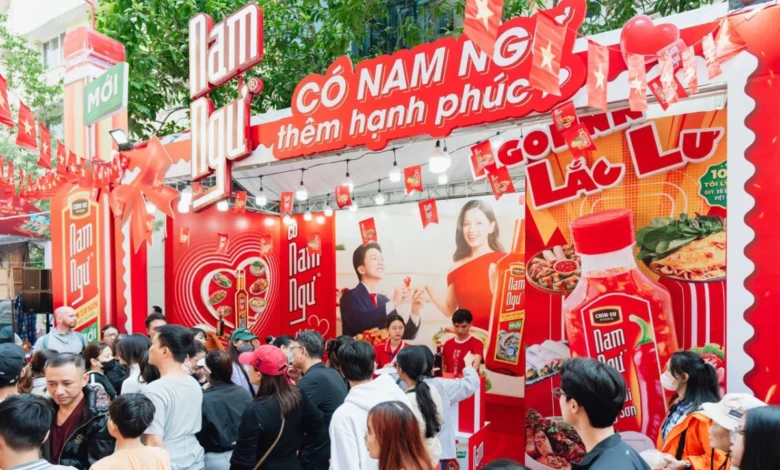
Simultaneously, Masan Consumer Corporation delivered its fastest quarterly revenue growth in three years during the third quarter of 2026, posting top-line figures of VND 8,743 billion, up 16.3% year-on-year, accompanied by a 14.1% rise in net profit. This performance was anchored by market share gains across core categories, including condiments, convenience foods, and bottled beverages. Leveraging its strategic "Retail Supreme" platform, Masan Consumer focused on optimizing assortment density within existing retail touchpoints rather than simply multiplying doors. During the quarter, the total number of retail points stocking six or more of the company’s product categories expanded from approximately 43,000 to 57,000, underscoring enhanced distribution efficiency.
In the protein sector, Masan MEATLife maintained its strong upward momentum, with processed meat products continuing to expand at a rate exceeding 30% and accounting for well over 40% of the division’s total revenue. Executive management noted that processed meat products yield a profit margin roughly double that of fresh meat, establishing a reliable foundation for sustained profitability in the protein segment moving forward.
Strategic Restructuring and Global Partnerships
Beyond domestic consumer markets, Masan’s high-tech industrial materials arm, Masan High-Tech Materials (MSR), has undergone a dramatic financial and strategic evolution. Benefiting from a powerful upswing in global tungsten demand and pricing, MSR contributed substantially to the conglomerate’s earnings expansion in 2026.
This momentum was further cemented on November 9, when Masan announced the execution of a momentous Memorandum of Understanding (MOU) with Japan’s Sojitz Corporation. Under the terms of the agreement, Sojitz is slated to acquire a 5% equity stake in MSR while simultaneously acting as a strategic distributor for MSR’s advanced tungsten and fluorspar products within the Japanese market. This alliance follows previous international integration moves, such as the acquisition of H.C. Starck Holding Germany GmbH (subsequently operating as Elmet), further advancing Masan’s strategy of embedding its industrial subsidiaries within global high-tech supply chains.
Looking ahead, equity analysts anticipate a natural rotation in the drivers of Masan’s earnings growth. While Masan High-Tech Materials served as a primary profit engine in 2026 propelled by commodity pricing dynamics, upcoming fiscal years are projected to see Masan Consumer and associated financial investments, such as Techcombank, assume increasingly dominant roles in powering the conglomerate’s incremental profitability.
Balance Sheet Strengthening and Cash Flow Discipline
A defining characteristic of Masan’s current corporate strategy is its unwavering commitment to financial prudence, liquidity preservation, and debt reduction. Addressing investors and analysts during the corporate update event on October 26, Masan Group’s Chief Financial Officer highlighted that free cash flow generated over the twelve months leading up to the end of the third quarter of 2026 reached approximately VND 10,800 billion, representing a 16% increase compared to the previous year. Total cash and cash equivalents stood at approximately VND 21,200 billion by the conclusion of the quarter, marking a 21% expansion from the close of 2025.
Concurrently, systemic debt metrics demonstrated marked improvement. The ratio of net debt to EBITDA retreated from 2.7 times at the end of 2025 down to 2.0 times at the close of the third quarter of 2026. Even after factoring in cash outlays executed for the additional acquisition of Masan Consumer shares in October—which elevated Masan’s ownership stake in the consumer goods subsidiary to approximately 74.9%—the leverage ratio was calculated at a manageable 2.4 times, with executive leadership projecting a further reduction toward 2.3 times by the end of the fiscal year.
Masan Group Chief Executive Officer Danny Le articulated the conglomerate’s overarching capital allocation framework, emphasizing that management will continue to prioritize debt reduction, deleveraging at the parent company level, and the systematic return of capital to shareholders through strategic dividends or share buybacks, contingent upon prevailing market conditions. By consolidating ownership in foundational cash-cow enterprises like Masan Consumer and streamlining the operational architectures of secondary units, Masan is methodically constructing a resilient corporate architecture designed to weather macroeconomic volatility while delivering compounding value to equity holders over the long term. The robust performance across the first three quarters of 2026 stands as compelling empirical validation of this strategic pivot.
Related posts: