Ford Mustang Mach-E ăng cuối băng xấp hạng doanh sê bán ít nhất tháng 10 làn thứ 5 liên tiếp

The Vietnamese automotive market continues to experience intense competition across various segments, as evidenced by the latest sales data released by the Vietnam Automobile Manufacturers Association (VAMA) and Hyundai Thanh Cong. In a notable trend that has captured the attention of industry analysts and consumers alike, the electric crossover segment and several imported niche models are facing significant hurdles in capturing local market share. Leading the bottom of the sales charts for an unprecedented fifth consecutive month is the Ford Mustang Mach-E, reflecting a complex landscape for high-end electric vehicles and low-volume imported nameplates in Vietnam.
Background Context of the Vietnamese Automotive Market
The Vietnamese automotive sector has undergone profound transformations over the past several years. Driven by rising disposable incomes, infrastructure developments, and government incentives toward green mobility, the market has expanded rapidly. However, adoption rates vary wildly across different vehicle categories. While mass-market subcompact sedans and affordable multi-purpose vehicles (MPVs) dominate the sales volume charts, specialized, imported, and battery-electric vehicles (BEVs) often face steep barriers to entry.

Factors such as charging infrastructure readiness, high initial acquisition costs, import duties, and consumer preference for established internal combustion engine (ICE) layouts heavily influence purchasing decisions. Within this environment, models positioned in upper-middle segments or niche lifestyle categories frequently record very low monthly sales figures, occasionally dropping into the single digits.
Chronology and Sales Performance Breakdown for October

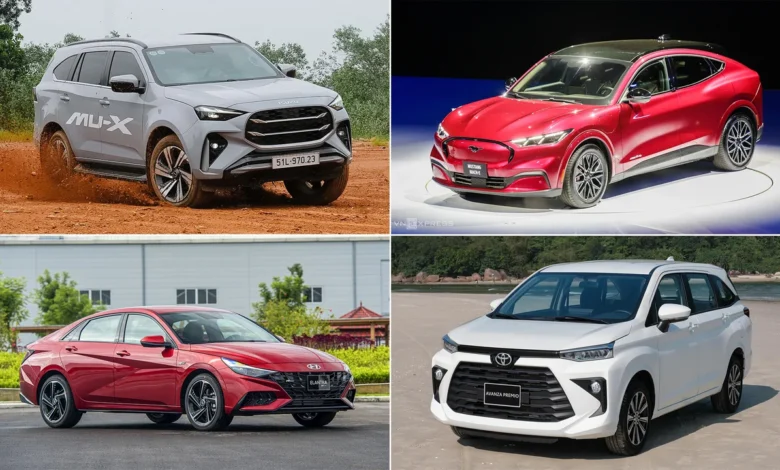
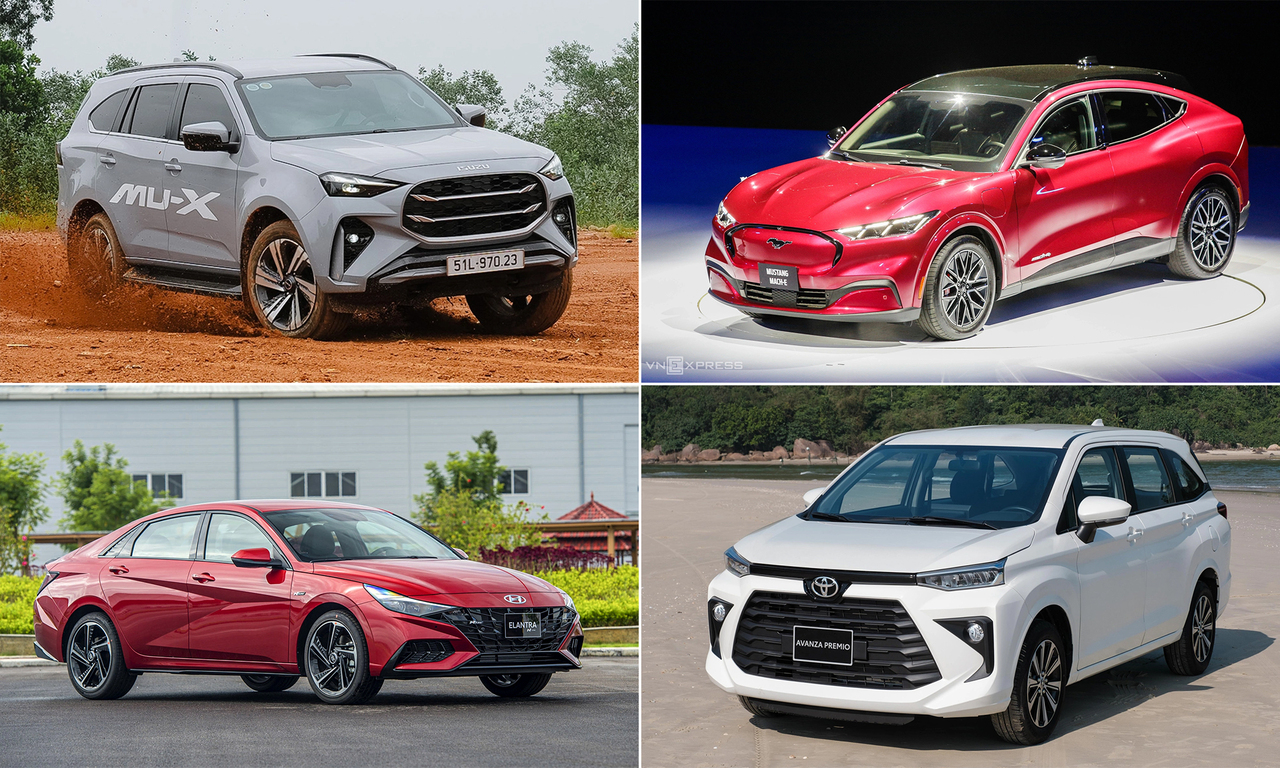
The sales data for October highlights a distinct clustering of low-volume vehicles at the bottom of the market rankings. At the absolute rear of the sales table sits the Ford Mustang Mach-E 2025 Premium AWD, marking its fifth straight month as the least-sold vehicle tracked by industry aggregators. Priced at approximately 1.699 billion VND, this imported D-segment crossover has struggled to gain traction among local buyers who remain hesitant to fully embrace high-priced electric crossovers outside of heavily localized alternatives.
Following closely behind are several other low-volume models spanning various segments, illustrating that the struggle is not isolated to electric vehicles alone, but extends to niche sedans, SUVs, pickups, and luxury MPVs:

- Hyundai Elantra: Representing the C-segment sedan and lower-C segment categories, the Elantra series—with prices ranging from 579 million to 769 million VND for locally assembled variants—recorded a meager 11 units sold in October. Despite being locally assembled and competitively priced compared to its imported rivals, the model faces fierce competition from dominant segment leaders like the Mazda3 and Kia K3.
- Isuzu mu-X: This imported D-segment SUV, offering five variants priced between 928 million and 1.269 billion VND, registered a total of 12 units sold (split evenly across recent tracking cycles at 4-4-4). The mu-X continues to fight an uphill battle in a segment heavily commanded by the Toyota Fortuner and Ford Everest.
- Toyota Land Cruiser Prado: As a heavyweight in the E-segment SUV category, the imported 2024 Prado—featuring single and panoramic sunroof options priced between 3.460 billion and 3.480 billion VND—achieved a modest 15 units (9-2-4 breakdown). While traditionally viewed as a prestige purchase, its high price tag inherently limits its monthly volume.
- Isuzu D-Max: In the mid-size pickup segment, the imported D-Max recorded 18 units sold (3-4-11 breakdown). Priced from 650 million to 880 million VND across its five trims, it trails far behind segment titans like the Ford Ranger and Mitsubishi Triton.
- Toyota Avanza: Moving into the compact MPV space, the Avanza Premio recorded 22 units sold (1-8-13 breakdown). Despite a relatively accessible price point of 558 million to 598 million VND for imported manual and automatic variants, it struggles against the overwhelming market dominance of the Mitsubishi Xpander and Toyota Veloz Cross.
- Toyota Alphard: Representing the ultra-luxury large MPV segment, the Alphard logged 24 units sold (12-2-10 breakdown) for its gasoline and hybrid variants, which command a hefty price tag of 4.370 billion to 4.415 billion VND.
- Suzuki Jimny: The cult-favorite A-segment mini SUV, imported as a niche lifestyle vehicle priced at 789 million VND, recorded 29 units sold (13-2-14 breakdown). While drawing considerable enthusiast attention online, its actual sales volume remains constrained by its two-door configuration and specialized appeal.
- Honda Civic: The imported C-segment sedan, including the newly introduced e:HEV RS hybrid variant, achieved 32 units (3-11-18 breakdown) with prices ranging from 789 million to 999 million VND.
- Suzuki Swift: Rounding out the bottom rankings, the imported B-segment hatchback/mild-hybrid variants recorded 35 units sold (15-4-16 breakdown) with prices set between 569 million and 577 million VND.
Supporting Data and Comparative Analysis
A granular review of the October sales data reveals underlying market dynamics. Low-volume vehicles in Vietnam generally fall into two distinct categories: high-priced luxury or specialty imports where volume is naturally restricted by target demographics (such as the Toyota Alphard and Land Cruiser Prado), and mainstream models experiencing cyclical slumps or intense segment cannibalization (such as the Hyundai Elantra and Isuzu D-Max).

For the Ford Mustang Mach-E, its persistent placement at the bottom underscores the unique challenges facing foreign-imported electric crossovers. At nearly 1.7 billion VND, buyers weigh the advanced technological package of the Premium AWD drivetrain against the nascent state of public fast-charging networks outside major metropolitan hubs like Hanoi and Ho Chi Minh City. Furthermore, local manufacturing incentives heavily favor domestic assembly, placing imported completely built units (CBUs) at a pricing disadvantage.
Official Responses and Industry Stakeholder Perspectives

Representatives from VAMA and affiliated distribution networks have noted that monthly fluctuations are normal within the Vietnamese automotive ecosystem, particularly during transitional periods between quarter ends. However, sustained low-volume figures for imported niche vehicles prompt continuous evaluation of import quotas and localized marketing strategies.
Brand representatives for brands like Isuzu and Suzuki emphasize that models such as the mu-X, D-Max, and Jimny cater to specific, highly loyal customer bases rather than mass-market volumes. Their business models rely on utility, durability, and enthusiast appeal rather than chasing top-tier sales volume charts. Conversely, for high-volume players like Hyundai and Toyota, low figures for specific nameplates like the Elantra or Avanza serve as internal metrics to adjust promotional campaigns, dealership incentives, and supply chain allocations.

Broader Impact and Market Implications
The concentration of low-volume sales among specific models carries several strategic implications for the Vietnamese automotive industry as it approaches the final quarter of the year and looks ahead to subsequent cycles:

- Inventory Management and Import Adjustments: Distributors of low-volume imported models, including Ford with the Mustang Mach-E and Isuzu with its utility lineup, are likely to carefully manage shipment volumes to prevent excess inventory buildup at bonded warehouses and dealership lots.
- Pricing Strategy Realignment: To stimulate demand, brands experiencing prolonged slumps may introduce localized promotional packages, trade-in bonuses, or financing incentives. However, for specialized imports, price adjustments are often constrained by strict global manufacturing costs and exchange rates.
- Infrastructure and Consumer Education: The ongoing struggles of electric crossovers like the Mustang Mach-E highlight the critical need for accelerated public charging infrastructure development. Until range anxiety is comprehensively addressed and charging networks proliferate, battery-electric vehicles outside of domestic conglomerates will likely remain low-volume options.
- Segment Polarization: The Vietnamese market is becoming increasingly polarized. Mass-market segments (such as A/B-segment sedans and budget MPVs) are dominated by a handful of high-volume best-sellers, while the lower tiers are populated by niche, luxury, or specialty vehicles whose sales volumes fluctuate based on enthusiast demand rather than broad consumer trends.
As the market progresses through the final months of the year, industry watchers will monitor whether targeted promotional efforts or infrastructure improvements can lift vehicles like the Ford Mustang Mach-E and its low-volume peers out of the bottom tier, or if these ranking patterns will remain entrenched well into the future.