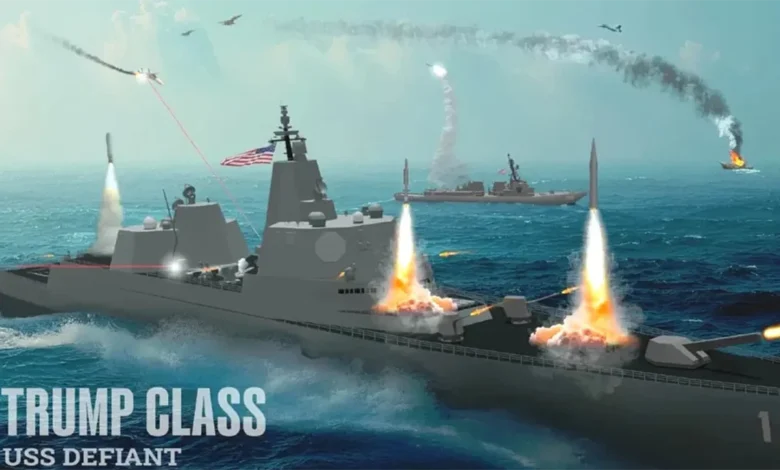
The recent "Blue Wave" victory of the Democratic Party in the midterm elections has sent shockwaves through the corridors of the Pentagon, specifically threatening the future of the ambitious "Trump-class" destroyer program. As the Democratic Party prepares to assume control of key congressional committees in January 2027, the legislative landscape for military procurement is set for a dramatic shift. This transition of power, characterized by a renewed focus on fiscal oversight and strategic alignment, has placed one of the most controversial naval shipbuilding projects of the decade under intense scrutiny.
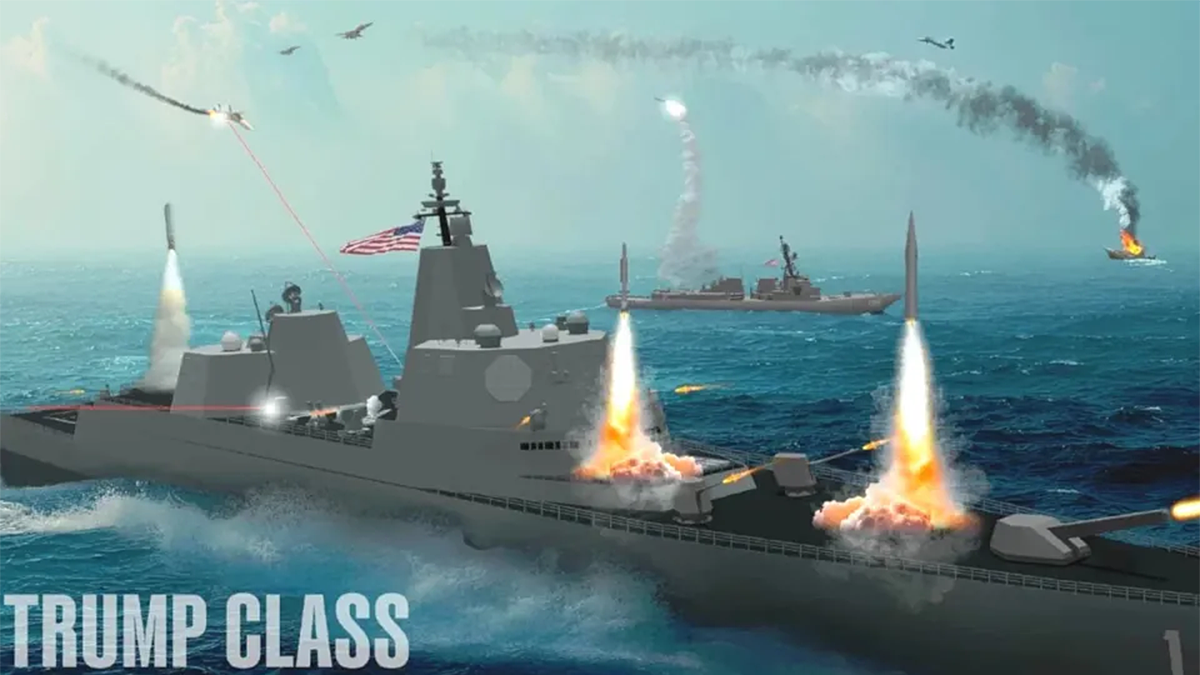
The Trump-class destroyer, unveiled with significant fanfare late last year, was envisioned as the cornerstone of the United States Navy’s future surface fleet. Designed with a massive displacement of 35,000 tons, these vessels were intended to serve as a platform for next-generation weaponry, including advanced directed-energy lasers and massive Vertical Launch Systems (VLS) capable of firing hypersonic missiles. However, political analysts and defense experts are now questioning whether the project will survive the shift in congressional leadership, as Democrats look to reallocate resources toward more sustainable and cost-effective naval modernization programs.
A Shifting Political Landscape and Legislative Hurdles
The Democratic electoral success on November 3 has effectively granted the party control over the House and Senate committees that oversee the Department of Defense’s budget. Representative Adam Smith, a prominent voice within the Democratic caucus, has emerged as a likely candidate to chair the House Armed Services Committee. His recent correspondence with colleagues has signaled a move away from the current trajectory of the Trump-class program, emphasizing the need for high-end systems that can withstand the rigors of modern combat while maintaining economic viability.
"The United States must prioritize systems that are resilient, scalable, and economically sustainable," Smith wrote in a letter dated November 4. "We are looking for platforms that provide true strategic value, rather than pursuing vanity projects that rely on outdated or overly expensive energy technologies."
This sentiment is echoed by policy analysts who suggest that the program faces an uphill battle not only due to its namesake’s political branding but also because of the sheer fiscal burden it places on the taxpayer. Mark Cancian, a senior advisor at the Center for Strategic and International Studies (CSIS), noted that the program’s lack of a clear, persuasive strategic requirement makes it a prime candidate for cancellation or significant restructuring.

Historical Context and Project Genesis
The genesis of the Trump-class destroyer dates back to the mid-2020s, a period marked by an intense, bipartisan push to expand the U.S. naval footprint in the Pacific. Proponents initially marketed the ship as a "game-changer," capable of providing the firepower of a cruiser while maintaining the agility of a destroyer. However, the technical specifications—particularly the shift toward nuclear-powered surface combatants—sparked immediate debates.
For the past thirty years, the U.S. Navy has relied on conventional propulsion for its surface fleet, with nuclear power reserved exclusively for aircraft carriers and submarines. The introduction of a nuclear-powered destroyer class was seen by many as a revolutionary, albeit risky, departure from established doctrine. According to data from the Congressional Budget Office (CBO), the lead ship, tentatively named the USS Defiant, carried an estimated price tag of $23 billion. While the Navy projected that costs would decrease to approximately $18 billion for subsequent hulls, the expenditure remains significantly higher than the Gerald R. Ford-class aircraft carriers, which are already considered among the most expensive assets in military history.
Chronology of the Trump-class Controversy
- Late 2025: The Trump-class destroyer concept is officially unveiled by the administration, promising a 35,000-ton vessel capable of carrying high-energy weapons.
- May 2026: The U.S. Navy confirms that the ships will feature nuclear propulsion, marking a return to such technology for surface combatants since the 1990s.
- August 2026: The Congressional Budget Office releases a report highlighting the ballooning costs of the USS Defiant, citing potential price tags exceeding $23 billion.
- November 3, 2026: The Democratic Party secures a significant victory in the midterm elections, effectively seizing control of key military oversight committees.
- November 4, 2026: Key Democratic lawmakers signal their intent to re-examine all large-scale procurement projects initiated by the previous administration.
Technical Challenges and Industrial Strain
Beyond the political theater, the Trump-class program faces severe technical and industrial challenges. The U.S. shipbuilding industrial base, which has been in a state of gradual contraction since the end of the Cold War, is struggling to meet current demand. Shipyards are facing acute labor shortages and inflationary pressures that have delayed existing projects, such as the Columbia-class submarine and the Ford-class carriers.

The specialized nature of the Trump-class destroyer’s nuclear reactor requires a limited set of suppliers, most of which are already at full capacity producing reactors for the U.S. submarine fleet. Adding a new, massive surface combatant to this supply chain could create a bottleneck that threatens the viability of the entire naval modernization schedule. Retired Rear Admiral Mark Montgomery has been a vocal critic of this aspect of the program, arguing that the logistical reality of the project is incompatible with current shipyard capabilities.
"The challenge is not just the cost per unit, but the opportunity cost," Montgomery stated. "When you commit these limited industrial resources to an experimental class of ships, you are necessarily depriving other programs, like the Arleigh Burke-class destroyers or additional submarine construction, of the labor and materials they need to maintain our current fleet readiness."
The Future of the Program: Restructuring vs. Cancellation
While the political rhetoric suggests a potential death knell for the project, analysts at the defense publication War Zone suggest that a total cancellation is unlikely. Instead, the program may undergo a massive restructuring. Components of the ship, such as its advanced electronic warfare suites and laser weapon systems, could be salvaged and integrated into smaller, less expensive platforms.

The Republican-led House Armed Services Committee, during its final sessions in May, had already begun to implement guardrails. They included clauses in the National Defense Authorization Act (NDAA) for fiscal year 2027 that prohibited further work on the USS Defiant until the Navy could certify that the ship’s internal systems were fully matured and combat-ready. Although this version of the NDAA has faced delays in the Senate, it highlights a growing bipartisan concern regarding the program’s technical readiness.
Brent Sadler, a researcher at the Heritage Foundation, suggests that the name itself may be the project’s biggest liability in a Democratic-controlled Congress. "The name ‘Trump-class’ carries a heavy political weight that makes it a lightning rod," Sadler said. "However, the underlying capabilities the Navy is seeking—better sensors, improved power generation, and enhanced missile defense—are still very much needed. It is entirely possible that the ship will be rebranded and redesigned into something more feasible, effectively ‘killing’ the name while keeping the technology alive."
Broader Strategic Implications
The fate of the Trump-class destroyer serves as a microcosm for the broader struggle within the U.S. military-industrial complex. As the nation faces a changing geopolitical environment, the debate over whether to pursue "super-weapons" or focus on the mass production of reliable, existing platforms has intensified.

The "Blue Wave" has essentially forced a reset. The incoming committee chairs are expected to prioritize transparency and fiscal accountability, demanding that the Department of Defense provide concrete proof that new projects will not lead to the cannibalization of existing programs. For the Navy, this means that the era of massive, high-risk capital ships may be coming to a close, replaced by a preference for modular, adaptable, and budget-conscious naval assets.
As of late 2026, the status of the USS Defiant remains in limbo. With the new legislative session approaching, the Navy is expected to face rigorous questioning. Whether the program survives as a re-envisioned platform or is relegated to the history books as an overly ambitious endeavor will be one of the first major tests of the new congressional balance of power. The ultimate decision will not only impact the Navy’s future fleet composition but also set a precedent for how the United States approaches the modernization of its armed forces in an era of constrained budgets and rapidly evolving technological threats.
Related posts: