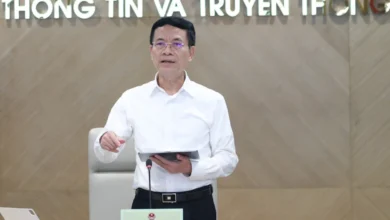
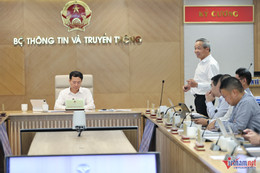
On October 25, the Ministry of Information and Communications (MIC) of Vietnam hosted a strategic working session with the leadership of CMC Corporation, a prominent technology enterprise with a 31-year legacy in the domestic and international digital landscape. Chaired by Minister Nguyen Manh Hung, the meeting served as a pivotal platform to align the private sector’s growth trajectory with the national mandate of digital transformation. The session included key ministry officials, including Deputy Ministers Nguyen Thanh Lam and Bui Hoang Phuong, alongside CMC’s top executive team, marking a historic moment of high-level collaboration between the state regulator and a leading technology firm.
A Legacy of Innovation: Three Decades of Growth
Since its inception in 1993, CMC has evolved from a nascent technology provider into a cornerstone of Vietnam’s IT sector. Over the past 31 years, the company has successfully transitioned from hardware distribution to becoming a comprehensive digital solutions provider, offering services in cloud computing, cybersecurity, data center management, and artificial intelligence.

The chronology of CMC is emblematic of Vietnam’s broader economic development. In the 1990s, the company focused on building the foundational infrastructure for a digitizing nation. By the 2010s, it shifted its focus toward software exports and global systems integration. Today, as the nation embarks on what is being termed the "Era of National Ascendancy," CMC is tasked with shifting its focus from local market dominance to becoming a global technology champion. This meeting was not merely a performance review; it was a strategic recalibration to ensure the company’s 2028 development plan is fully synchronized with the state’s vision for a high-income, digitally-driven economy.
Strategic Vision for 2028: Scaling for Global Impact
During the session, Dang Tung Son, Deputy Chairman and Chief Strategy Officer of CMC, presented a comprehensive roadmap for the next four years. The company’s goal is to transition into a global AI and digital services powerhouse by 2028. Key performance indicators outlined in the report include a projected revenue growth of more than three times current levels and a workforce expansion exceeding 10,000 employees, with a specific focus on high-skilled AI engineers, who are expected to comprise 40% of the total technical staff.
Minister Nguyen Manh Hung praised these ambitious targets, noting that the company’s aspirations mirror the national ambition to master core technologies. He emphasized that for a company to be truly "large," it must move beyond mere profitability and tie its success to the strategic sovereignty of the nation. "A business that wishes to grow large and survive alongside the nation must attach itself to the national destiny," the Minister remarked.
The Mandate to Master Technology
The meeting highlighted a shift in the philosophy of state-private sector partnerships in Vietnam. Under the leadership of General Secretary To Lam, the national policy emphasizes "mastery of technology" as the bedrock of development. This involves moving away from simple assembly or service provision toward deep research, development, and the creation of intellectual property.
Minister Hung explicitly directed CMC to prioritize investments in R&D and to treat the mastery of application as a precursor to the eventual mastery of underlying core technologies. For CMC, this means investing heavily in the "AI-first" paradigm. The Ministry advised the company to focus on "applied AI"—AI tailored for specific industries, individual needs, and unique enterprise workflows. By creating specialized models that ingest proprietary data, companies like CMC can solve complex national problems that off-the-shelf global solutions cannot address effectively.
Infrastructure as a National Priority
A significant portion of the four-hour session was dedicated to the practical challenges of infrastructure investment. CMC, which has been involved in significant telecommunications projects, sought guidance from the Ministry regarding the legal framework for laying new subsea fiber-optic cables.

Minister Hung instructed the company to leverage the updated Land Law and to coordinate closely with the Telecommunications Department to ensure that new cable routes are integrated into provincial master plans. This coordination is vital for enhancing the resilience of Vietnam’s international connectivity, which is a matter of national security. The Minister emphasized that the MIC acts as a facilitator, and when obstacles arise, the Ministry is the primary destination for resolution and support.
The Role of Digital Transformation in Corporate Governance
A recurring theme throughout the meeting was the necessity of "internal digital transformation." Minister Hung challenged the leadership of CMC, stating that before a company can sell digital transformation services to other businesses, it must undergo a profound transformation itself. By adopting cutting-edge tools and data-driven management, the company gains the practical experience required to become a trusted advisor to others.
The Minister’s advice to CMC was clear: as a company grows, it must move into areas of "impact," such as massive cloud infrastructure and national-scale software platforms. These are the "digital rails" upon which the rest of the economy can run. When a company owns the infrastructure, it sets the standards for the industry, thereby increasing its influence and long-term sustainability.

Implications and Future Outlook
The partnership between the MIC and CMC serves as a blueprint for how the Vietnamese government intends to cultivate "national champions." The focus is on a tri-fold objective: becoming a large-scale enterprise, mastering core technology, and achieving international competitiveness.
The implications for the broader market are significant. By aligning corporate R&D with national interests, the government is essentially de-risking the development of complex technological ecosystems. In exchange, these enterprises are expected to contribute to the nation’s technological independence and export capabilities.
As CMC moves toward its 2028 targets, the company is expected to ramp up its efforts in the semiconductor and AI sectors. The Minister’s suggestion to treat AI and chip development as "parallel branches" of growth suggests that the government views these as the next frontiers of the Fourth Industrial Revolution in Vietnam.

Conclusion: A Collaborative Journey
The meeting concluded with a ceremonial exchange, where Minister Hung gifted Chairman Nguyen Trung Chinh two key books on the history and strategy of the Information and Communications industry. Chairman Chinh expressed his gratitude for the Ministry’s guidance, acknowledging that while the road to 2028 is filled with challenges, the support and clear strategic direction from the MIC provide a vital foundation for success.
"The path to becoming a global player requires not only our own efforts but the continued accompaniment, guidance, and support of the Ministry," Chinh said. As Vietnam continues its push toward high-tech industrialization, the role of companies like CMC will be increasingly defined by their ability to harmonize commercial ambition with the overarching goal of national prosperity. The session underscored a fundamental truth of the modern era: for Vietnam to thrive, its technology sector must not only participate in the global market but must lead in the creation of the tools and systems that define the future.