From Affordable Housing Pioneer to Legal Storm: The Rise and Fall of Le Thanh Than and Muong Thanh Group

The journey of Le Thanh Than, widely recognized in Vietnam’s real estate circles as the "Chuban billionaire who drives a Rolls Royce," represents one of the most paradoxical trajectories in the country’s modern economic history. As the founder and head of Muong Thanh Group and Private Enterprise No. 1 Dien Bien, Than built an immense fortune by tapping into a previously neglected demographic: middle- and lower-income urban residents desperately seeking affordable housing. By offering apartments at prices drastically lower than market averages, Than became a household name, creating a sprawling empire that spanned hospitality and residential real estate. However, the aggressive business model that propelled him to billionaire status—characterized by rapid construction, massive density scaling, and severe regulatory shortcuts—ultimately trapped him in a sprawling legal quagmire, culminating in high-profile criminal investigations, official inspection rebukes, and numerous prosecutions.
The Genesis of the Affordable Housing Empire
During the peak of Vietnam’s real estate market freeze around 2012, when liquidity vanished and traditional developers scrambled to survive, Private Enterprise No. 1 Dien Bien defied market logic. The enterprise injected thousands of "super-cheap" apartments into the Hanoi market, priced between 13 and 15 million VND per square meter. These developments primarily occupied peripheral land plots acquired at low costs during early market cycles. Despite their suburban or semi-peripheral locations, the projects became instant sensations. Demand was so overwhelming that units sold out immediately, forcing prospective buyers to navigate secondary markets, brokers, and external allocation quotas just to secure a contract.
This populist pricing strategy generated vast cash flows for entities associated with Than. Projects like the Xa La urban area, Kim Van – Kim Lu, and Dai Thanh provided a steady stream of capital that fueled the group’s expansion. Yet, this high-speed, high-volume operational model bypassed critical statutory frameworks. The pursuit of maximum volume on restricted land footprints sowed the seeds for structural, safety, and legal violations that would plague the developments for over a decade.
A Chronology of Systematic Regulatory Breaches
The systematic erosion of urban planning codes within Muong Thanh projects came to light comprehensively in 2016, when the Hanoi Inspectorate published the findings of a comprehensive audit covering investment, management, and land use across nine major projects associated with Than’s enterprise. These included CT5 Tan Trieu, VP6 Linh Dam, the HH1 through HH4 cluster within the CC6 commercial and residential complex in Linh Dam, CT6 Kien Hung, VP5 Linh Dam, and VP3 Linh Dam, while three additional projects—Xa La, Kim Van – Kim Lu, and Dai Thanh—fell under the purview of the Government Inspectorate.
The audit revealed profound systemic violations across investment, land, housing, real estate business, and tax laws. When matched against detailed 1/500 scale master plans, all nine projects exhibited severe discrepancies:
- Height elevations were systematically increased beyond approved blueprints.
- Construction footprints for both podium and tower blocks were illegally expanded.
- Basement capacities and structural designs were altered without authorization.
- Commercial office and service spaces were illicitly converted into residential apartments.
- Residential unit counts skyrocketed, in some instances multiplying approved density by nearly six times.
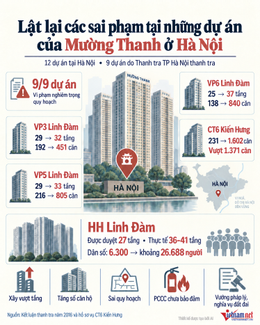
Detailed case files from the inspection underscored the staggering scale of these deviations. For instance, the VP3 Linh Dam project saw its height elevated from 29 to 32 floors, while its apartment count surged from 192 to 451 units—an excess of 259 homes. Similarly, VP5 Linh Dam scaled from 29 to 33 floors, expanding from 216 to 805 units.
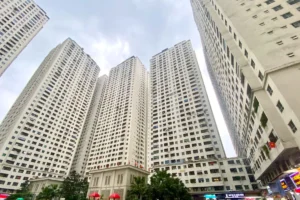
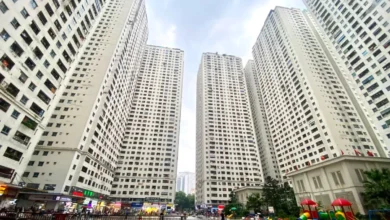
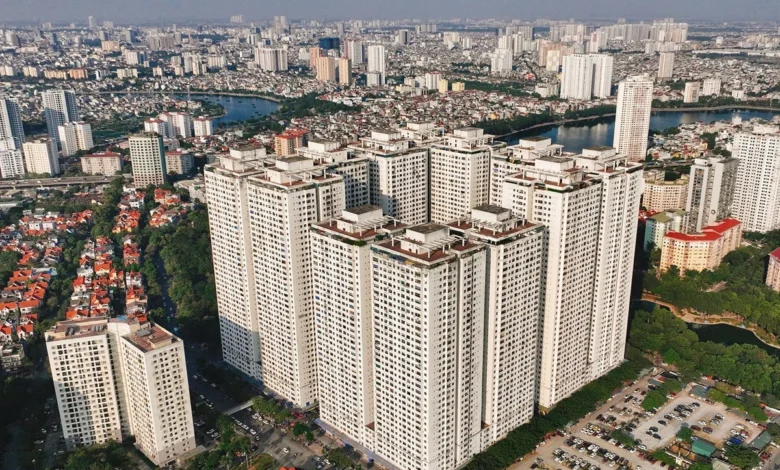
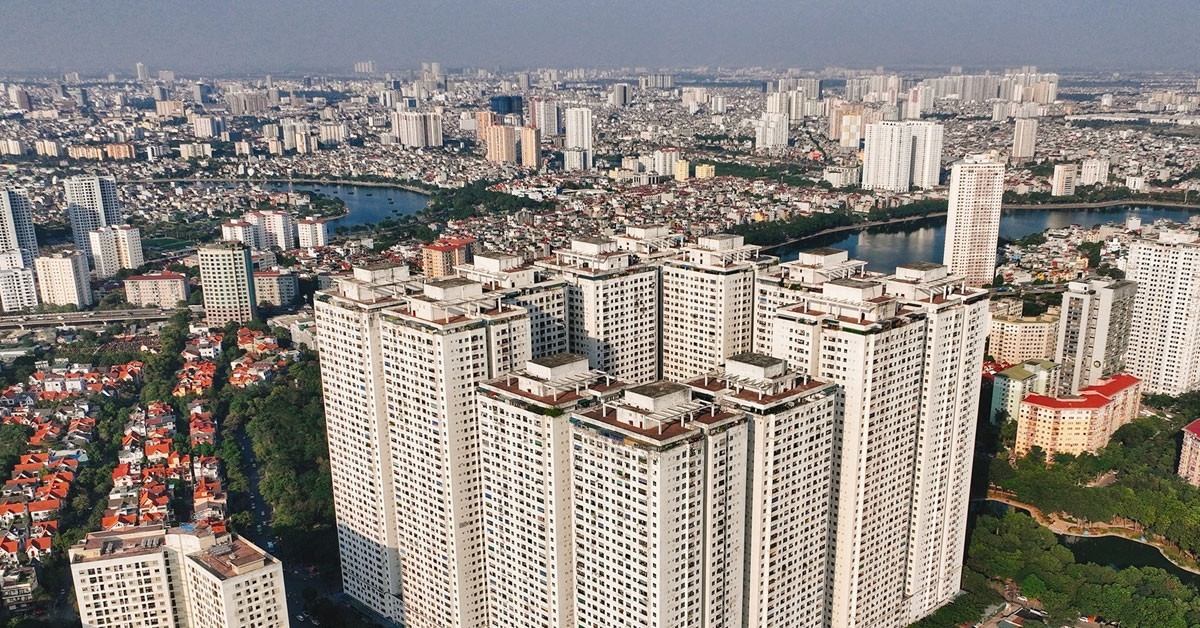
The VP6 Linh Dam project pushed these practices further, leaping from a 25-floor design to 37 floors, increasing its apartment count from 138 to 840 units—an excess of 702 homes. In the massive HH Linh Dam complex, towers originally approved for 816 units each were built out to accommodate approximately 2,000 units per tower. Across the 12 residential towers in Linh Dam alone, the population swelled to nearly 26,688 residents housed in 8,896 apartments, quadrupling the approved demographic capacity of 6,300 people within a mere 42,260-square-meter land area.
Similar infractions characterized the CT5 Tan Trieu and CT6 Kien Hung developments. At CT6 Kien Hung, high-rise blocks expanded from 231 planned units to 1,602 completed apartments—surpassing the target by 1,371 units. Low-rise housing zones designated for 15 three-story terrace houses were replaced by 38 four-story units, and a 718.8-square-meter plot designated for a local kindergarten was co-opted by the developer to construct low-rise apartments.
Legal Deficits and Fire Safety Failings
Beyond architectural overreach, the inspection findings revealed profound administrative and legal non-compliance. The projects frequently bypassed statutory transfer procedures, failed to complete necessary land withdrawal, allocation, and repurposing documentation, and neglected to settle land use fee obligations fully. Crucially, construction often commenced well in advance of formal building permit issuance.
Fire safety compliance emerged as a critical vulnerability. Despite failing to meet mandatory fire prevention and suppression standards stipulated by law, the developer proceeded to hand over apartments to residents. Thousands of families moved into structures lacking verified fire safety clearance, placing occupants at constant risk and triggering continuous safety alarms among municipal authorities.
The cumulative result of these actions created an administrative bottleneck for property ownership certification. Because the projects failed to adhere to initial planning parameters or complete mandatory legal procedures, municipal agencies could not lawfully issue pink books (Land Use Rights Certificates) to apartment buyers. This paralyzed secondary market liquidity and trapped ordinary citizens in a protracted cycle of legal limbo, administrative disputes, and escalating grievances across Hanoi.
Judicial Reckoning and Criminal Prosecutions
As public pressure mounted and municipal findings solidified, the legal framework tightened around Le Thanh Than. The Hanoi People’s Procuracy formally established that Than intentionally orchestrated the illegal land-use conversions and structural overbuilds, securing unauthorized approvals or circumventing regulatory oversight altogether. The unauthorized construction of building CT6C at the Kien Hung project—a structure entirely absent from the approved master plan—exemplified the brazen nature of these violations.
In subsequent legal proceedings, judicial authorities moved to prosecute Le Thanh Than on charges of deceiving customers under Article 198 of the Penal Code. Investigators asserted that by marketing and selling apartments that deviated fundamentally from legal blueprints and lacked valid occupancy and ownership credentials, the developer engaged in systemic misrepresentation that compromised consumer rights on a massive scale.

Broader Socio-Economic Implications and Urban Legacy
The unfolding saga of Le Thanh Than and Muong Thanh Group offers critical lessons regarding the intersection of rapid urbanization, regulatory enforcement, and consumer protection in emerging economies. On one hand, Than’s enterprises addressed an acute, undeniable societal need: providing low-cost housing options for millions of working-class families priced out of formal commercial developments. The commercial success of these projects proved that immense pent-up demand existed for affordable urban housing.
However, the methodology employed exposed severe vulnerabilities in municipal oversight and corporate governance. The developments placed an intolerable burden on local infrastructure, overwhelming road networks, straining drainage and electrical grids, and creating severe deficits in public amenities, schools, and green spaces in areas like Linh Dam and Hoang Mai.
Furthermore, the legal fallout has left thousands of homeowners in perpetual uncertainty. While residents secured roofs over their heads, the absence of clear property titles diminishes asset value, complicates inheritance and collateral financing, and casts a long shadow over the accountability of private developers operating within major metropolitan hubs.
As judicial proceedings continue and municipal authorities grapple with the structural legacy of these hyper-dense developments, the case stands as a watershed moment for Vietnam’s real estate sector. It underscores the vital imperative for balanced urban planning, rigorous regulatory enforcement, and the unwavering protection of consumer rights, ensuring that the pursuit of commercial expansion never compromises public safety or the rule of law.