Toyota Fortuner New Generation Spotted Testing in Southeast Asia as Toyota Prepares for a High-Stakes Market Pivot


The automotive landscape in Southeast Asia is witnessing a flurry of activity as Toyota has been captured road-testing a heavily camouflaged prototype of its next-generation Fortuner SUV. The sighting, occurring on public roads in Thailand, signals that the Japanese automaker is nearing the final stages of development for one of its most pivotal models. As the current iteration of the seven-seater SUV faces dwindling market share and intensifying pressure from rivals like the Ford Everest, this upcoming transformation is widely viewed as a critical strategic maneuver to regain dominance in the highly competitive segment.
A Decade of Evolution and the Need for Change
Since its inception, the Toyota Fortuner has functioned as the bedrock of Toyota’s SUV presence in the ASEAN region. Built on the robust IMV (Innovative International Multi-purpose Vehicle) platform, the vehicle has long been celebrated for its durability, off-road capability, and low maintenance costs. However, the current generation, which has been in production since approximately 2015, has reached the end of its lifecycle. Despite receiving multiple mid-cycle refreshes and aesthetic updates, the vehicle has struggled to keep pace with the rapid technological advancements and design shifts introduced by competitors, most notably the Ford Everest.
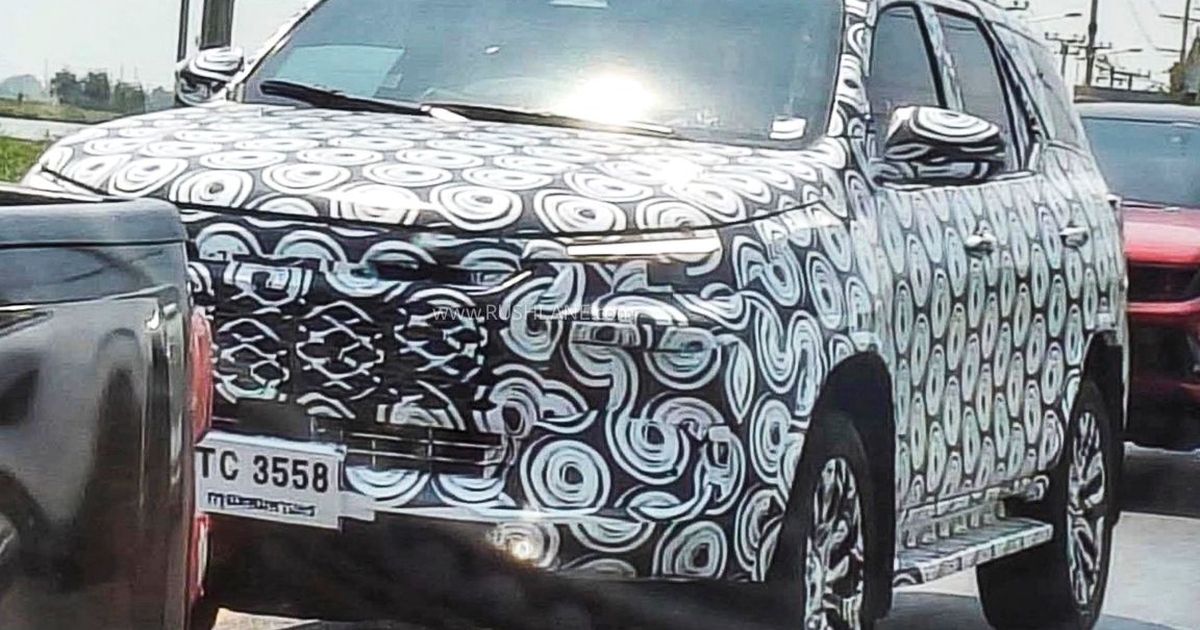
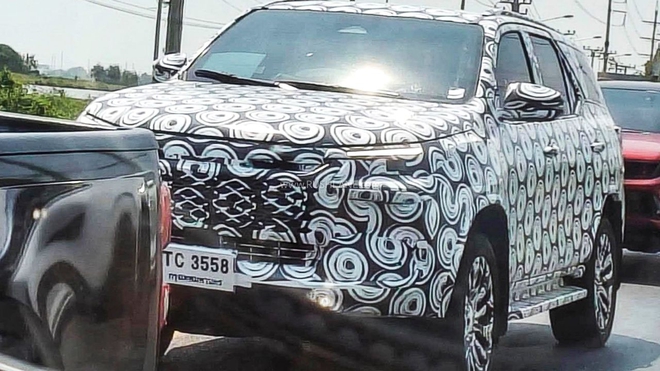
The emergence of these new test mules, heavily masked in black protective cladding, suggests that Toyota is not merely preparing a cosmetic facelift but is instead readying a comprehensive generational overhaul. Industry experts note that the test units display revised proportions and a more aggressive, aerodynamic stance.
Decoding the Prototype: Design and Technological Shifts
Observations from automotive analysts, including reports from specialist outlets like RushLane, indicate that the rear fascia of the prototype features updated lighting signatures, potentially moving toward a sleeker, more modern aesthetic that aligns with the brand’s newer global design language. While the heavy camouflage obscures specific details, the presence of new light strips hints at a significant departure from the outgoing model’s traditional taillight configuration.
At the front, the changes appear even more substantial. The prototype exhibits a more imposing front bumper, a significantly enlarged radiator grille, and a repositioned headlamp assembly. The slim upper lighting strips combined with the lower-placed main illumination modules suggest a multi-tier lighting architecture, a design trend currently favored by premium SUVs. Perhaps most importantly, the presence of sensors, likely housing advanced radar systems, and a camera integrated behind the windshield, underscores Toyota’s intent to introduce a more sophisticated suite of active safety technologies. This integration of Advanced Driver Assistance Systems (ADAS) is widely expected to be a major selling point for the new model, addressing a significant gap that has existed between the current Fortuner and its more tech-forward competitors.
The IMV Platform and Performance Expectations
According to industry intelligence from sources such as Autocar India, the new Fortuner is slated to be built upon an updated version of the IMV platform, likely inheriting technical advancements recently showcased in the newest Toyota Hilux. This platform sharing is essential for Toyota’s economies of scale and ensures that the Fortuner maintains its reputation for frame-on-rail structural integrity while benefiting from improved chassis rigidity and refined suspension tuning.
Regarding powertrain options, official specifications remain undisclosed; however, industry consensus suggests a transition toward hybridization. It is widely anticipated that the current 2.7-liter gasoline and 2.8-liter diesel engines will continue to serve as the core offerings, potentially augmented by mild-hybrid or full-hybrid technology. The inclusion of electrification would not only improve fuel efficiency—a growing priority for consumers in emerging markets—but also allow the vehicle to meet increasingly stringent emission regulations in countries like Thailand and Vietnam. The interior is also expected to undergo a total redesign, likely featuring a larger, high-resolution infotainment display, a fully digital instrument cluster, and premium materials designed to compete with the upscale cabins of the Ford Everest.
The Competitive Landscape: The Case of the Vietnamese Market
The urgency of this release is perhaps most visible in the Vietnamese automotive market. Historically, the Toyota Fortuner dominated the SUV segment; however, the shift in consumer preferences toward comfort, luxury, and advanced technology has seen the Ford Everest capture significant market share.

According to sales data from the Vietnam Automobile Manufacturers’ Association (VAMA), the contrast in performance is stark. In August 2026, Toyota recorded 217 sales of the Fortuner, a 22% increase from the previous month. While this represents a modest recovery, it remains dwarfed by the Ford Everest, which sold 690 units in the same period. Year-to-date data for 2026 further highlights the struggle: the Ford Everest has delivered 7,640 units, commanding approximately 85% of the frame-on-rail SUV market. In the same eight-month period, the Toyota Fortuner reached only 1,181 units, marking a 41% decline compared to the same period in 2025.
This decline is largely attributed to the "age" of the current Fortuner platform. While the brand’s reliability remains a core asset, it is no longer enough to overcome the segment-leading features offered by the Everest, which include a superior infotainment interface, more refined road manners, and a design that feels distinctly modern.
Strategic Implications for Toyota
The release of a new Fortuner is not merely about updating a product; it is a defensive strategy to prevent further erosion of brand loyalty. Toyota has successfully relied on its reputation for long-term ownership value, but as the gap between the Fortuner and its rivals widens in terms of cabin technology and safety features, that loyalty is being tested.

Toyota has yet to release an official launch date or a confirmation regarding the specific regional rollout. While some analysts project an arrival in major Asian markets by late 2027, others argue that given the aggressive nature of the competition, Toyota may look to accelerate this timeline. For the Vietnamese market, the introduction of the new generation will be a defining moment. Should the new model fail to bridge the technological gap or be priced uncompetitively, Toyota risks losing its position as a primary contender in the segment entirely.
Market Response and Future Outlook
Industry analysts remain cautious but optimistic. "The Fortuner is an icon in the ASEAN region," says one automotive consultant familiar with the project. "Toyota knows that they cannot afford to play it safe with this iteration. The move toward hybrid power and the integration of high-end safety sensors indicate that they are listening to market feedback."
As it stands, the current Fortuner remains available in Vietnam, with gasoline 2.7-liter variants starting at approximately 1.155 billion VND, and the high-end Legender 2.7 4×4 retailing from 1.395 billion VND. These price points place the vehicle in a direct conflict zone with the Everest. The incoming generation will likely command a premium, but its success will hinge on whether that price increase is justified by the leap in performance, safety, and interior comfort.
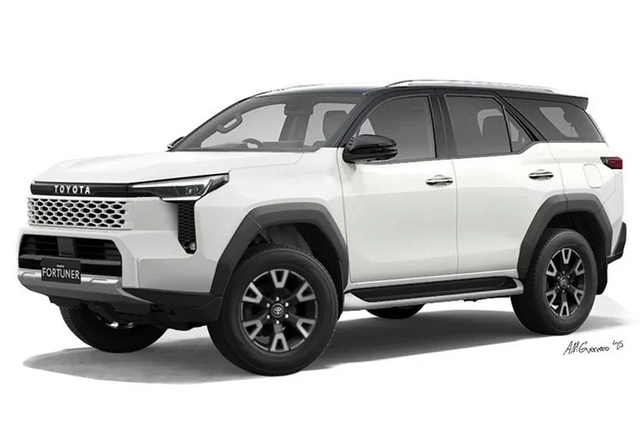
As the road-testing continues across the region, the industry waits for the first official teaser from Toyota. Until then, the camouflaged silhouettes in Thailand remain the most tangible evidence of an automotive giant preparing to defend its territory in a market that is evolving faster than ever before. The upcoming launch will serve as a test of whether Toyota’s traditional strengths can successfully blend with the new requirements of the modern SUV buyer.