US President Donald Trump Suggests Apple CEO Tim Cook as Potential Successor to Nvidia Chief Executive Jensen Huang

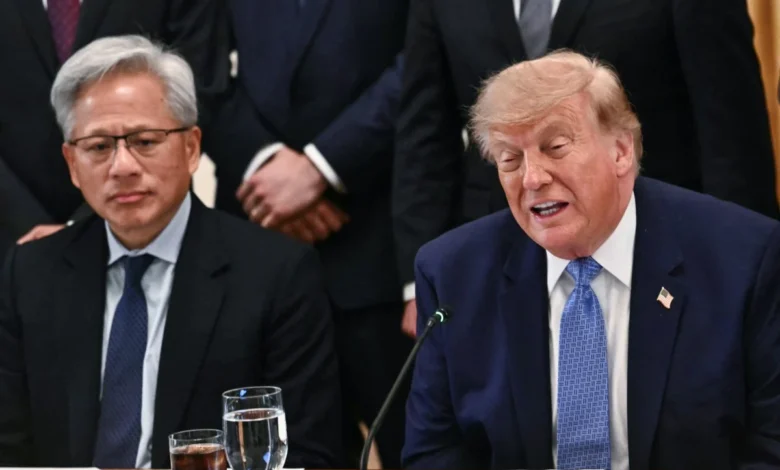
The global technology sector was thrown into a state of heightened volatility following a series of dramatic leadership developments surrounding semiconductor giant Nvidia and its long-standing chief executive, Jensen Huang. In an unexpected twist that has captured the attention of Wall Street, Silicon Valley, and Washington alike, United States President Donald Trump publicly weighed in on the sudden vacancy at Nvidia, suggesting that former Apple CEO Tim Cook would be an ideal successor to lead the artificial intelligence chip powerhouse.
The remarks, issued via social media late Wednesday evening, have sparked intense speculation regarding the future leadership of the world’s most valuable semiconductor manufacturer. President Trump’s commentary comes at a turbulent juncture for Nvidia, which is currently navigating an unprecedented corporate crisis involving independent investigations, high-stakes geopolitical pressures, and the sudden departure of one of the most iconic leaders in modern tech history.
The Catalyst: Jensen Huang Steps Down Amid Scrutiny
The leadership shakeup at Nvidia was officially confirmed earlier this week when the company announced that co-founder and Chief Executive Officer Jensen Huang had stepped down from his post. The announcement sent shockwaves through global financial markets, given Huang’s instrumental role in steering Nvidia from a niche graphics card manufacturer into the indispensable backbone of the global artificial intelligence revolution.
According to filings and corporate disclosures, Nvidia’s board of management announced that Chief Financial Officer Colette Kress would immediately step into the role of interim CEO. Kress will helm the company on a temporary basis while the board initiates a comprehensive, nationwide search for a permanent successor to lead the tech giant through its next phase of growth and regulatory scrutiny.
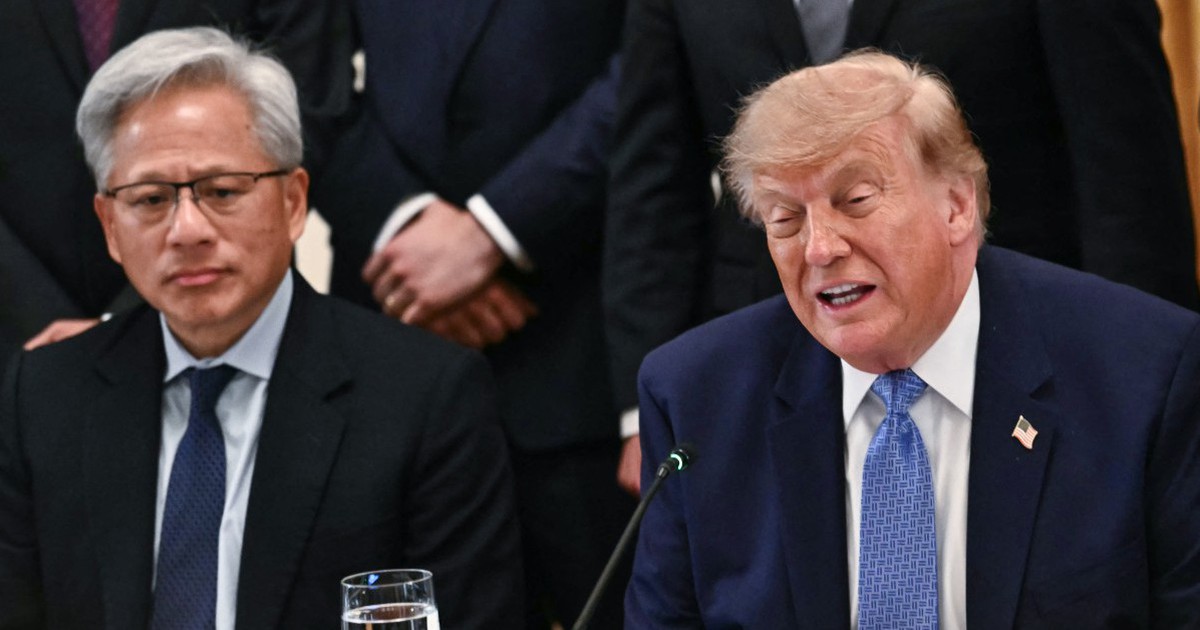
The sudden resignation followed a weekend announcement by Nvidia’s board of directors confirming the launch of an independent investigation. The inquiry was initiated to examine the personal and professional relationships between the 63-year-old billionaire executive and Alice Huang, a prominent Chinese businesswoman who serves as the head of Megaspeed, a Singapore-based technology firm. Regulatory authorities and internal compliance teams reportedly flagged the relationship amid heightened concerns regarding cross-border corporate governance and national security, following allegations from U.S. intelligence circles suggesting potential conflicts of interest and unauthorized technology exposure involving foreign entities.
In a heartfelt letter addressed to Nvidia employees, Jensen Huang candidly acknowledged the unfolding situation. He admitted to personal failings regarding his marital commitments and offered a formal apology to his family, corporate colleagues, business partners, and the broader global technology community. Huang assured stakeholders that he is fully cooperating with the independent investigation commissioned by Nvidia’s board to ensure complete transparency.
Just days prior to his resignation, President Trump had expressed a measure of cautious sympathy toward Huang during a press briefing, acknowledging his monumental contributions to American technological dominance. "I only know him as a good person, but nobody knows what is going on behind the scenes," President Trump remarked to reporters. However, as the situation escalated and the vacancy became official, the tone of the administration’s commentary shifted toward strategic positioning within the American industrial landscape.
President Trump’s Endorsement of Tim Cook
Taking to the digital platform Truth Social, President Trump offered a bold assessment of how Nvidia should approach its leadership transition. "Right now, when Nvidia CEO Jensen Huang—who has done a fantastic job—steps down, there is only one person who could possibly replace him, and that is Tim Cook of Apple," the U.S. leader wrote. He punctuated the endorsement with the notable declaration: "A legend replaces a legend!"
The unexpected proposition immediately reverberated across financial and corporate circles. Apple and its executive leadership team have remained officially silent regarding the president’s remarks, declining to issue formal comments. Industry analysts have similarly expressed astonishment, noting that a transition of this magnitude—moving a retail- and consumer-hardware-focused executive with a background in supply chain management into the ultra-specialized, highly technical realm of advanced artificial intelligence semiconductors—would represent an unprecedented paradigm shift in corporate leadership.
Tim Cook concluded a monumental 15-year tenure as Apple’s Chief Executive Officer last September, successfully transitioning into the role of executive chairman of the Cupertino-based tech behemoth. Under Cook’s leadership, Apple solidified its position as a global financial titan, achieving historic market valuations and heavily reinforcing its domestic manufacturing footprint.
The relationship between Cook and President Trump has experienced notable moments of alignment. Last year, Cook presented the U.S. President with a commemorative, domestically manufactured glass mirror inscribed with the president’s name and mounted on a 24-karat gold base—a gesture symbolizing Apple’s broader commitments to domestic production. Concurrently, Apple announced ambitious plans to inject an additional $100 billion into domestic manufacturing and infrastructure operations within the United States.
Silicon Valley Alliances and Geopolitical Pressures
The high-profile commentary underscores the increasingly intertwined relationship between the current U.S. administration and the leadership of America’s premier technology conglomerates. President Trump has cultivated robust working relationships with key Silicon Valley figures throughout his second term, positioning domestic technology infrastructure as a cornerstone of national security and economic vitality.
Jensen Huang, in particular, had emerged as one of the administration’s most active corporate allies in the technology sector. Throughout the past two years, Huang maintained a frequent presence in Washington, D.C., openly supporting the federal administration’s industrial growth initiatives. These diplomatic efforts were largely driven by Nvidia’s complex commercial imperative to secure regulatory clearance for exporting advanced, high-performance artificial intelligence accelerators to key international markets, including China, while strictly adhering to national security guardrails established by the Department of Commerce.
Industry insiders note that Huang’s departure leaves an immense strategic void. Nvidia’s graphics processing units (GPUs) and proprietary CUDA software ecosystem form the foundational architecture upon which nearly all modern generative artificial intelligence models are trained and deployed. Consequently, the selection of a permanent CEO is viewed not merely as a corporate governance decision, but as a matter of critical national economic security.

Implications for the Global Technology Landscape
As Nvidia’s interim leadership under Colette Kress takes the reins, market watchers are closely monitoring the unfolding independent investigation and its potential ramifications for the company’s valuation and strategic roadmap. Nvidia shares have experienced localized fluctuations in response to the leadership uncertainty, though institutional investors remain confident in the underlying demand for the company’s next-generation Blackwell architecture and enterprise AI solutions.
Whether the board of directors will entertain external visionary candidates from outside the semiconductor industry—such as the hypothetical transition of Tim Cook—remains highly improbable according to corporate governance experts. Navigating the intricate layers of advanced chip fabrication, foundry partnerships with Taiwan Semiconductor Manufacturing Company (TSMC), and fierce competition from rival firms like AMD and hyperscale cloud providers developing proprietary silicon requires deeply specialized engineering leadership.
Nevertheless, President Trump’s public intervention highlights the degree to which major technology corporations operate within a broader geopolitical arena. As the search for Nvidia’s next permanent chief executive formalizes in the coming weeks, the tech world will be watching to see how the board balances internal operational continuity with the monumental task of replacing an industry-defining pioneer.