U.S. Navy Under Fire: Secret Submarine Commander Firings Threaten Confirmation Hearing of Hung Cao

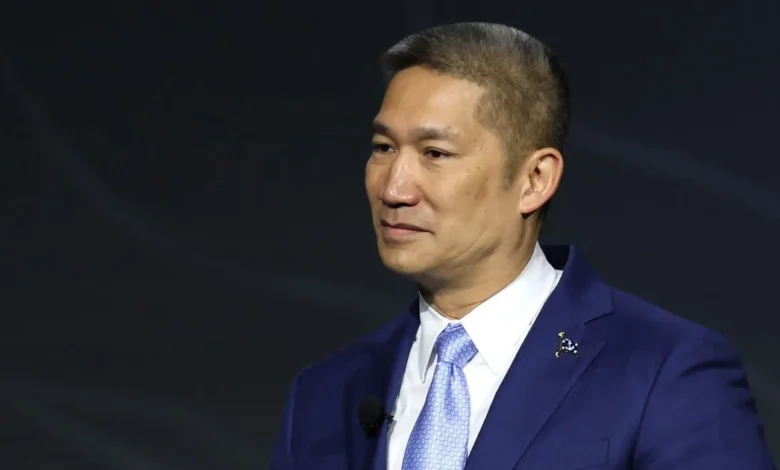
A high-stakes political showdown is rapidly materializing on Capitol Hill, threatening to derail the imminent Senate confirmation of Hung Cao as he prepares to assume the position of Secretary of the Navy. The brewing controversy follows revelations that the Department of the Navy quietly purged multiple high-ranking officers, bypassing traditional congressional notification procedures and triggering profound bipartisan distrust among lawmakers.
The crisis exploded into public view following an investigative report by the Associated Press, which revealed that prominent Democratic lawmakers—Representatives Joe Courtney of Connecticut and Adam Smith of Washington—penned a sharply worded letter to senior defense officials expressing deep dismay over the lack of transparency. The core of the controversy centers on the clandestine dismissal of the entire command triad of the nuclear-powered fast-attack submarine USS South Dakota following an unexpected collision with an underwater obstacle.
A Clandestine Submarine Command Purge
According to the correspondence sent to acting Navy Secretary Hung Cao and Admiral Daryl Caudle, the commanding officer, executive officer, and chief of the boat of the USS South Dakota were stripped of their commands roughly a month prior to the public disclosure. The vessel, a formidable Virginia-class nuclear-powered attack submarine designed for stealth and high-end maritime combat, sustained operational damage during the sub-surface incident.
Rather than adhering to longstanding norms of transparency and legislative notification, the Navy allegedly made the unilateral decision to relieve the senior leadership team without informing the House Armed Services Committee. Compounding the frustration of lawmakers, military leadership systematically refused to offer public commentary or formal briefings regarding the incident, creating a shroud of secrecy around a major operational mishap involving sensitive nuclear assets.
"The consequences of this information blackout by the Navy are deeply troubling," Representatives Courtney and Smith wrote in their joint letter. "What appears to be a departure from standard information-sharing protocols once again raises serious questions regarding the service branch’s stated commitment to transparency, as well as its dedication to maintaining a functional, trust-based working relationship with the United States Congress."
The timing of these revelations could not be worse for Hung Cao, a retired Navy captain whose nomination to lead the civilian side of the service branch is currently moving through the legislative pipeline. While Cao is navigating the final phases of his Senate vetting process, these developments threaten to harden opposition among key defense committees, turning what was expected to be a standard confirmation hearing into an aggressive legislative grilling.
A Pattern of Quiet Dismissals Across the Ranks
Congressional investigators and defense analysts have pointed out that the South Dakota incident is not an isolated occurrence, but rather part of a broader pattern of unannounced high-level firings within the Navy over recent months. This creeping opacity within military leadership has alarmed oversight committees, who fear a systemic erosion of accountability.
Defense officials, speaking on the condition of anonymity due to the sensitive nature of internal personnel actions, confirmed that on September 27, the Navy unceremoniously relieved Commander Caitlin Cunningham of her command aboard the guided-missile destroyer USS Michael Murphy. Commander Cunningham, who had assumed leadership of the warship less than a year prior, was dismissed due to an alleged "loss of confidence."
The USS Michael Murphy is currently deployed in the critical U.S. Central Command region, where it actively supports complex military operations designed to deter Iranian aggression and maintain stability in vital maritime corridors. Under normal operating procedures, the Navy typically issues public press releases detailing the relief of commanding officers within days of the decision. However, in Cunningham’s case, no formal public announcement was made, leaving defense journalists and congressional overseers in the dark until leaks forced acknowledgment.
A third high-profile personnel shift involved Dr. Brian Monahan, the esteemed attending physician for the United States Congress and the Supreme Court. Dr. Monahan, who has long shouldered the immense responsibility of providing primary healthcare, medical monitoring, and emergency response coordination for hundreds of lawmakers, Supreme Court justices, congressional staff, and visitors within the Capitol complex, quietly stepped down from his role within the Office of the Attending Physician. Despite the pivotal nature of his position at the center of American government operations, the Navy—which oversees the administrative and medical personnel details for the office—offered no public statements, acknowledgments, or explanations regarding the transition.
The Broader Implications for Civil-Military Relations
The friction between naval leadership and Capitol Hill highlights a growing structural tension regarding civilian oversight of the armed forces. Under the United States Constitution, Congress holds the constitutional power of the purse and overarching oversight authority to monitor the readiness, conduct, and management of the military.
For decades, the Department of the Navy has relied on a delicate social contract with congressional committees: operational security is strictly maintained, but administrative stability, disciplinary actions involving senior leadership, and major vessel mishaps are communicated transparently to elected representatives. Bypassing this protocol weakens the foundation of trust necessary for effective governance.
Defense policy analysts note that the current environment on Capitol Hill is exceptionally volatile. Lawmakers from both sides of the aisle have increasingly signaled intolerance for what they perceive as institutional stonewalling from the Pentagon. When military branches withhold information regarding command-level dismissals on nuclear submarines or front-line destroyers, it invites suspicion that the leadership is attempting to shield institutional incompetence or systemic failures from public scrutiny.
What Lies Ahead for Hung Cao’s Nomination
As Hung Cao prepares to face the Senate Armed Services Committee for his upcoming confirmation hearings, he finds himself caught in the crossfire of this institutional standoff. As the prospective Secretary of the Navy, Cao is expected to champion civilian control, accountability, and absolute transparency with the legislative branch.

However, lawmakers have made it clear that they intend to use the confirmation process as a forum to demand answers regarding the USS South Dakota incident, the relief of Commander Cunningham, and the broader breakdown in communication between the Navy and Congress. Senators are expected to press Cao on whether he supports the current lack of public disclosures and what specific reforms he would implement to restore trust between the sea service and its congressional overseers.
If Cao fails to provide satisfactory assurances and commitments to reform the Navy’s communication practices, the political fallout could jeopardize his path to confirmation. The upcoming week will prove decisive, testing not only Cao’s political acumen and readiness for high office, but also the future tone of civil-military relations within the United States defense apparatus.
Related posts: